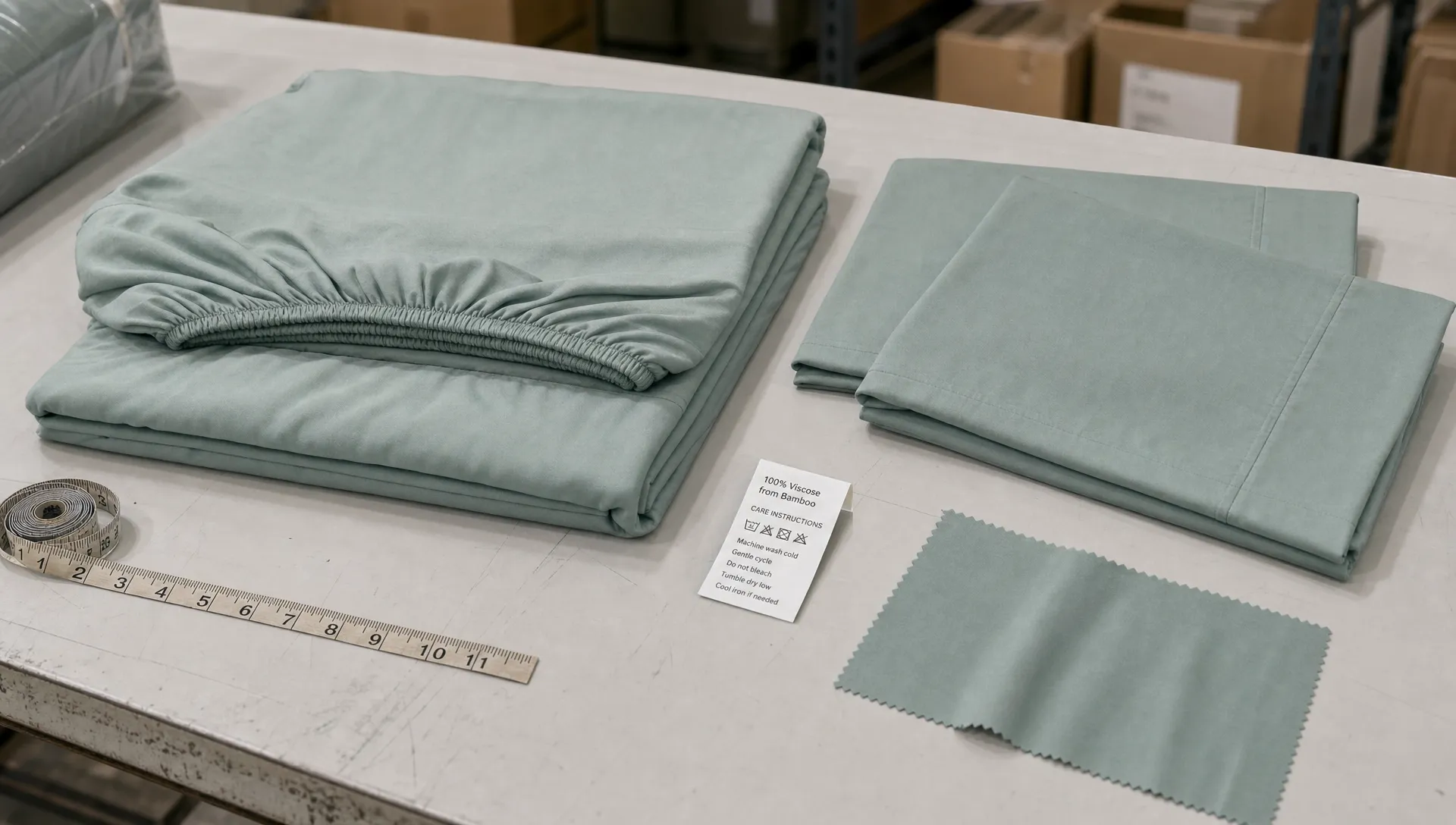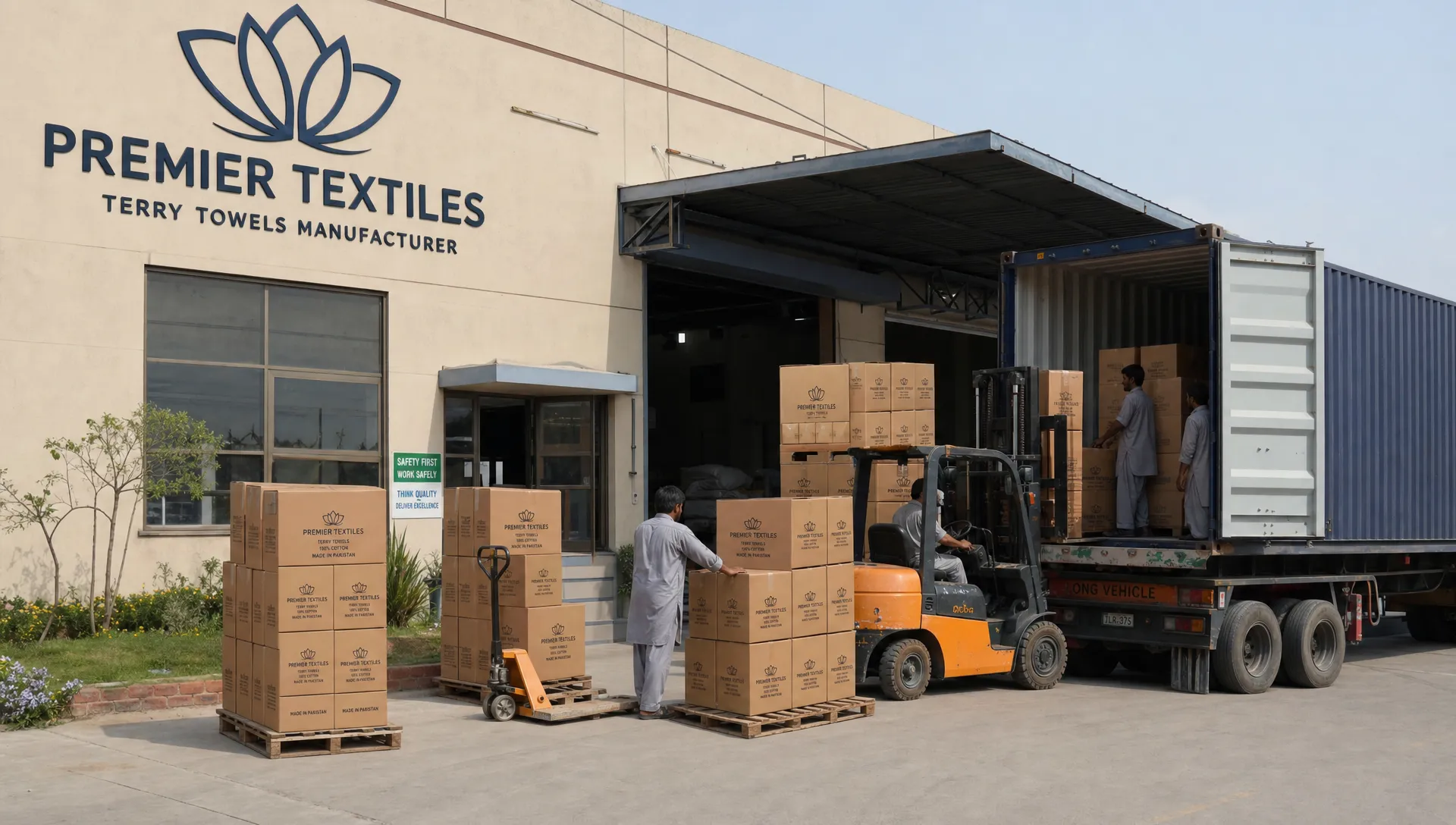
Choosing a hotel linen manufacturer for global supply is not a simple price comparison. For hotels, resorts, distributors and hospitality brands, the right partner must deliver consistent comfort, commercial durability, compliant documentation and predictable shipments across markets like the USA, Canada, Europe, Japan, Australia and South Africa.
Global buyers often face the same challenge: samples look acceptable, but bulk shipments reveal shrinkage, shade variation, weak stitching or packing errors. A better selection process protects your brand before the first container leaves the factory. It also helps you compare suppliers fairly, because every manufacturer is measured against the same specifications, quality standards and delivery expectations.
Why global hotel linen sourcing needs more than a low unit price
A low FOB price can look attractive on a spreadsheet, but hotel textiles are judged over months of laundering, guest use and replacement cycles. Sheets that shrink beyond tolerance can disrupt housekeeping. Towels that lose absorbency too quickly increase replacement costs. Poor carton labeling can delay customs clearance or create receiving errors at multi-property groups.
A reliable hotel linen manufacturer should understand that global supply is a system, not a one-time transaction. Product design, factory capacity, inspection, export documents and communication all affect the final landed cost.
For international buyers, consistency matters more than a small price difference. Hotels in Germany, France, Spain, the Netherlands, Poland, Japan, Australia, Canada and the USA may have different size preferences, climate considerations and brand standards, but they all need linens that arrive on spec and perform under commercial laundry conditions.
Build a specification before you contact a hotel linen manufacturer
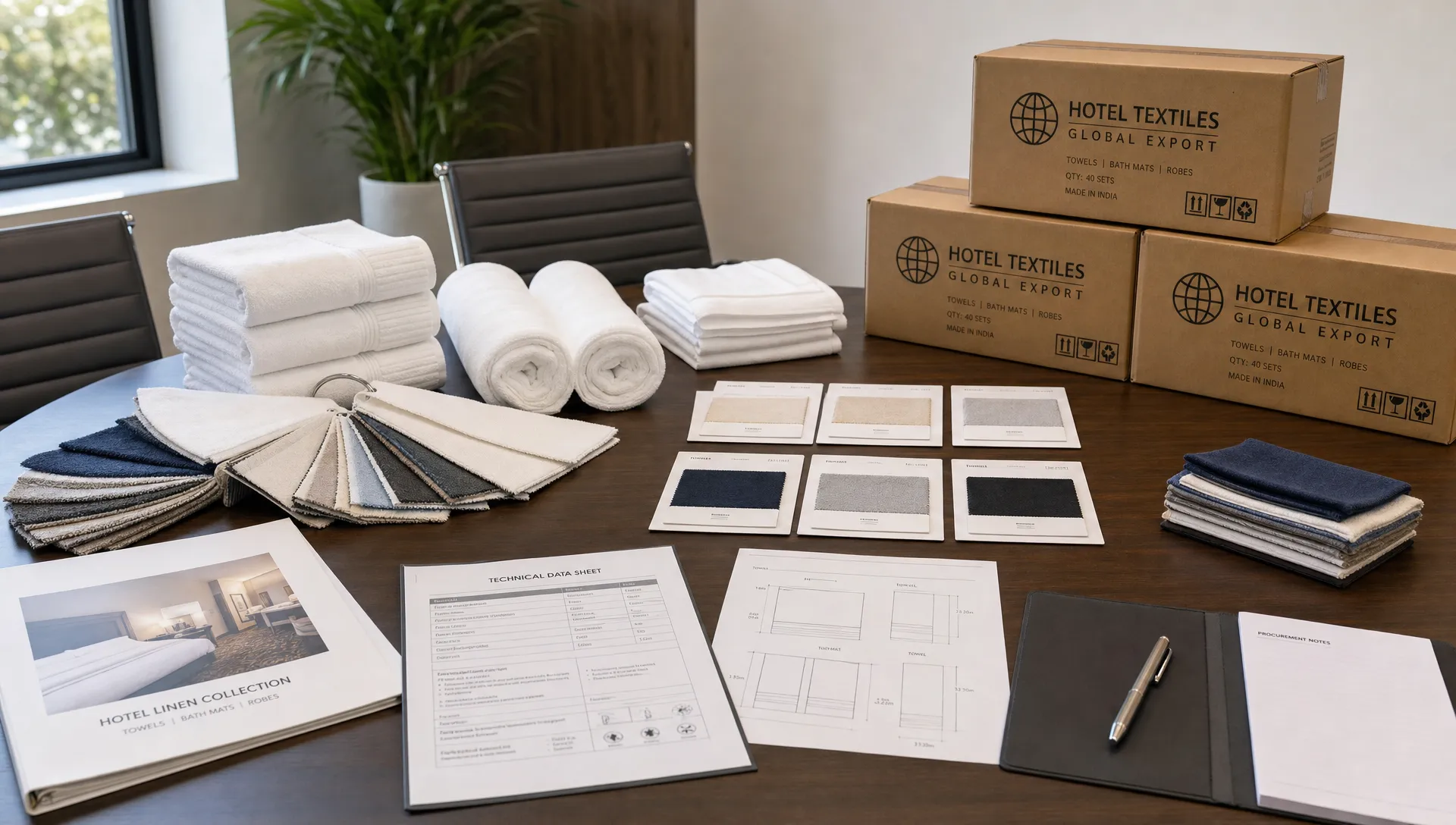
The strongest supplier conversations start with a technical brief. Without one, every quote is based on assumptions, which makes comparison almost impossible. Your brief does not need to be complicated, but it should define the product, material, construction, size, finish, packaging and expected use.
A hotel linen manufacturer can only quote accurately when it knows what performance level you want. For bedding, that may include fabric composition, thread count, weave, finished size, stitching and shrinkage tolerance. For towels, the brief should include GSM, yarn type, dimensions, border style, absorbency expectations and washing requirements.
| Product category | Key specification points | Why it matters |
|---|---|---|
| Bed sheets | Fabric composition, weave, thread count, finished size, shrinkage tolerance | Controls feel, fit and laundry performance |
| Pillowcases | Closure style, stitch quality, size tolerance, fabric finish | Supports room consistency and guest comfort |
| Duvet covers | Button, envelope or zipper closure, corner ties, dimensions | Reduces housekeeping issues and fit problems |
| Terry towels | GSM, yarn type, pile construction, absorbency, lint control | Affects softness, durability and drying time |
| Bathrobes | Fabric weight, sizing, belt loops, collar style, stitching | Influences spa, resort and room amenity quality |
If you are sourcing multiple room linen categories, review supplier product pages such as Extreme Towel’s wholesale hotel linen manufacturing options to understand how product ranges can be structured before you finalize your RFQ.
Check manufacturing capability and product range
A supplier may be strong in towels but less experienced in fitted sheets, duvet covers or bathrobes. Before placing a bulk order, confirm whether the factory regularly produces the exact product categories you need for hospitality use.
A capable hotel linen manufacturer should be able to discuss terry towel manufacturing, hotel bedding, bathrobes, bamboo bedding, private-label customization, bulk production and custom packaging without vague answers. Ask whether production is handled in-house, subcontracted or split across partner facilities. Subcontracting is not automatically a problem, but it must be disclosed and controlled.
You should also confirm whether the manufacturer can scale with your demand. A boutique hotel group may need smaller custom runs, while wholesalers and distributors may require container-volume replenishment. If your business serves several regions, ask how the supplier manages repeat orders, shade continuity and product consistency across production batches.
Useful capability questions include:
- Which hotel linen products do you manufacture most often?
- What is the practical MOQ by product, size and color?
- Can you support private-label branding, woven labels or custom cartons?
- How do you control repeat order consistency?
- What lead times apply during peak production months?
Audit quality control for commercial laundering
Hotel textiles are washed far more aggressively than household linens. This is where many sourcing mistakes appear. A product may feel soft during sample review, then lose shape, thickness or color after repeated commercial laundry cycles.
When you evaluate a hotel linen manufacturer, ask for documented quality control steps at fabric, cutting, stitching, finishing, packing and final inspection stages. Do not rely only on a polished sample. Request information on how bulk production is checked against the approved sample and written specification.
Quality control should include visual inspection and measurable checks. For hotels, the most useful checks often relate to shrinkage, dimensional stability, weight, color consistency, seam strength and absorbency. For towels, linting and drying time are also important. For bedding, pilling, tear strength and hand feel after washing should be reviewed.
| Quality checkpoint | What to verify | Buyer benefit |
|---|---|---|
| Pre-production sample | Construction, size, color, labeling, packaging | Confirms the approved production standard |
| In-line inspection | Stitching, cutting accuracy, shade variation, defects | Catches issues before full order completion |
| Laundry testing | Shrinkage, colorfastness, softness retention, lint | Predicts commercial-use performance |
| Final inspection | Quantity, carton marks, packing list accuracy, defects | Reduces shipment disputes and receiving delays |
For a deeper look at commercial textile expectations, this guide on how hospitality fabric manufacturers meet commercial standards is a useful companion resource.
Evaluate export readiness and communication
Manufacturing quality is only part of global sourcing. Export readiness determines whether your goods move smoothly from factory to destination. A supplier that understands documentation, carton markings, packing discipline and freight coordination can save buyers time and prevent avoidable delays.
The right hotel linen manufacturer will be comfortable discussing commercial invoices, packing lists, country of origin documents, HS codes, Incoterms, carton dimensions, palletization preferences and shipment scheduling. For buyers in the EU, USA, Canada, Japan or Australia, clear documentation can also help customs brokers classify goods correctly and reduce back-and-forth during clearance.
Communication is another practical test. During quoting, note how quickly the supplier answers technical questions. Do they clarify missing details, or do they quote without understanding the product? Do they provide realistic lead times, or only the fastest possible estimate? Global buyers should prefer accuracy over overly optimistic promises.
A simple rule helps: if communication is vague before payment, it rarely becomes clearer after production starts. Choose a partner that documents commitments in writing and keeps every revision tied to the approved specification.
Compare total landed cost, not just FOB price
The quoted product price is only one part of your sourcing cost. Packaging, inland transport, freight, duties, insurance, inspection, warehousing, replacements and slow-moving inventory can all change the real economics of an order.
A hotel linen manufacturer that serves international buyers should help you understand carton quantities, CBM, weight, packing efficiency and shipment planning. Better packing can reduce freight cost per unit, especially for bulky terry towels and bathrobes. Consistent product sizing can also reduce operational waste at the hotel level.
The same due diligence mindset applies across high-value purchasing categories. Retail buyers often compare product transparency, delivery details, support and total ownership cost before making decisions, as seen in this guide to choosing the right hot tub store online. Hotel linen sourcing benefits from the same disciplined approach.
| Cost factor | What to ask |
|---|---|
| Product cost | Is the quote based on exact approved specs? |
| Packaging | Are cartons export-grade and labeled correctly? |
| Freight impact | What are carton dimensions, weight and CBM? |
| Duties and customs | Are HS codes and documents prepared clearly? |
| Replacement cost | How does the product perform after repeated laundry? |
| Inventory cost | Can the supplier support repeat orders on schedule? |
If cost control is a major goal, this article on how commercial linen suppliers help hotels control costs explains how specifications and supplier choices affect long-term operating expense.
Test the relationship with samples and trial orders
Sampling is not only about feel. It is a test of discipline. The sample process shows whether the supplier understands your instructions, follows revisions and records the approved standard correctly.
Before awarding a full program, ask the hotel linen manufacturer to produce a counter sample or pre-production sample based on your technical brief. Review size, weight, stitching, shade, label placement, packaging and hand feel. If possible, wash the sample in conditions similar to your hotel laundry process.
For new supplier relationships, a trial order can reduce risk. It helps you test production consistency, packing accuracy, export documentation and communication without committing your full seasonal volume. Keep the trial order specifications identical to the planned bulk order so the results are meaningful.
For towel-specific sourcing, buyers can also use the vetting steps in this guide to evaluating an OEM hotel towel manufacturer when building a broader hotel linen supplier review process.
Red flags when choosing a global supplier
Some warning signs appear early. Treat them seriously, because they often become bigger problems during production.
Be cautious if a supplier refuses to provide clear specifications, changes materials without approval, offers unusually low prices without explanation or avoids discussing quality control. The same applies if they cannot explain their export process, give inconsistent lead times or push for bulk production before sample approval.
Other red flags include poor response quality, unclear MOQ terms, missing packing details and reluctance to confirm tolerances in writing. A professional supplier will not be offended by detailed questions. Serious manufacturers understand that global hospitality buyers need documentation, repeatability and accountability.
Price pressure is real in every market, but the cheapest supplier is not always the lowest-cost supplier. If a shipment fails inspection, arrives late or performs poorly after laundering, the savings disappear quickly.
Use a practical supplier evaluation scorecard
A scorecard makes supplier comparison more objective. It also helps procurement, operations, housekeeping and brand teams align before a purchase decision.
Before choosing a hotel linen manufacturer, assign weights based on what matters most to your business. A luxury resort may prioritize feel, finishing and guest experience. A distributor may prioritize repeatability, MOQ flexibility and carton efficiency. A multi-property hotel group may focus on replenishment reliability and standardized sizes.
| Evaluation area | Suggested weight | What to measure |
|---|---|---|
| Product quality | 30% | Materials, construction, sample accuracy, laundry results |
| Manufacturing capability | 20% | Product range, capacity, repeat order control |
| Export readiness | 15% | Documents, packing, Incoterms knowledge, shipment planning |
| Communication | 15% | Response quality, technical clarity, revision tracking |
| Commercial terms | 10% | MOQ, payment terms, lead time, price stability |
| Brand support | 10% | Labels, packaging, private-label options, consistency |
The scorecard does not replace judgment, but it prevents one impressive sample or one low price from dominating the decision.
Why Pakistan can be a strategic sourcing base
Pakistan has a long-established textile manufacturing sector and access to cotton-based production expertise, making it a relevant sourcing destination for hotels, distributors and private-label buyers. For global buyers, the opportunity is strongest when the supplier combines manufacturing capability with disciplined quality control and export experience.
A Pakistan-based hotel linen manufacturer can be especially useful for buyers looking to consolidate terry towels, hotel bedding, bathrobes and custom textile programs through one sourcing relationship. Consolidation can simplify sampling, labeling, packaging and repeat order management.
The key is still supplier selection. Do not choose by country alone. Choose by specification accuracy, production transparency, quality control, communication and the ability to support your market requirements.
Frequently Asked Questions
What should I ask a hotel linen manufacturer before placing an order? Ask about product specifications, MOQ, production capacity, sample process, quality control checks, export documents, packing details, lead times and repeat order consistency. You should also confirm how the supplier handles approved samples and production changes.
How do I compare hotel linen samples fairly? Compare samples against the same written specification. Check finished size, fabric composition, GSM or thread count, stitching, color, label placement, packaging and wash performance. Do not rely only on softness when the product is new.
What is more important, price or durability? Both matter, but durability often has a greater impact on long-term cost. A slightly cheaper towel or sheet can become expensive if it shrinks, pills, fades or needs early replacement after commercial laundering.
Can one manufacturer supply towels, bedding and bathrobes? Yes, some manufacturers can support multiple hotel linen categories. The buyer should still verify experience, samples, quality control and capacity for each product type instead of assuming all categories perform equally well.
How can international buyers reduce sourcing risk? Use a clear technical brief, approve samples before production, request inspection points, confirm export documentation and start with a trial order when working with a new supplier.
Partner with Extreme Towel for global hotel linen supply
Extreme Towel is a Pakistan-based textile manufacturer and exporter serving hotels, hospitality brands, wholesalers, distributors and private-label customers worldwide. The company produces premium terry towels, hotel linens, bamboo bedding and bathrobes, with OEM manufacturing, bulk wholesale production, quality control inspections, custom packaging and global export support.
If you are comparing suppliers for a new hotel program or replenishment line, use the framework above to prepare your specifications and evaluation criteria. Then contact Extreme Towel to discuss your required products, volumes, packaging needs and export destination with a manufacturing team familiar with global hospitality supply.