A loose hem does not always justify discarding a sheet, but a neatly repaired tear does not necessarily make it suitable for a guest bed. Deciding when to repair or replace hotel bed linen means checking fabric strength, cleanliness, comfort and appearance together. The right decision protects room standards without sending usable stock to waste or spending labor on repairs that will fail after another wash.
For housekeeping teams and purchasing managers, the most useful approach is condition-based rather than calendar-based. Inspect each piece against a clear acceptance standard, separate laundry problems from physical damage and compare repair costs with the usable life likely to remain. Apply the same rules across shifts so that one inspector’s acceptable sheet does not become another inspector’s rejection.
A quick decision guide for hotel bed linen
Repair a localized construction fault only when the surrounding fabric remains sound. Replace an item when deterioration affects its strength, fit, comfort or ability to meet your property’s presentation standard.
Use this guide at the inspection or folding station:
| Condition found | Recommended action | What determines the decision |
|---|---|---|
| Open hem or short seam separation | Consider repair | Fabric beside the stitching is strong and the repair can lie flat |
| Small tear through the main fabric | Usually replace from guest-room use | A patch or stitched repair may remain visible, uncomfortable or vulnerable to further tearing |
| Thin areas, holes or repeated tears | Replace | The fabric itself is deteriorating |
| Staining or grayness without damage | Hold for laundry assessment | Approved treatment may restore appearance without harming the textile |
| Persistent roughness or pilling | Assess, then replace if unresolved | Surface condition remains unacceptable after laundry causes are checked |
| Failed fitted-sheet elastic | Consider replacement elastic | The fabric and seams remain sound and the sheet will fit securely afterward |
| Shrinkage or permanent distortion | Replace for the intended bed size | The item no longer provides correct coverage or secure fit |
Do not return a questionable item to stock simply because a room attendant can hide the defect. Inspection should assess the whole piece, including corners, folds and areas concealed beneath the mattress.
When a repair is worth making
Repairing hotel bed linen is most practical when the fault is confined to stitching or a replaceable component, not the fabric body. A cleanly opened hem on an otherwise sound sheet is different from a seam splitting because the adjacent cloth has become weak.
Check the fabric around the fault
Examine the affected area under good lighting. Compare its thickness, surface and flexibility with an undamaged part of the same item. Look for fraying, small holes, discoloration around the break or several nearby repairs.
If the stitching has failed but the fabric remains intact, a repair may restore function. If the cloth tears beside the proposed stitch line, adding more stitching is unlikely to solve the underlying problem.
Avoid relying on forceful hand-pulling as a strength test. It is inconsistent between inspectors and may damage a serviceable piece. For recurring failures across a batch, ask the supplier or a textile laboratory to investigate fabric strength using an appropriate test method.
Confirm the repair will remain guest-ready
An acceptable repair should be secure, smooth and unobtrusive. It must not create a hard ridge, exposed fastener or uncomfortable contact point. Match the thread and construction appropriately, then check the finished dimensions.
Before adopting a repair method across a batch, trial it through the property’s normal laundering process and inspect the result. A repair that looks good at the sewing station may pucker, distort or reopen after washing and finishing.
When replacement is the better choice
Replacing hotel bed linen is the better decision when the textile can no longer meet its intended purpose, even if sewing could temporarily close the damage.
Fabric deterioration and repeated failure
Thin patches, multiple pinholes and tears appearing in different places suggest broader deterioration rather than an isolated defect. Repeatedly repairing these pieces consumes labor without restoring the original fabric strength.
A transparent or visibly worn pillowcase can also fall below presentation standards before it develops a hole. Inspect the entire item rather than treating the absence of an open tear as proof that it remains serviceable.
Pilling and roughness require a similar judgment. First check whether deposits or laundry conditions are contributing. If the surface remains uncomfortable after appropriate corrective action, replacement is more useful than repeatedly attempting to improve it.
Poor fit, permanent marks and visible repairs
A sheet that repeatedly slips off a mattress or a duvet cover that has become too small can slow room preparation and affect sleep comfort. Measure suspect pieces against the approved finished size rather than relying on their original labels.
Your bedding specifications for consistent room standards should define the dimensions and presentation that replacement stock must meet.
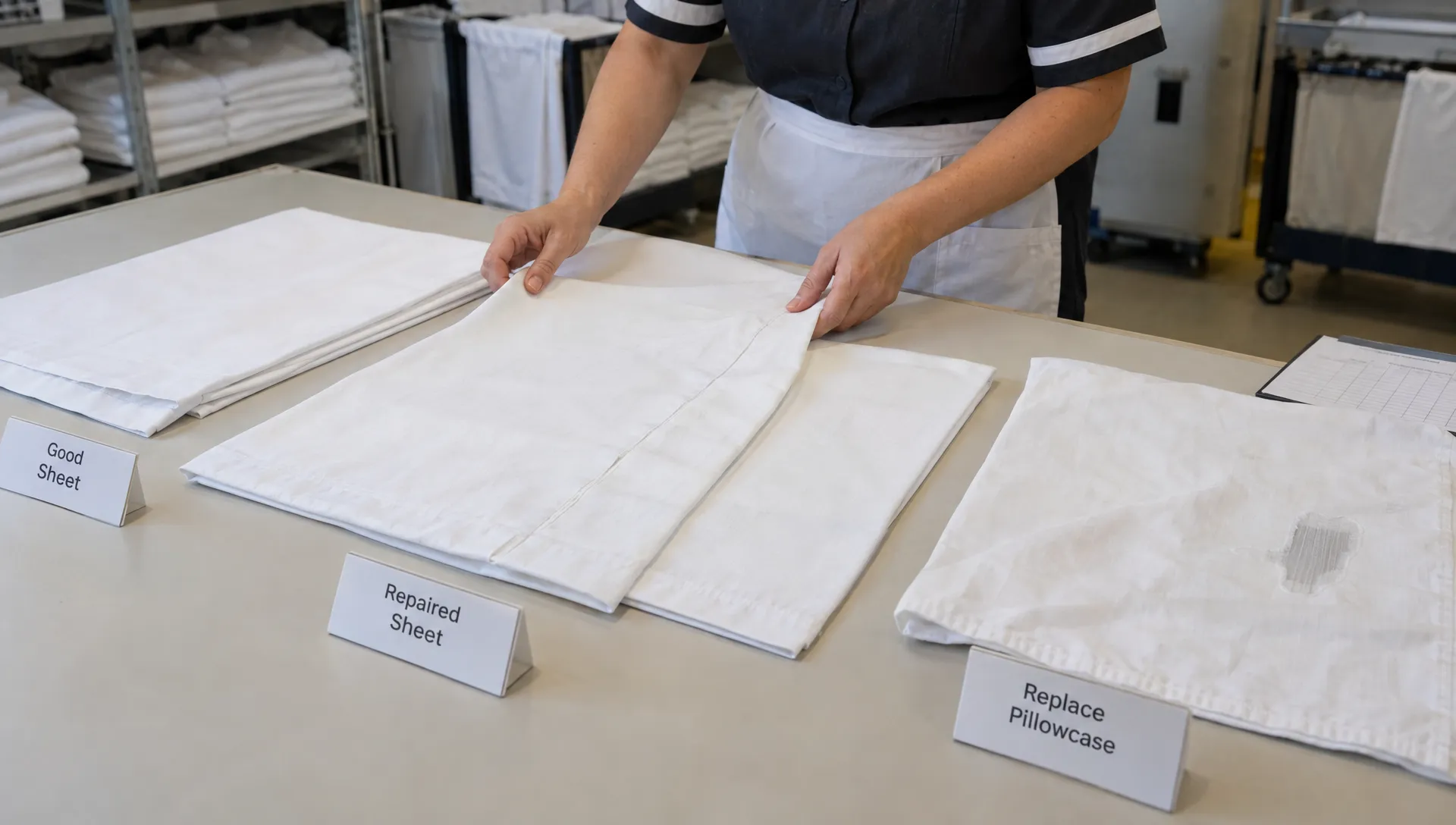
Permanent marks, conspicuous patches or obvious repair lines may also make an otherwise functional piece unsuitable for guest use. Document those appearance limits with physical examples or reference photographs so decisions do not depend entirely on personal preference.
Check laundry causes before rejecting a whole batch
A rise in rejected hotel bed linen should trigger an investigation, not just a larger replacement order. If recently introduced stock is graying, tearing or shrinking, new purchases may develop the same problems unless the cause is corrected.
Compare affected pieces by delivery batch, laundry route and processing history where records are available. Check chemical dosing, wash programs, drying conditions and finishing equipment with the laundry team. Also inspect handling points for sharp edges or catching hazards.
Stains should follow an approved treatment process appropriate to the fabric and the type of mark. Avoid repeated, increasingly aggressive treatment without reassessment. Rewashing adds handling and processing costs, and some treatments can damage fibers when misused.
Keep unresolved items separate from ready-to-use stock. Suspected biological contamination requires the property’s applicable handling and laundering procedures, not a cosmetic inspection alone. Visible cleanliness is not proof that those procedures have been completed.
If a batch remains defective, retain representative samples and records for a supplier discussion. They provide more useful evidence than a general report that the linen “did not last.”
Compare repair cost with remaining useful service
The cheapest repair is not always the lowest-cost choice. Include inspection, sewing, transport, any required reprocessing and final quality checks. Also consider whether the piece is likely to need another repair soon.
A practical comparison is:
Cost per expected future use = total repair or replacement cost ÷ expected acceptable uses remaining.
For an illustrative calculation, suppose repairing a sheet costs $3 and is expected to provide 15 further acceptable uses. That is $0.20 per use. A replacement costing $12 and expected to provide 100 acceptable uses would cost $0.12 per use. These figures are examples, not industry lifespan or price benchmarks.
The comparison only works if the assumptions are realistic. Use your own purchase prices, processing costs and retirement records. Where the remaining life is uncertain, test a small repair batch before committing more labor.
Cost does not override suitability. An item that fails cleanliness, comfort or safety requirements should not return to a guest room because its estimated cost per use looks attractive. Apply those acceptance requirements first, then compare the economics of the options that remain.
Make inspection decisions consistent across shifts
A workable system needs clear ownership and a small number of outcomes. Room attendants can identify obvious defects during stripping and bedmaking, while the laundry or linen-room team performs a more complete inspection before stock returns to circulation.
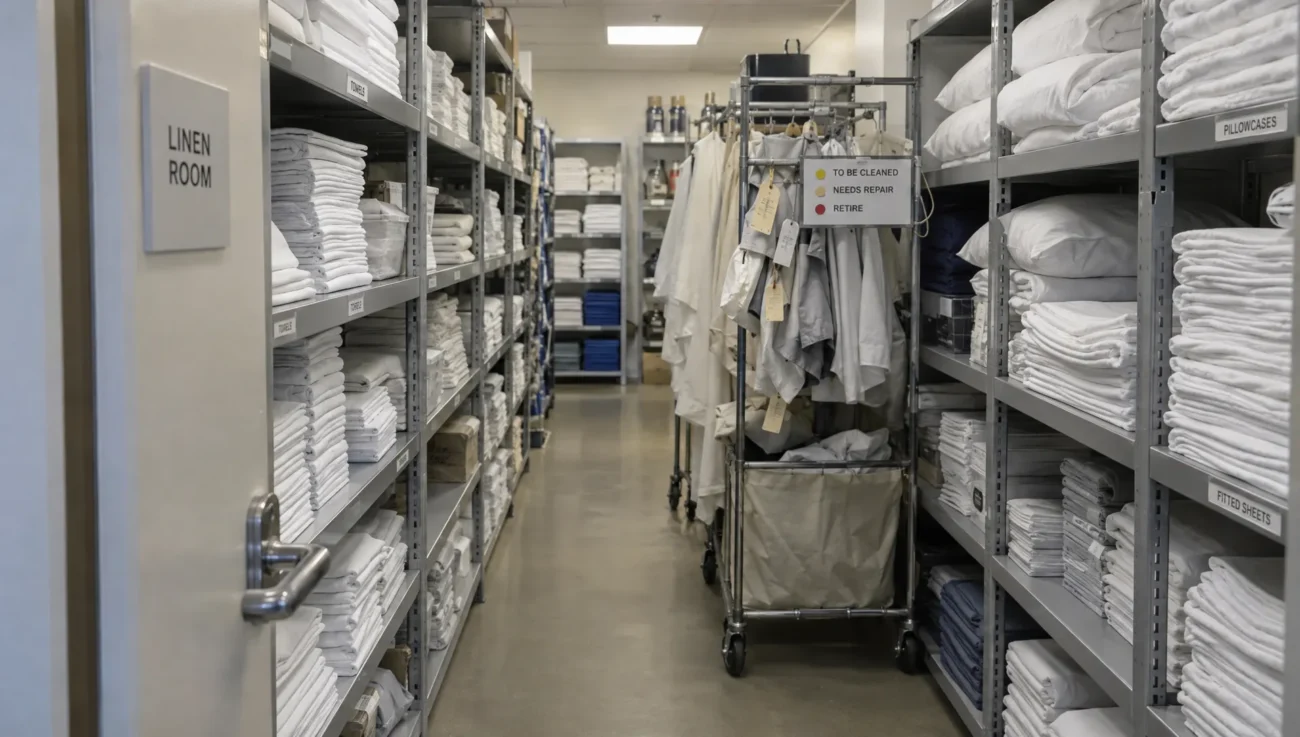
Use distinct, labeled holding areas for items awaiting stain treatment, repair assessment and retirement. This prevents rejected pieces from being folded back into usable stock during a busy shift.
For hotel bed linen, record the item type, size, defect, decision and batch identification when available. A simple retirement log can reveal whether pillowcases are wearing out faster than sheets or whether one delivery batch has an unusual seam-failure pattern.
Give staff practical acceptance references
Keep approved examples of a satisfactory repair, unacceptable thinning and a permanent stain that falls below the property’s standard. Include a sample showing correct fit where sizing problems are common.
Review borderline decisions together periodically. The aim is not to encourage staff to reject more pieces, but to apply the same threshold reliably.
Keep the recording process short enough to use during normal operations. Detailed investigation is valuable for recurring defects, but logging every individual piece should not take longer than inspecting it. Batch-level records can be sufficient where item-level tracking is unavailable.
Plan replacements without disrupting room standards
Replace stock according to condition and operational demand rather than waiting for a large group of pieces to fail together. Count usable items separately from those awaiting treatment or repair, since unavailable stock cannot support the next room turnover.
Build purchasing plans around room occupancy, changes per occupied room, laundry turnaround and the reserve needed for delays or unexpected rejects. There is no single stock multiple that suits every hotel and laundry arrangement.
When replenishing hotel bed linen, compare new samples with the approved room standard and with serviceable stock already in circulation. Check size after laundering, fabric feel, seam construction and shade compatibility. An acceptable new sheet may still look noticeably different beside older pillowcases.
The steps used to prevent color mismatch in sheets and pillowcases are particularly relevant when replacements arrive in smaller batches.
Decide what happens to retired pieces
Separate retirement from disposal. A piece unsuitable for guest-room presentation may have another permitted use, but that depends on its condition, cleanliness and local requirements.
If textiles are reassigned for cleaning or another internal purpose, identify and store them separately so they cannot re-enter bedding stock. Confirm acceptance conditions before arranging donation or textile recycling. Contaminated material should follow the relevant disposal procedure rather than being repurposed automatically.
Frequently asked questions
How often should hotels replace sheets and pillowcases? Use inspection results and property-specific service records rather than a universal monthly or annual schedule. Fabric construction, occupancy, laundering and handling all affect useful life. Retire pieces when they no longer meet the approved standard.
Can a small hole in a hotel sheet be repaired? It can sometimes be sewn or patched, but that does not make it suitable for guest use. A repair in the sleeping surface may remain visible or uncomfortable, and the hole may indicate weakened fabric. Replacement is usually the more appropriate guest-room decision.
Should stained hotel bed linen always be discarded? No. Hold the item for approved stain treatment and reassess it afterward. If the mark remains unacceptable, the treatment damages the fabric or required cleaning procedures cannot be satisfied, remove the piece from guest-room stock.
Should an entire bedding set be replaced when one piece fails? Not necessarily. Replace individual components when suitable replacements match the required size, feel and appearance. If shade or texture differences are obvious on the made bed, use a coordinated replacement plan rather than mixing visibly inconsistent pieces.
Specify replacement stock around the failures you find
Inspection records should inform the next purchase. Repeated seam failures, poor fit or early thinning are reasons to review specifications and laundering compatibility before ordering the same item again.
Extreme Towel manufactures hotel linens in Pakistan and offers OEM manufacturing, private-label customization, bulk production and export support. When discussing hotel linen manufacturing with Extreme Towel, share your finished-size requirements, laundry conditions and common rejection reasons so the replacement brief addresses the problems your team actually encounters.