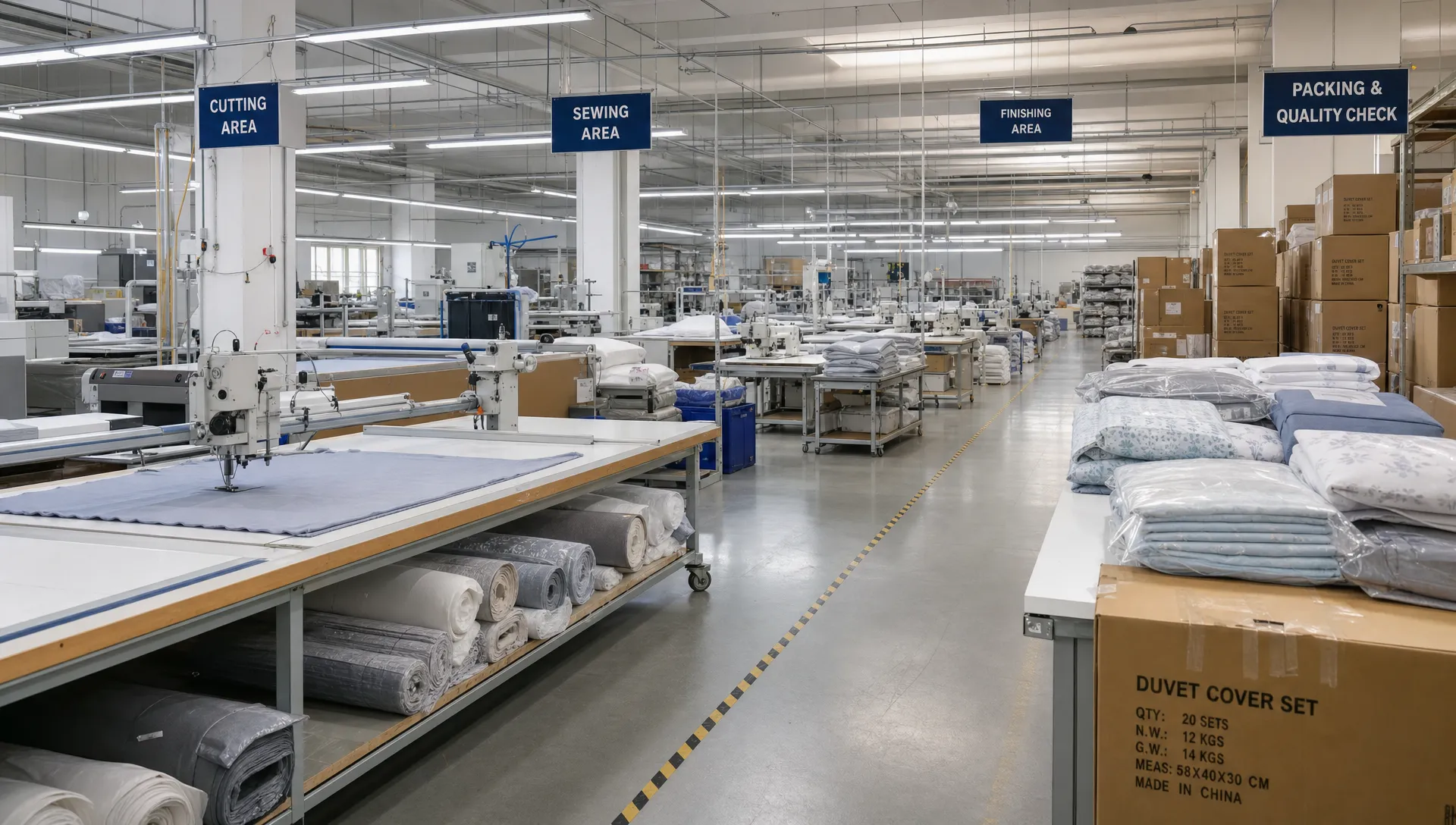
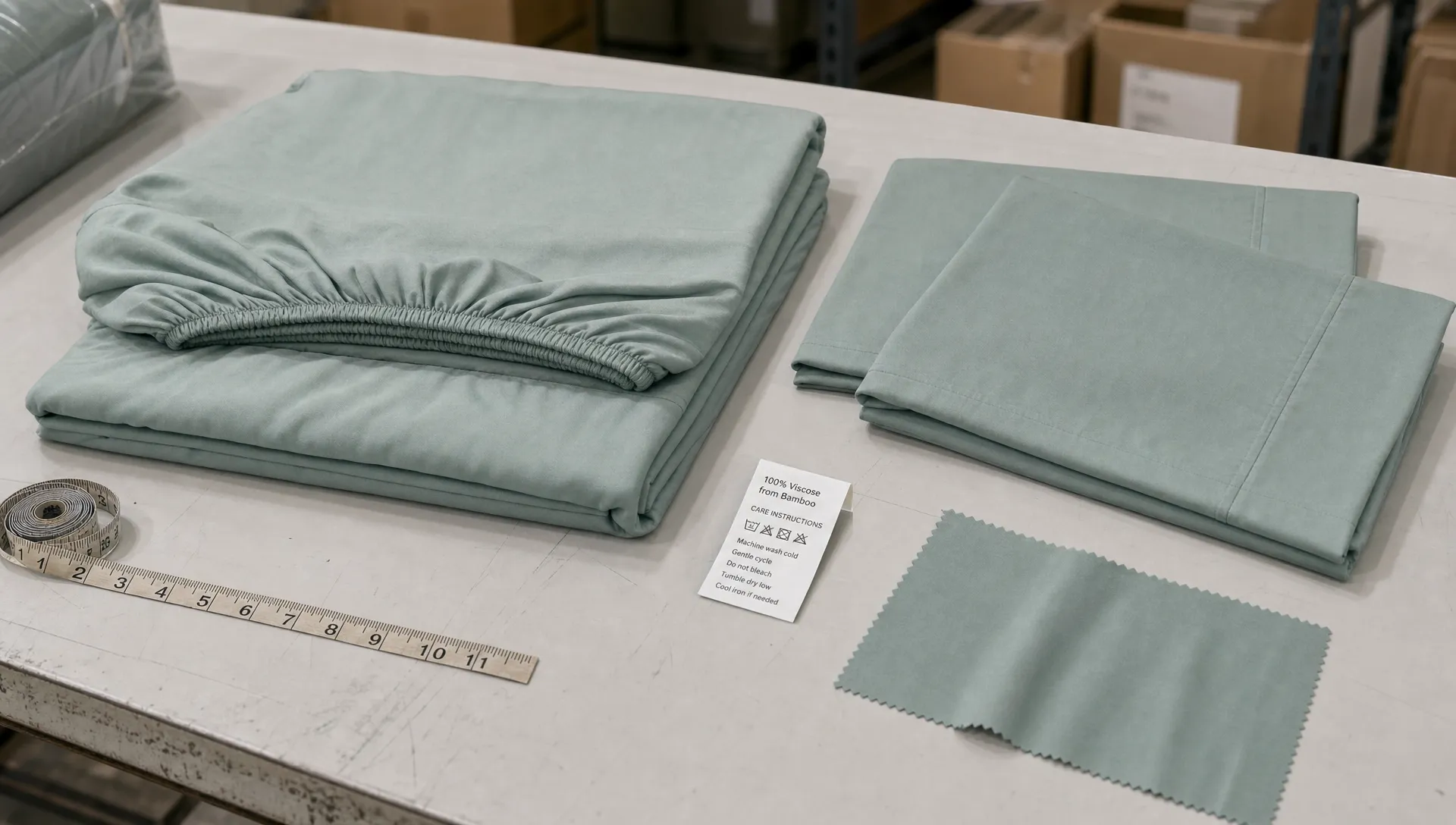
Hotel textiles do far more than complete a room design. Towels, sheets, bathrobes, pool towels and bedding move through harsh laundry cycles, meet guest expectations every day and represent the standards of the property that selected them. For hotels, resorts, spas, distributors and private-label brands, the challenge is not only finding attractive fabric products. It is finding a manufacturer that can prove commercial readiness before the first bulk shipment leaves the factory.
That is where experienced hospitality fabric manufacturers differ from general textile suppliers. They work from defined specifications, test for performance, document compliance and build repeatable production controls into every order. A towel that feels soft in a showroom may fail after 20 washes if the yarn, dyeing, stitching or finishing process is not built for hotel operations.
Commercial standards are not a single checklist. They combine material performance, safety requirements, labeling laws, packaging expectations, inspection protocols and the practical needs of laundry teams. Understanding how manufacturers meet these standards helps buyers reduce product failures, protect brand reputation and make better sourcing decisions.
What commercial standards mean in hospitality textiles
Commercial textile standards exist because hospitality products are used differently from household products. A guest towel may be washed several times per week. A hotel sheet may face repeated exposure to detergents, heat, stain removers, mechanical drying and folding equipment. Pool towels may be exposed to chlorine, sun and high moisture environments.
For a manufacturer, meeting commercial standards usually means controlling five areas:
- Fabric construction and material consistency
- Durability under repeated laundering
- Guest safety and chemical compliance
- Accurate labeling, packing and export documentation
- Reliable quality control across bulk production
The exact requirement depends on the product category and target market. A luxury bath towel needs strong absorbency, pile retention and seam durability. Hotel bedding needs dimensional stability, fabric strength and smooth finishing. Bathrobes need comfort, stitching strength and sizing consistency. A private-label order may also require custom labels, cartons, barcodes and brand-specific packaging.
Buyers should treat standards as part of the product brief, not as an afterthought. The clearer the specification, the easier it is for a manufacturer to choose the right yarn, weave, finishing process and inspection criteria.
Translating buyer specifications into production details
The first step in meeting commercial standards is converting a buyer’s requirement into measurable production parameters. A request such as “premium hotel towel” is too broad. A commercial manufacturer needs details that can be produced, tested and inspected.
For terry towels, specifications may include cotton type, yarn count, GSM, size, pile height, border design, absorbency expectations and color tolerance. For bedding, specifications may include fabric composition, thread count, weave, width, shrinkage tolerance, stitching style and finish. For bathrobes, manufacturers need style, size grading, fabric weight, belt design, pocket placement and labeling details.
This product brief becomes the control document for sampling and bulk production. Without it, buyers and suppliers may judge quality differently. With it, both sides can evaluate samples against the same standards.
| Product type | Common commercial standard focus | Why it matters for hotels |
|---|---|---|
| Terry towels | GSM, absorbency, lint control, seam strength, colorfastness | Towels must stay soft, absorbent and presentable after frequent washing |
| Hotel sheets | Thread count, fabric strength, shrinkage, smooth finish, sizing accuracy | Bedding must fit properly, feel comfortable and survive commercial laundry |
| Bathrobes | Fabric weight, stitching, sizing, belt loops, softness | Robes need comfort, durability and consistent presentation across rooms |
| Pool towels | GSM, colorfastness, chlorine resistance, drying performance | Pool textiles face moisture, sun exposure and frequent turnover |
| Bamboo bedding | Fiber blend, softness, pilling resistance, shrinkage control | Bedding must balance comfort with repeatable hotel-grade performance |
This is also where private-label and OEM requirements come in. A buyer may need custom woven labels, embroidery, specific carton markings or retail-ready packaging. These elements must be planned before bulk production because they affect lead times, material sourcing and inspection.
Material selection: the foundation of performance
Hospitality fabric manufacturers meet commercial standards by choosing materials that match how the product will be used. The best fabric is not always the heaviest or the most expensive. It is the one that performs reliably in the intended operating environment.
For example, high-GSM towels can feel plush and luxurious, but they also take longer to dry. In a resort or spa, that may be acceptable if the property wants a premium experience and has laundry capacity to match. In a high-turnover hotel, a balanced GSM may reduce drying time, energy use and replacement costs.
For bedding, fabric selection affects guest comfort, laundry efficiency and long-term appearance. Cotton-rich fabrics offer breathability and a familiar hotel feel. Bamboo bedding can appeal to brands that want a smooth hand feel and a premium sleep experience, but it still needs proper construction, finishing and testing for hospitality use.
Extreme Towel supports hotel and wholesale buyers across terry towels, hotel linens, bamboo bedding and bathrobes, which means material decisions can be aligned with the category instead of handled as a one-size-fits-all purchase. Buyers comparing bedding options can review Extreme Towel’s wholesale hotel linen manufacturing capabilities to understand how specifications such as fabric type and construction are presented for hospitality supply.
Testing for durability, shrinkage and color performance
A commercial textile is only as good as its performance after repeated use. That is why testing is central to hospitality manufacturing. The goal is not merely to pass a sample inspection. The goal is to predict how the product will behave after laundering, drying, folding, stacking and daily guest use.
Common performance checks include absorbency testing for towels, shrinkage testing for bedding and robes, colorfastness testing for dyed textiles, pilling evaluation for bedding fabrics and tensile or seam strength testing for stitched products. Manufacturers may use internal lab checks, third-party laboratories or buyer-approved testing protocols depending on the order.
Colorfastness is especially important for hotels that use colored towels, pool towels or robes. Poor dye stability can lead to fading, bleeding or inconsistent presentation across rooms. Shrinkage control is equally important. A fitted sheet that shrinks beyond tolerance creates operational problems, even if the fabric feels good on day one.
Commercial laundry conditions should be considered during testing. Hospitality laundering often involves higher temperatures, stronger detergents and more mechanical action than home washing. A product built only for domestic care may not meet hotel expectations.
Chemical safety and certification requirements
Guest-facing textiles come into direct contact with skin, which makes chemical safety a major part of commercial standards. Buyers often ask manufacturers for evidence that fabrics, dyes, auxiliaries and finishing chemicals are controlled.
One of the most recognized textile safety systems is OEKO-TEX STANDARD 100, which tests textile products for substances that may be harmful to human health. Certification requirements can vary by buyer, product type and market, but hospitality brands frequently use recognized standards to simplify supplier qualification.
Chemical compliance may also involve market-specific rules. In the European Union, textile products must comply with relevant chemical restrictions under REACH. In the United States, importers may require documentation related to fiber content, origin and product labeling rules. Buyers selling into multiple markets should clarify which regulations apply before approving production.
For hotels and distributors specifically looking at safety certifications, Extreme Towel has a practical guide on how to source OEKO-TEX certified towels for hospitality that explains certificate verification, sample review and specification control.
Quality control during bulk production
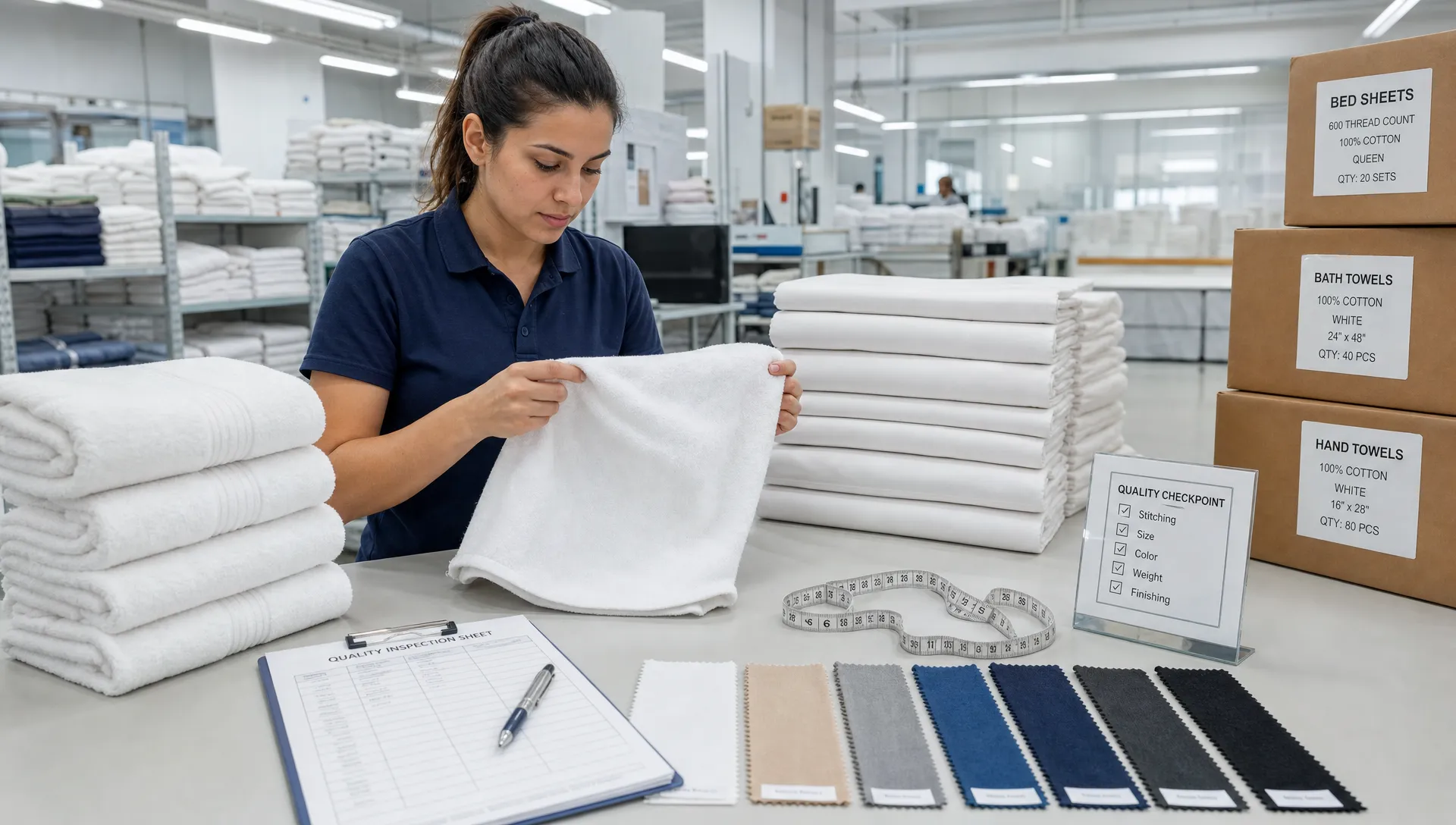
The most common sourcing mistake is assuming that an approved sample guarantees consistent bulk quality. In commercial manufacturing, consistency comes from process control. Hospitality fabric manufacturers need checks at multiple stages, from raw material sourcing to packing.
A strong quality control process usually covers raw material inspection, weaving or knitting checks, dyeing and finishing control, cutting accuracy, stitching inspection, measurement verification and final packing review. For export orders, carton condition, labeling, packing lists and SKU separation also matter.
Final inspections often use AQL sampling, a widely used method for evaluating a batch by inspecting a statistically selected sample. AQL does not mean every piece is perfect. It defines an acceptable limit for defects and helps buyers and manufacturers agree on what passes or fails. Serious defects such as stains, holes, incorrect labeling, poor stitching or size errors should be defined clearly before inspection.
Quality control should also separate cosmetic issues from functional failures. A loose thread may be minor if it can be trimmed. Weak stitching on a robe belt loop is more serious because it affects use and durability. Clear defect classification prevents disputes and keeps inspections objective.
Labeling, documentation and market compliance
Commercial standards extend beyond the textile itself. Labels, documentation and packaging can affect customs clearance, retail distribution and hotel inventory management. A well-made towel with incorrect fiber labeling can still create compliance problems for the buyer.
In the United States, the Federal Trade Commission provides guidance on textile labeling under the Textile and Wool Acts, including fiber content, country of origin and manufacturer or dealer identity. The FTC’s business guidance, Threading Your Way Through the Labeling Requirements, is a useful reference for importers and sellers.
For the European market, textile fiber names and labeling are covered under EU textile regulation requirements. Buyers may also need language-specific labeling, care instructions and packaging details depending on the selling country. Canada and other markets have their own textile labeling rules, so global buyers should avoid assuming one label format works everywhere.
Manufacturers help by preparing labels and packaging according to the buyer’s approved artwork and compliance requirements. Still, the importer or brand owner should confirm legal obligations in the destination market.
Laundry performance and total cost of ownership
Hotels do not judge textiles only by purchase price. They judge them by cost per use. A lower-priced towel may become expensive if it loses softness quickly, sheds lint, shrinks beyond tolerance or needs frequent replacement. A bedding set may increase labor costs if it wrinkles heavily or takes longer to process.
This is why commercial standards should include practical laundry performance. Drying time, stain release, folding behavior, linting, edge durability and replacement cycle all affect operational cost. Manufacturers that understand hospitality use can suggest specifications that balance guest feel with laundry efficiency.
For example, a luxury property may prioritize high-density towels and premium finishing. A large hotel group may prefer a durable mid-weight construction that supports faster processing. A resort may need pool towels with strong color stability and clear SKU control. The right answer depends on the property, the laundry system and the guest experience target.
Extreme Towel’s guide on how commercial linen suppliers help hotels control costs expands on this lifecycle view, including how durability, replacement planning and laundering efficiency influence hotel textile budgets.
Custom manufacturing without compromising standards
Private-label customization is common in hospitality textiles. Buyers may request embroidered logos, custom borders, branded labels, special packaging or exclusive fabric specifications. Customization adds brand value, but it also adds variables that must be controlled.
Embroidery, for example, can affect towel hand feel if the backing, thread density or placement is poorly chosen. Dyed products need color approval and repeatability between lots. Custom sizes must account for shrinkage so finished dimensions remain within tolerance after washing. Retail packaging must protect the product during shipping and still meet presentation requirements.
A reliable manufacturer will sample customized details before bulk production. Approval should cover both appearance and performance. If a logo towel looks good before laundering but puckers or stiffens after washing, the customization method needs adjustment.
How buyers can evaluate hospitality fabric manufacturers
Choosing a supplier is easier when buyers ask for evidence rather than general assurances. Commercial-grade manufacturing can usually be demonstrated through samples, specifications, certificates, inspection procedures and export experience.
Before confirming a bulk order, buyers should review:
- Product specifications with measurable tolerances
- Pre-production samples that match the intended order
- Relevant test reports or certifications when required
- Quality control steps used during production and final inspection
- Labeling, packaging and carton requirements for the destination market
- Export documentation support and communication process
The best supplier conversations are practical. Ask how the product will perform after laundering. Ask what happens if shrinkage exceeds tolerance. Ask how color consistency is controlled between production lots. Ask what inspection standard will be used before shipment. A manufacturer that can answer clearly is more likely to deliver repeatable commercial quality.
Why standards matter for brand reputation
Guests rarely see the sourcing process, but they feel the result. A towel that stays soft, a sheet that fits properly and a robe that feels comfortable all contribute to perceived quality. When textiles fail, the impact is immediate. Housekeeping notices problems first, then guests notice roughness, staining, shrinkage or inconsistency.
For wholesalers and distributors, quality failures can also damage customer relationships. Replacing defective stock is costly, especially across international shipments. Standards reduce that risk by creating agreed expectations before production begins.
Hospitality fabric manufacturers that meet commercial standards protect the buyer from uncertainty. They combine product development, testing, compliance awareness and production discipline so the textile performs not only in a sample room, but in daily hotel operations.
Frequently Asked Questions
What makes hospitality fabric manufacturers different from regular textile suppliers? Hospitality fabric manufacturers build products for repeated commercial use, not occasional household use. They focus on durability, laundering performance, sizing consistency, compliance documentation and bulk production control.
Which standards are most important for hotel towels? Hotel towels are usually evaluated by GSM, absorbency, softness, lint control, shrinkage, colorfastness and stitching durability. Safety certifications such as OEKO-TEX may also be required by certain buyers or markets.
Do hotel linens need special testing? Yes. Hotel linens should be checked for shrinkage, fabric strength, seam quality, pilling, colorfastness and fit after laundering. Testing helps confirm that bedding remains usable after repeated commercial laundry cycles.
How can buyers verify a manufacturer’s compliance claims? Buyers can request current certificates, product-specific test reports, pre-production samples, inspection records and clear labeling details. For certifications, they should verify certificate numbers through the issuing organization when possible.
Is customization possible without reducing durability? Yes, if customization is tested and controlled. Embroidery, labels, dyed colors, custom sizes and packaging should be approved through samples before bulk manufacturing begins.
Work with a commercial textile manufacturer built for hospitality supply
Commercial standards are easier to meet when they are planned from the start. Extreme Towel manufactures and exports premium terry towels, hotel linens, bamboo bedding and bathrobes for hotels, hospitality brands, wholesalers, distributors and private-label customers worldwide.
If you need OEM manufacturing, bulk wholesale production, custom packaging or export support, visit Extreme Towel to discuss your hospitality textile requirements and request manufacturing support for your next order.