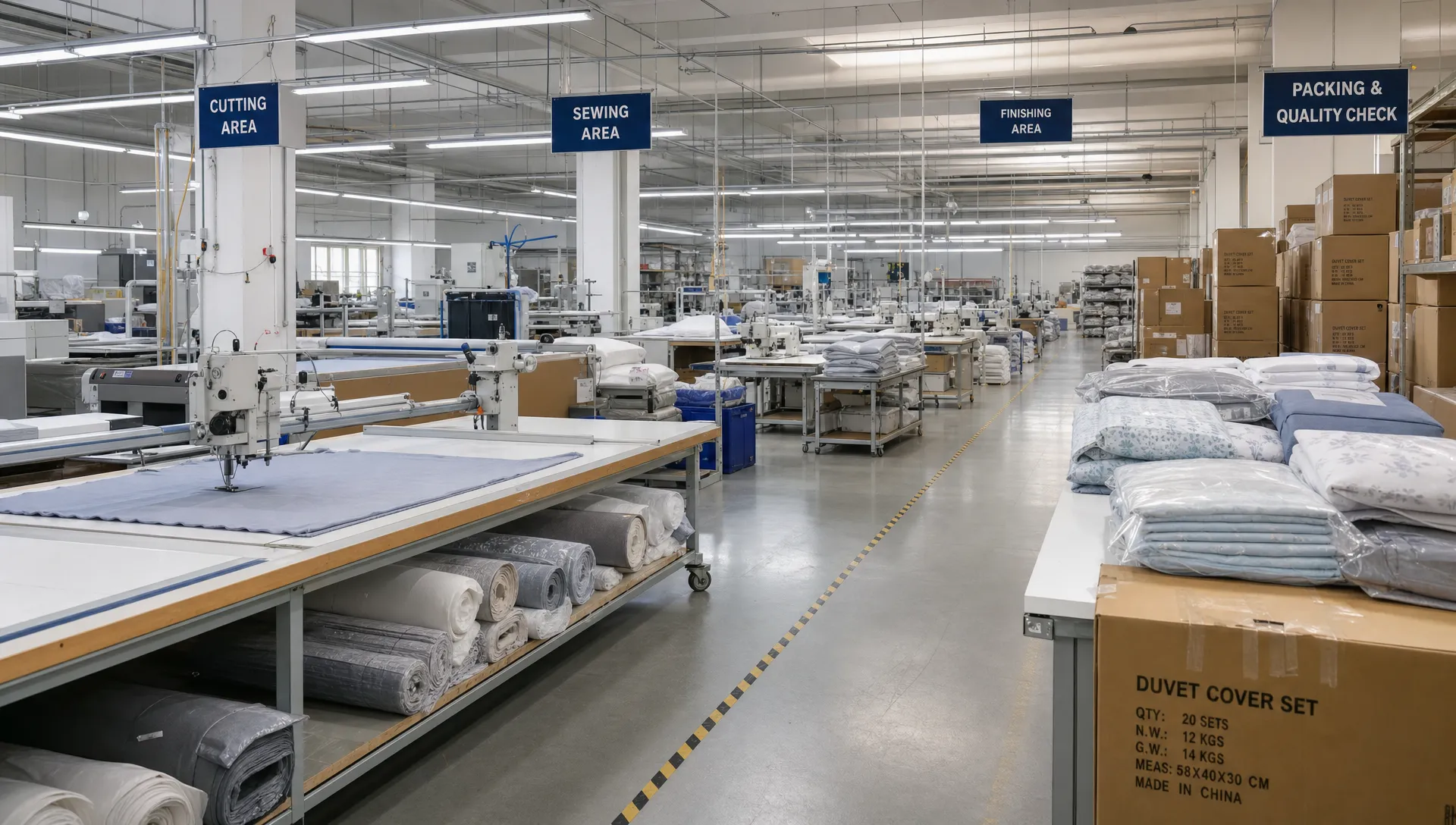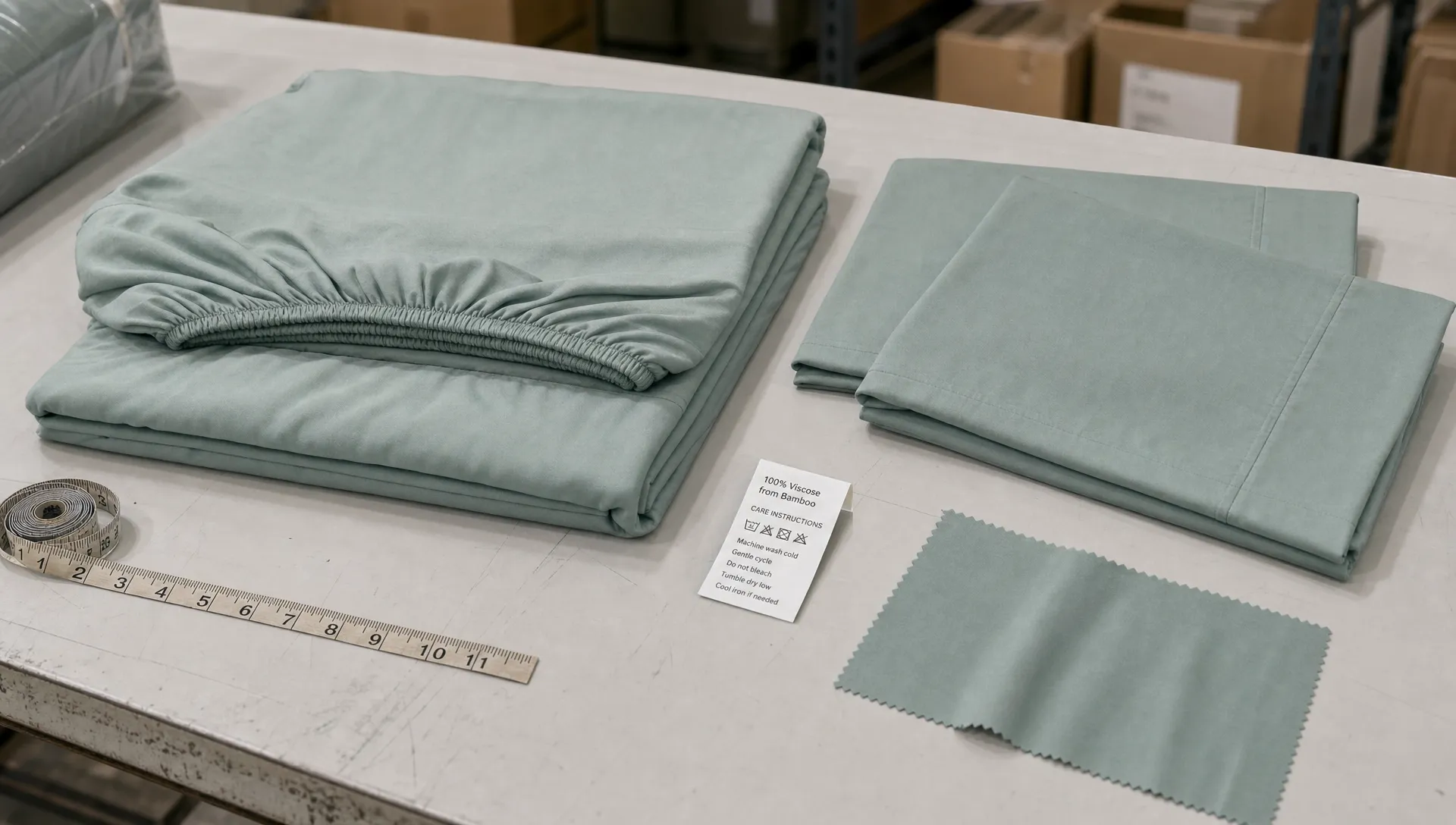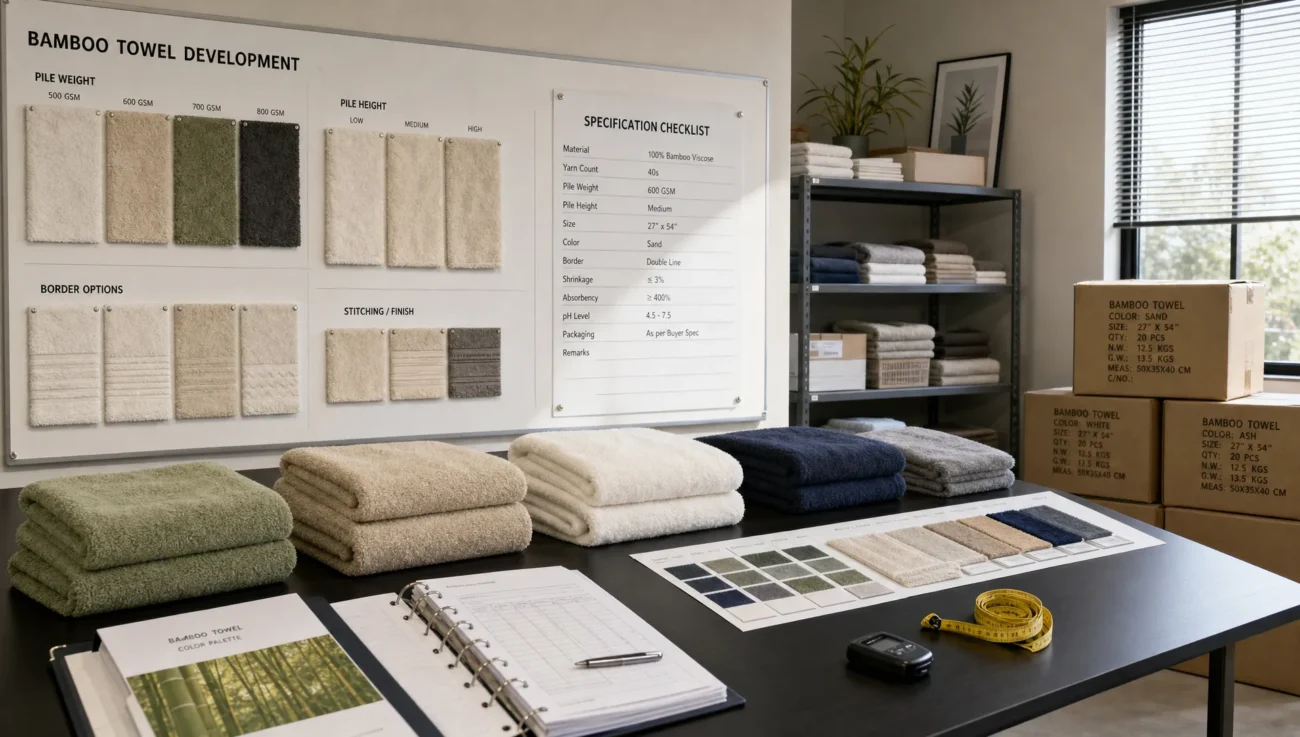
For wholesale buyers, bamboo bath towels are attractive for a clear reason: they sit at the intersection of softness, premium positioning and rising demand for more responsible textile choices. Hotels, spas, retailers, distributors and private-label brands can use them to create a differentiated towel range without moving too far from a familiar bath category.
The challenge is that “bamboo” is often used loosely in textile sourcing. A towel described as bamboo may be made from bamboo viscose, bamboo rayon, bamboo lyocell, a bamboo-cotton blend or another construction entirely. Those differences affect hand feel, absorbency, drying time, labeling, cost and compliance.
This guide explains what bamboo bath towels wholesale buyers should check before placing bulk orders, especially if importing into the USA, Canada, Europe, Japan, Australia or other international markets.
What bamboo bath towels usually mean in wholesale sourcing
In most commercial towel programs, “bamboo bath towels” do not mean strips of natural bamboo plant turned directly into towel loops. They usually refer to regenerated cellulose fibers made from bamboo pulp, most commonly bamboo viscose or bamboo rayon. Some suppliers may also offer bamboo lyocell, which uses a different production process.
This distinction matters because fiber naming affects both product performance and legal labeling. In the United States, the Federal Trade Commission warns businesses that textiles made from processed bamboo are generally rayon or viscose and should not be marketed simply as bamboo unless the fiber is mechanically made directly from bamboo. The FTC’s guidance on avoiding misleading bamboo textile claims is useful reading for U.S. importers and private-label brands.
For buyers, the practical takeaway is simple: ask the supplier to define the fiber composition in technical terms before discussing price. “Bamboo feel” is not a specification. “70% bamboo viscose and 30% cotton, 600 GSM, dobby border, reactive dyed” is much closer to a production-ready brief.
Why wholesale buyers add bamboo towels to a collection
Bamboo-based towel programs can work well when the target customer values softness and a premium bath experience. Bamboo viscose often has a smooth, silky hand feel, which makes it appealing for retail, spa, wellness and boutique hospitality ranges. It can also help brands tell a material story, provided sustainability claims are accurate and supported.
That last point is important. Bamboo as a plant grows quickly, but the environmental profile of a finished towel depends on the fiber process, chemical management, dyeing, finishing, wastewater handling, packaging and transport. Buyers should avoid broad claims such as “100% eco-friendly” unless they have documentation that supports the claim in the destination market.
For many wholesale programs, bamboo bath towels are not a replacement for every cotton towel. They are often positioned as a premium line, a soft-touch retail range or a hospitality upgrade. If your catalog already includes standard cotton terry towels, a bamboo blend can give buyers another price and comfort tier.
Key specifications to confirm before requesting a quote
A serious supplier cannot quote accurately on the word “bamboo” alone. Towel pricing and performance depend on a group of specifications that need to be aligned before sampling.
| Specification | What to ask for | Why it matters |
|---|---|---|
| Fiber composition | Bamboo viscose, bamboo rayon, bamboo lyocell, cotton blend or other blend | Determines labeling, feel, absorbency and cost |
| GSM | Target grams per square meter | Affects weight, plushness, drying time, shipping cost and price |
| Size | Finished size after washing, not only cut size | Prevents undersized towels after laundering |
| Yarn and pile | Ring spun, combed, zero twist, low twist or standard twist where applicable | Influences softness, linting, strength and durability |
| Construction | Single ply, double ply, dobby border, jacquard, plain terry or decorative design | Affects appearance, strength and production complexity |
| Color and dyeing | White, vat dyed, reactive dyed or custom Pantone target | Impacts colorfastness, shade consistency and lead time |
| Finishing | Soft finish, enzyme wash, anti-shrink process or other finishing | Changes hand feel and laundering behavior |
| Packaging | Bulk carton, belly band, private-label insert, retail pack or hotel pack | Affects landed cost and customer presentation |
Buyers should also define tolerance levels. For example, acceptable size variation, GSM tolerance, shade tolerance and carton packing instructions should be written into the purchase order or approved sample documentation.
GSM, weight and towel positioning
GSM is one of the first numbers buyers discuss, but it should not be treated as the only quality marker. A heavier towel usually feels more plush, yet it may dry more slowly and cost more to ship. A lighter towel may be better for gyms, travel programs or fast-turn hotel operations.
| GSM range | Common wholesale positioning | Buyer consideration |
|---|---|---|
| 400-500 GSM | Lightweight to midweight towels for gyms, promotions, budget hospitality or quick-dry use | Lower weight can reduce freight and laundry load, but may feel less plush |
| 500-600 GSM | Balanced hotel, spa and retail bath towel programs | Often a practical middle ground between softness, absorbency and drying time |
| 600-700 GSM and above | Premium hotel, luxury retail and spa ranges | Stronger plush feel, but higher unit cost, carton weight and drying time |
For bamboo bath towels, the same GSM can feel different depending on the blend and yarn. A 550 GSM bamboo-cotton towel may feel softer than a 550 GSM conventional towel, but that does not automatically mean it will be more durable in institutional laundry. Sampling and wash testing remain essential.
Bamboo viscose, bamboo-cotton blends and performance tradeoffs
Many commercial bamboo towel programs use blends because each fiber contributes something different. Bamboo viscose can add a smooth hand feel and attractive drape. Cotton can support strength, loop stability and familiarity in towel manufacturing. The exact blend depends on your target price, towel use and destination market.
For hospitality, durability and laundering performance are usually more important than the softest possible touch on day one. Hotels need towels that can survive repeated wash cycles, retain size and avoid excessive lint. For retail, the first hand feel, shelf presentation and packaging may carry more weight.
If you are sourcing a broader towel range, compare bamboo options against standard terry constructions rather than looking at bamboo in isolation. Extreme Towel’s category for wholesale bath towels for hotels and bulk supply is a useful reference point for buyers building a complete bath assortment.
Compliance and labeling for international markets
Bamboo towel labeling should be handled carefully. A label that is acceptable in one market may not be compliant in another. U.S. buyers should review FTC rules on rayon and bamboo claims. European buyers should pay attention to fiber composition labeling under Regulation (EU) No 1007/2011, along with any country-specific language requirements.
For importers and private-label sellers, the safest approach is to request the exact fiber name, percentage composition and care label wording before bulk production. Do not wait until goods are packed to check labels. Label mistakes can create relabeling costs, customs delays and marketplace compliance issues.
Also be careful with performance and sustainability claims. Words like antibacterial, hypoallergenic, biodegradable, organic and eco-friendly should not be used casually. If a claim matters to your sales strategy, ask what test report or certification supports it, who issued it, which product it covers and whether it is valid for the current production batch.
Quality control checks before bulk production
Bamboo bath towels should be approved through a structured sample process. A small swatch may confirm color and feel, but it does not prove finished towel performance. Buyers should request a full pre-production sample that matches the agreed GSM, size, weave, border, label and packaging.
Key checks include absorbency, linting, seam strength, shade consistency, odor, pile uniformity, dimensional stability and colorfastness to washing. For white hotel towels, whiteness and staining behavior may matter more than decorative finish. For dyed retail towels, shade consistency across cartons is critical.
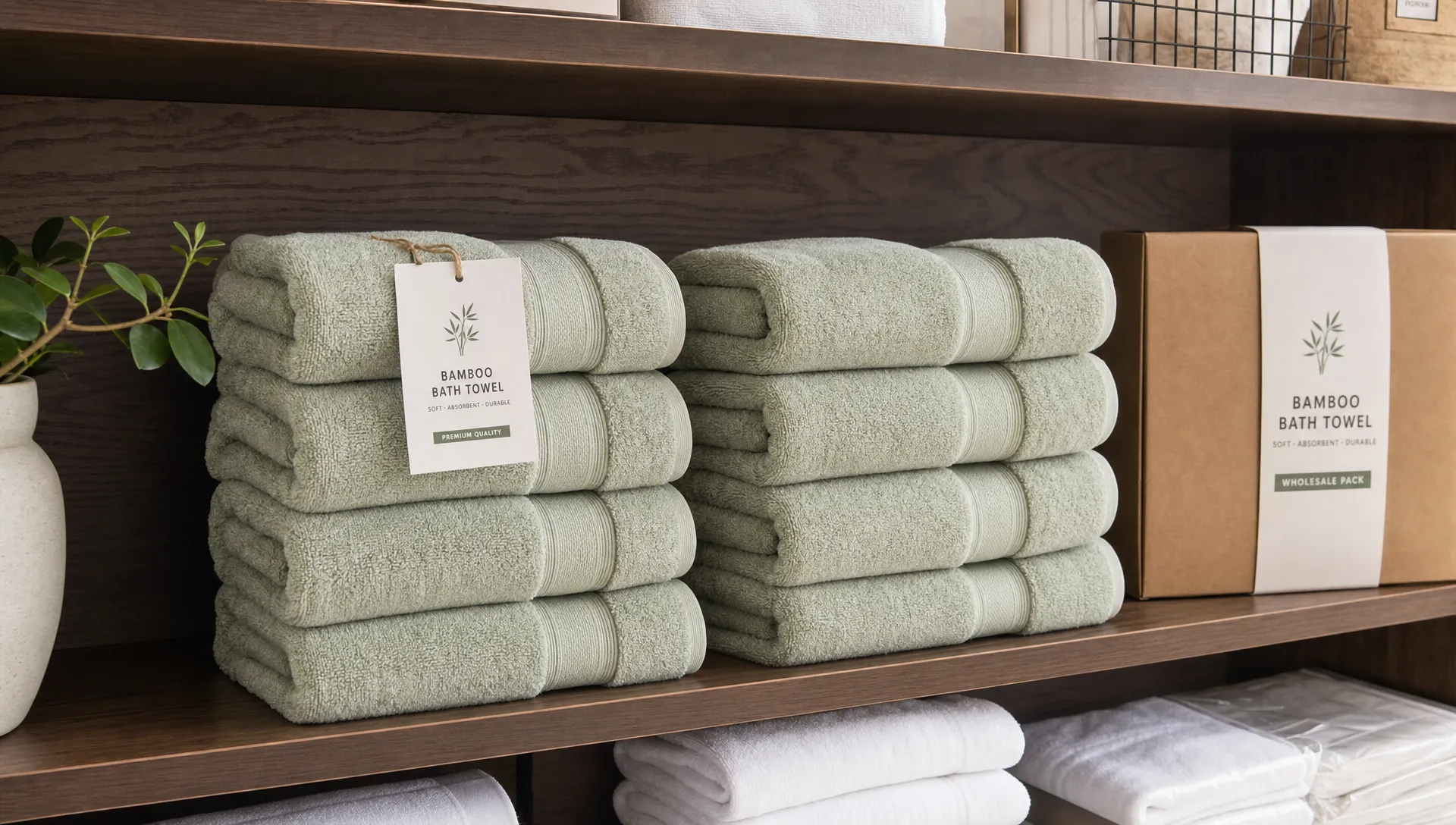
A practical approval process should include a retained reference sample at the factory and with the buyer. Both sides should refer to the same sealed sample if there is a dispute during inspection.
| QC checkpoint | What buyers should confirm | When to check |
|---|---|---|
| Pre-production sample | Size, GSM, blend, color, border, label and packaging | Before purchase order approval |
| Lab dip or strike-off | Color target for dyed towels | Before bulk dyeing |
| Inline inspection | Weaving defects, shade variation, towel weight and stitching | During production |
| Final inspection | Carton quantity, labeling, folding, packing, defects and measurements | Before shipment |
| Wash test | Shrinkage, linting, colorfastness and hand feel after laundering | Before bulk approval or during sampling |
Third-party lab testing may also be required for some buyers, especially brands selling through larger retailers or marketplaces. If your program needs testing against a specific standard such as OEKO-TEX Standard 100, confirm this requirement early and verify the certificate scope through the official OEKO-TEX label check process.
Questions to ask before accepting a wholesale quote
Price comparison only works when every supplier is quoting the same item. If one factory quotes a 500 GSM bamboo-cotton towel with basic packaging and another quotes a 650 GSM towel with retail bands and custom labels, the lower price may not be the better offer.
Before accepting a quote, clarify these points:
- What is the exact fiber composition and legal label wording?
- Is the quoted GSM before or after finishing?
- What is the finished towel size after washing?
- Does the price include custom labels, packaging, inserts or carton marking?
- What sample type will be provided before bulk production?
- What inspection process is included before shipment?
- Which Incoterms, port and export documents are included in the quote?
- What is the expected production lead time after sample approval?
This is also where buyers should discuss MOQ. Minimum order quantity can vary by towel size, color, GSM, yarn, packaging and whether the order uses an existing construction or a fully custom development. Dyed towels and private-label packaging often require higher planning discipline because lab dips, trims and print materials add steps to the timeline.
Packaging and private-label details buyers often miss
Packaging is not just a presentation choice. It affects carton cube, freight cost, barcoding, retailer compliance, warehouse handling and customer experience. A towel packed for a hotel laundry program may only need bulk cartons and clear carton marks. A retail towel may need a belly band, insert card, barcode, hang tag, care label and brand packaging.
For private-label bamboo bath towels, buyers should prepare artwork and label requirements early. The care label should match the approved fiber composition and destination market. Carton marks should match the packing list and purchase order. If towels are sold online, packaging may also need to protect the towel during parcel handling while still presenting the product clearly.
Extreme Towel offers custom packaging as part of its manufacturing support, which can be useful for wholesalers and distributors that need private-label presentation for multiple markets. If your brand also plans bamboo bedroom products, the company’s bamboo bedding sets manufacturer in Pakistan page shows how bamboo product programs can extend beyond towels.
Market considerations for the USA, Canada, Europe and beyond
Different markets value different towel features. U.S. and Canadian buyers often focus on clear claims, retail packaging, competitive landed cost and consistency across repeat orders. European buyers may place more emphasis on labeling discipline, chemical compliance and lower-impact sourcing documentation. Japanese buyers often expect precise finishing, compact presentation and consistent quality. Australian and South African buyers may pay close attention to freight efficiency because distance affects landed cost.
These are commercial patterns, not fixed rules. A luxury spa in France and a resort group in Australia may have similar expectations, while a discount retailer and a boutique hotel in the same country may require very different towels. The buyer’s job is to translate end-customer needs into measurable specifications.
For hotel and hospitality buyers, laundering conditions should be discussed before production. A towel that performs beautifully in a home laundry cycle may behave differently under industrial washing, high heat drying or bleach exposure. If the towels will be used in hotels, spas or gyms, tell the manufacturer how they will be washed.
Choosing a bamboo towel manufacturer in Pakistan
Pakistan is a well-established textile manufacturing and export country, and many international buyers source towels, bathrobes, hotel linen and bedding from Pakistani suppliers. Still, choosing the right factory requires more than asking for a product catalog.
Buyers should evaluate whether the supplier understands terry towel construction, export documentation, private-label requirements and quality control. They should also confirm that the factory can communicate clearly during sampling, production and inspection. Small misunderstandings around GSM, shade, label wording or packing can become expensive once goods are already produced.
If you are comparing suppliers, the same due diligence used for conventional towel programs applies to bamboo towels. Extreme Towel’s guide on what buyers should check at a towel factory in Pakistan covers factory evaluation points that are relevant before placing any bulk towel order.
How to build a sourcing brief for bamboo bath towels
A good sourcing brief helps the manufacturer quote accurately and reduces back-and-forth. It also gives your team a document to compare suppliers fairly. At minimum, include the towel type, size, GSM, composition, color, target market, packaging, label requirements, expected order volume and quality expectations.
If you do not know the ideal blend yet, state the use case instead. For example, “premium spa towel for retail sale in Germany” gives a supplier more direction than “send bamboo towel price.” A capable manufacturer can then suggest constructions that fit the intended market, but the final approval should still be based on samples, tests and written specifications.
For repeat programs, keep a technical file for each towel SKU. This file should include approved sample photos, GSM, size tolerance, label copy, packaging artwork, carton quantity, inspection criteria and previous shipment notes. Over time, this reduces mistakes and makes reorders smoother.
Frequently Asked Questions
Are bamboo bath towels better than cotton towels? Bamboo bath towels can feel softer and more silky than many standard cotton towels, but “better” depends on the use case. Hotels may prioritize durability and laundering performance, while retail customers may prioritize softness and presentation.
What is the best GSM for bamboo bath towels? Many wholesale buyers choose 500-600 GSM for a balanced bath towel, while premium programs may use 600 GSM or higher. The best GSM depends on target price, drying time, freight cost and customer expectations.
Can bamboo towels be labeled as eco-friendly? Only if the claim is accurate and supported. Bamboo-derived fibers such as viscose or rayon involve processing, so buyers should avoid broad sustainability claims unless they have relevant documentation, certifications or test reports.
What should importers check before bulk production? Importers should approve a full pre-production sample, confirm fiber labeling, test washing behavior, review packaging artwork and set inspection criteria before production starts.
Are bamboo-cotton blend towels good for hotels? They can be, provided the construction is designed for repeated laundering. Hotel buyers should test shrinkage, linting, absorbency and colorfastness under realistic laundry conditions before committing to bulk orders.
Work with a textile manufacturer that understands wholesale requirements
Bamboo bath towels can be a profitable wholesale product when the specification, claim strategy and quality process are clear from the beginning. The strongest programs are built on verified fiber composition, realistic GSM selection, approved samples and disciplined production checks.
Extreme Towel manufactures premium terry towels, hotel linen, bamboo bedding and bathrobes in Pakistan for hotels, hospitality brands, wholesalers, distributors and private-label customers worldwide. If you are planning a custom bamboo towel program, share your target size, GSM, blend, packaging and order requirements with Extreme Towel to discuss OEM manufacturing, bulk production and export support.