A strong retail bedding range does more than fill shelf space. It gives shoppers a reason to trust your brand night after night, then reorder the same fit, feel and color with confidence. For retailers, distributors and private-label brands, that means treating custom bedding as a program rather than a one-time product order.
A custom bedding program connects product development, sourcing, quality control, packaging, forecasting and export planning into one repeatable system. That system matters whether you sell in the USA, Canada, Europe, Japan, Australia or South Africa, because bedding expectations change by market, mattress size, climate, price point and retail channel.
The goal is not to create endless variations. The goal is to build a focused range your customers understand, your suppliers can manufacture consistently and your operations team can scale without chaos.
Start with the role bedding plays in your retail brand
Before choosing fabrics or colors, define what your bedding range should do for your business. A retailer selling everyday essentials needs a different program from a premium home brand, hotel supplier or department-store private label. Your answer shapes everything that follows, from yarn selection to packaging format.
A useful starting point is to clarify your brand promise. Are you offering affordable durability, natural comfort, boutique-hotel styling, sustainable materials or hard-to-find sizes? Custom bedding works best when every specification supports that promise.
Retailers can learn from adjacent premium categories too. A specialty food shop such as Beef Boutique's restaurant-quality meat assortment makes a complex quality story easier to shop by grouping products around use case, cut and taste. Bedding can be merchandised the same way: customer need first, technical proof second.
For example, a bedding range can be structured around cooling sleep, hotel-style crispness, easy-care family use or luxury softness. Those stories are easier for customers to compare than raw specifications alone.
Build a clear product architecture
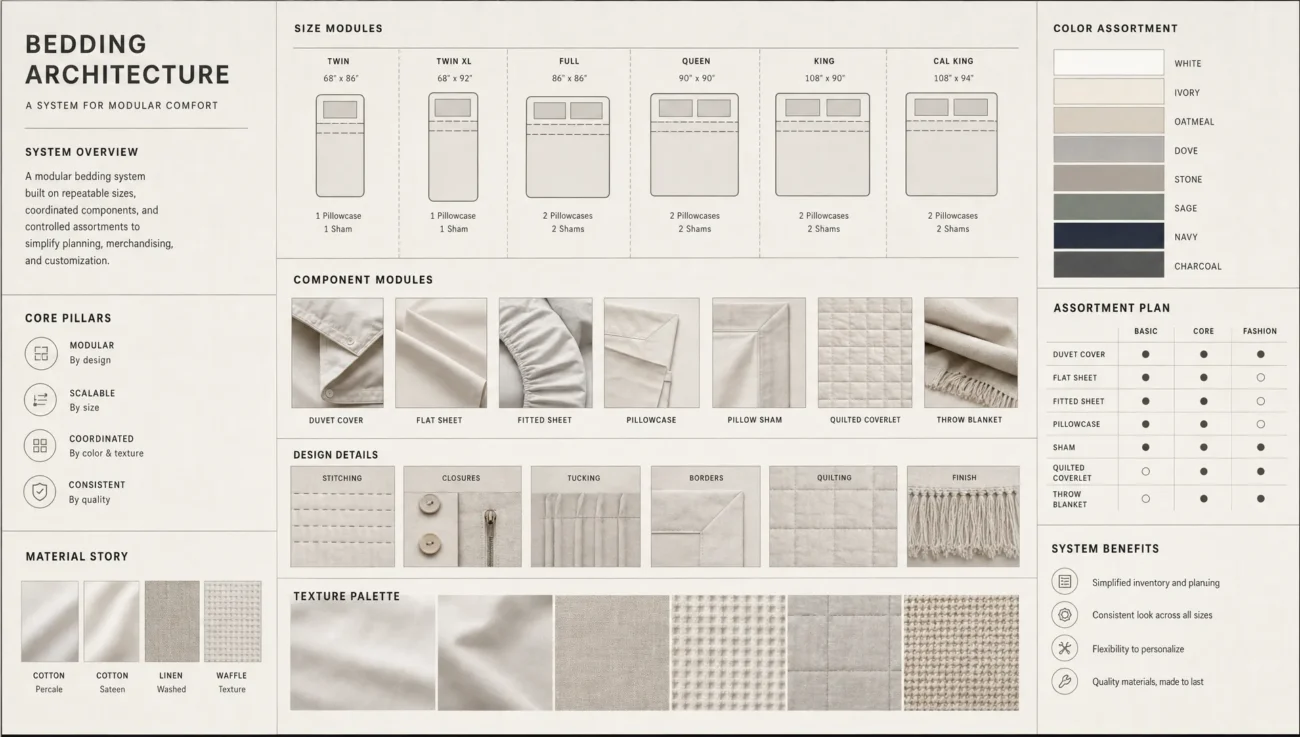
A custom bedding program needs a disciplined assortment plan. Too few options limit your sales potential, but too many SKUs increase inventory risk, sampling cost and production complexity. The best architecture usually starts with a core range, then adds premium or seasonal lines only where demand is clear.
| Range tier | Typical retail role | Specification focus | Best use case |
|---|---|---|---|
| Core essentials | High-volume repeat sales | Durable weave, easy care, stable sizing | Everyday bedding customers |
| Premium comfort | Higher margin and brand differentiation | Softer hand feel, refined finishing, elevated packaging | Gift sets, lifestyle retail, premium e-commerce |
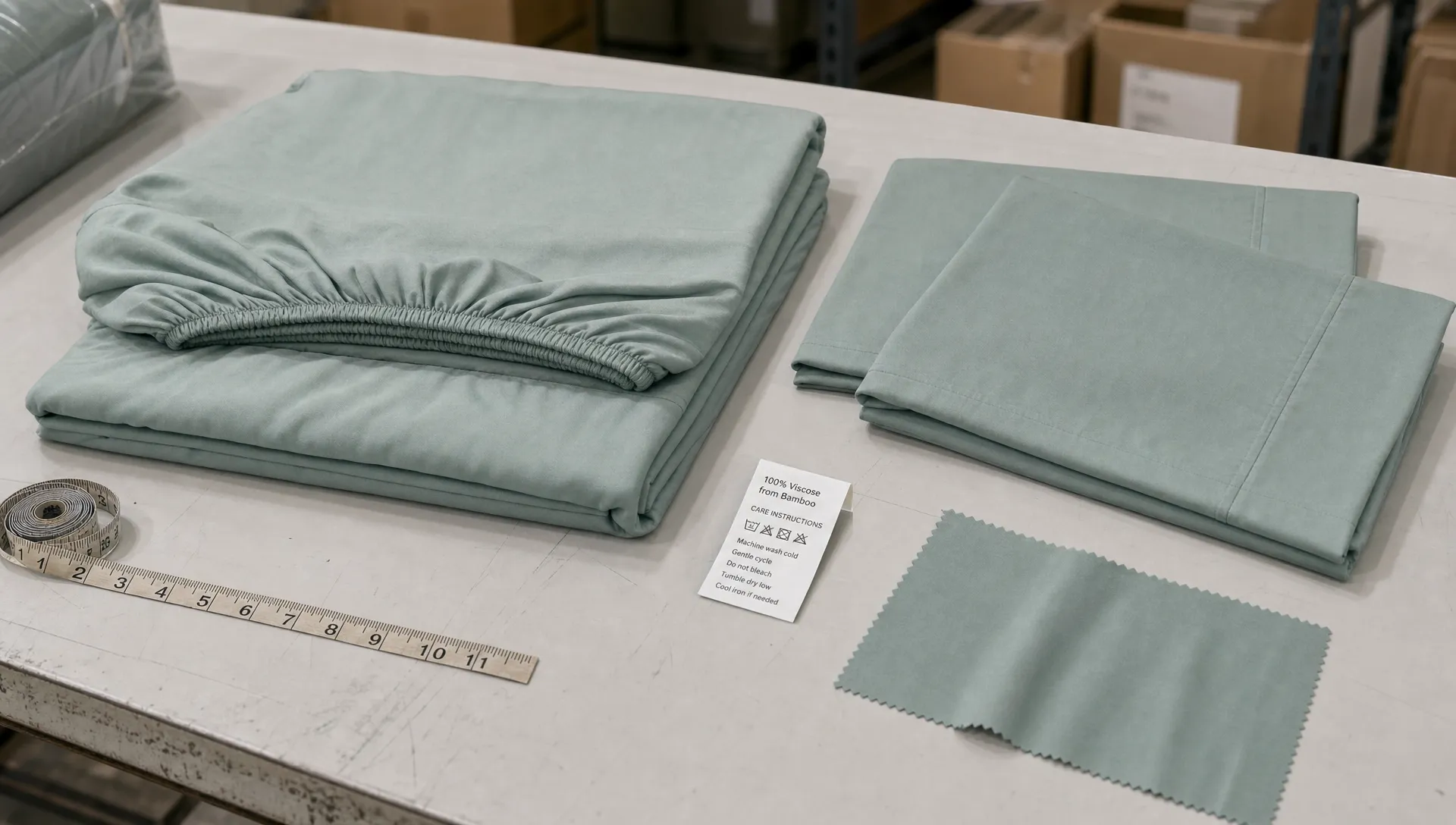
| Natural or specialty | Material-led positioning | Bamboo viscose, cotton-rich blends or other defined fibers | Cooling, softness or sustainability-focused shoppers |
| Hospitality-inspired | Commercial durability with retail appeal | Strong seams, consistent laundering performance, neutral colors | Hotel suppliers and retail customers seeking hotel comfort |
This structure also helps with purchasing. You can place larger orders on core colors and sizes, then test smaller seasonal capsules without locking too much capital into slow-moving inventory.
If your brand is exploring natural softness as a point of difference, Extreme Towel's work as a bamboo bed sheets manufacturer is relevant for private-label buyers comparing fiber options for bedding collections.
Turn the brand promise into technical specifications
Once the range architecture is clear, translate it into a technical product brief. This is where many custom bedding projects succeed or fail. A vague request for soft sheets or luxury bedding leaves too much room for interpretation. A strong brief tells the manufacturer what to make, how it should perform and how it should be packed.
Your specification sheet should cover fabric composition, yarn count or construction, weave, finished size, pocket depth, elastic style, stitching, shrinkage tolerance, color standard, labels, packaging and carton requirements. It should also define whether the product is sold as individual pieces or as a set.
Thread count deserves careful handling. Higher thread count does not automatically mean better bedding. Fiber quality, yarn construction, weave density, finishing and laundering performance all influence the final product. A crisp percale and a smooth sateen can both be premium, but they deliver different sleep experiences. Your product copy and retail displays should explain that difference in shopper-friendly language.
Color planning is another practical decision. White, ivory, gray and other neutral shades are easier to replenish across seasons, while fashion colors can create excitement but require tighter inventory control. For international retail, neutral palettes often simplify forecasting across multiple markets.
Design sizes for the markets you actually serve
Bedding size names are not universal. A queen, king or double can vary by country and channel, and customers are unforgiving when sheets do not fit. Retailers selling across North America, Europe, Japan and Australia should build a size matrix before sampling begins.
This is especially important for fitted sheets. Mattress height, toppers and modern deep-pocket designs affect fit as much as length and width. If sizing is central to your brand, Extreme Towel's guide to custom size bed sheets explains how better measurements can reduce fit issues for hotels, wholesalers and private-label bedding lines.
| Market or channel | Sizing consideration | Program implication |
|---|---|---|
| USA and Canada | Queen and king dominate many retail assortments, with Twin XL demand in student and hospitality channels | Prioritize high-volume sizes and define pocket depth carefully |
| Germany, Poland, France, Spain and the Netherlands | Centimeter-based sizing, duvet dimensions and pillow formats may vary by country | Build market-specific size charts rather than translating names only |
| Japan | Compact living spaces and local bed formats can influence size demand | Confirm local measurements before producing imported retail packs |
| Australia | Local bed size names and dimensions may differ from North American standards | Use finished measurements, not name matching, in all purchase orders |
| Hospitality and wholesale | Mattresses often include toppers or protectors | Test fit on the full sleep system, not the mattress alone |
A good manufacturer can work from exact measurements, but the retailer must decide which measurements make sense commercially. Every added size increases SKU count, photography needs, packaging versions and inventory planning.
Sample in stages, not all at once
Sampling is not a formality. It is the cheapest time to catch problems. A staged sampling process helps your team approve the right product before bulk production begins.
Start with fabric hand-feel swatches or fabric options, then move to lab dips for color approval. Next, request fit samples for each construction type, especially fitted sheets, duvet covers and pillowcases. After adjustments, approve a pre-production sample that reflects the final fabric, stitching, labels and packaging.
Keep one approved sample in your office and one with the manufacturer. Both teams should refer to the same standard during production and final inspection. If a dispute occurs, the approved sample and written specification sheet prevent guesswork.
Plan pricing, MOQ and margins early
Custom bedding pricing is shaped by fabric choice, construction complexity, size mix, packaging, order quantity and inspection requirements. Premium packaging, multiple colors, deep fitted sheets and small split orders can all increase cost. Retailers should model landed cost before finalizing the line.
Avoid building a program around a single target cost without understanding the trade-offs. If a price point is fixed, decide which attributes are non-negotiable and where flexibility is acceptable. For example, you may protect fabric quality and fit while simplifying packaging or reducing the number of launch colors.
| Cost driver | Why it matters | Practical decision |
|---|---|---|
| Fabric composition | Affects hand feel, durability and positioning | Match material to the shopper promise |
| Size mix | Larger sizes use more fabric and can affect cutting efficiency | Forecast size demand by market |
| Packaging | Influences shelf appeal, freight weight and retail compliance | Design packaging after confirming channel needs |
| Color count | Adds dyeing, lab dip and inventory complexity | Launch with proven neutrals, then add seasonal colors |
| Order quantity | Impacts production planning and unit economics | Align MOQ discussions with realistic sell-through |
For private-label programs, the best margin decisions usually happen before sampling, not after the product is already developed.
Make quality control operational
Quality control should be built into the program, not added at the end. For custom bedding, the main risks are inconsistent sizing, shade variation, seam weakness, shrinkage, pilling, loose threads, packaging errors and labeling mistakes.
A practical QA plan includes raw material checks, in-line production review and final inspection before shipment. Many retailers also use an AQL-based inspection approach for bulk orders, but the exact plan should match the product risk, order value and customer expectations.
For bedding, inspection points commonly include finished measurements, fabric defects, seam appearance, color consistency, elastic strength, button or zipper function where applicable, label accuracy, folding method, barcode placement and carton markings. If your brand sells online, packaging consistency matters because the unboxing experience becomes part of the review.
Prepare packaging, labeling and export requirements
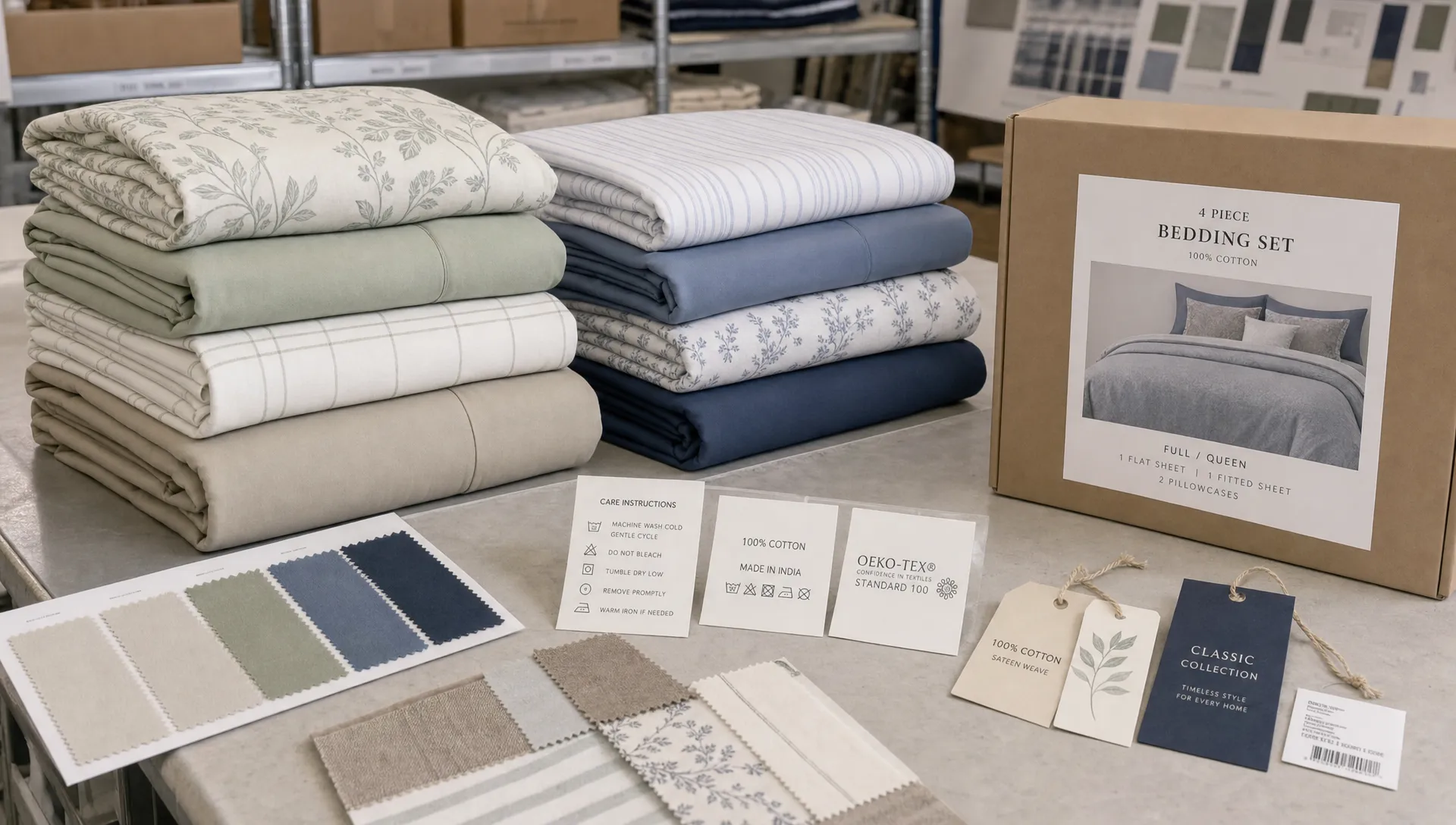
Packaging is not only a design choice. It protects the product, supports retail presentation and helps warehouses identify SKUs quickly. A custom bedding program may require inserts, belly bands, fabric bags, printed cartons, barcode labels, care labels and country-specific compliance information.
Textile labeling rules vary by market. Retailers should confirm requirements for fiber content, care instructions, country of origin, importer details and language before production. The U.S. Federal Trade Commission, European Union regulations and local authorities in markets such as Canada, Australia and Japan each have their own expectations. Your supplier can support production and documentation, but the brand owner should verify legal obligations for each selling region.
Custom packaging also affects freight. Bulky boxes may look premium on a shelf but reduce carton efficiency. Compressed or compact packaging can improve logistics, but it must not damage the product or create wrinkles that make the bedding look low quality when opened.
Choose a manufacturer that can scale with the program
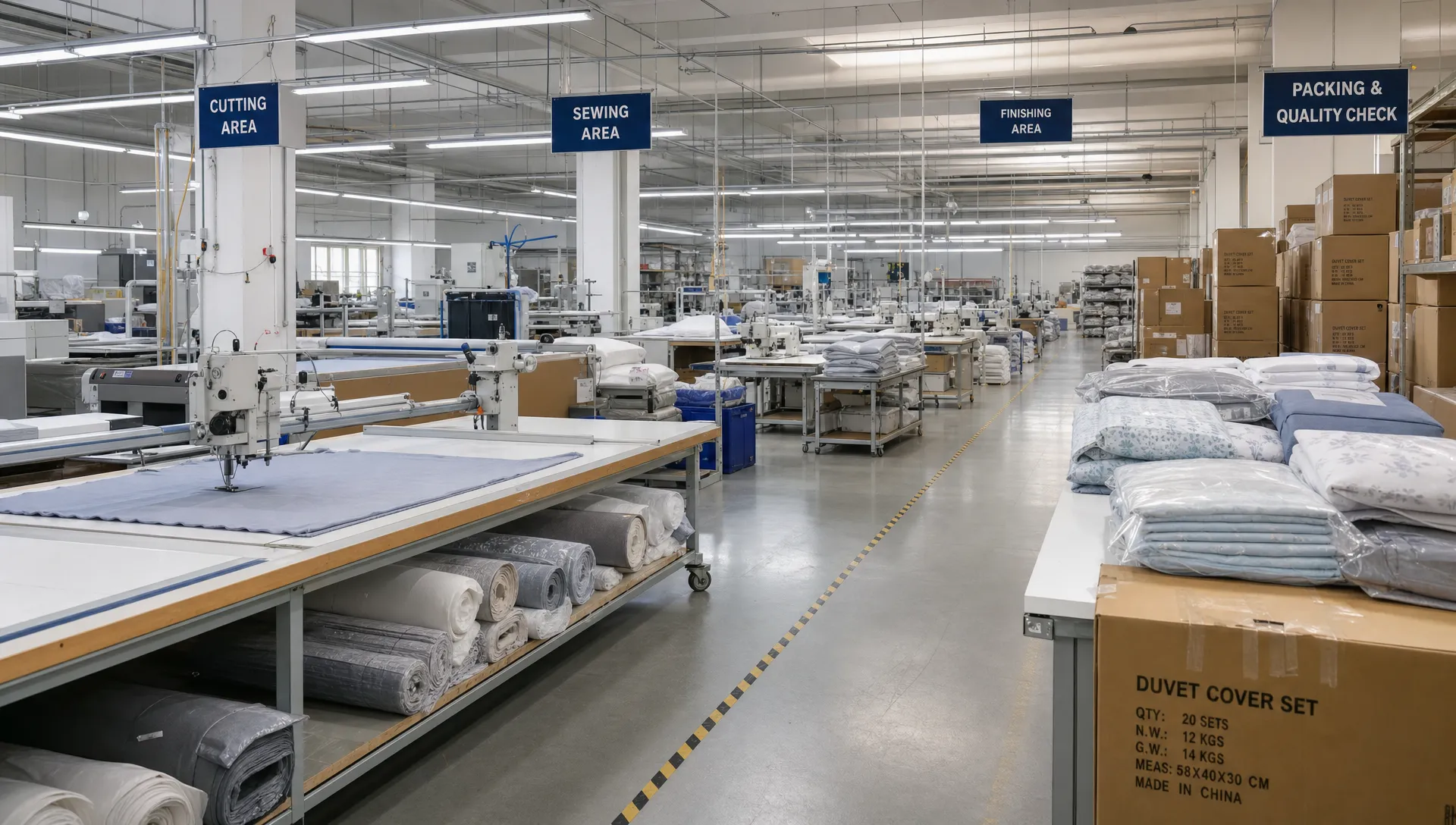
A custom bedding program needs more than a supplier that can quote a sheet set. You need a manufacturing partner that understands product development, bulk production, quality checks, packaging and export coordination.
When evaluating partners, look at technical capability, communication speed, sampling discipline, raw material sourcing, production capacity and experience with your target channel. Retail bedding requires different thinking from one-off promotional textiles, especially when repeat orders must match the first shipment.
If you are still shortlisting options, Extreme Towel's guide on how to choose private label bedding manufacturers gives a useful framework for comparing capability, sampling and supplier reliability.
As a Pakistan-based textile manufacturer and exporter, Extreme Towel supports OEM manufacturing, bulk production, private-label customization, quality control inspections, custom packaging and global export service for bedding and related textile categories. Those capabilities are especially relevant when a retailer wants one manufacturing partner to support both product development and repeat supply.
Launch with controls, then improve with data
The launch plan should be as structured as the product brief. Start with a controlled range, track sell-through by size and color, collect return reasons and review customer feedback before expanding. Bedding returns often reveal practical issues such as fit confusion, color expectation gaps or care-instruction misunderstandings.
For e-commerce, product pages should show finished dimensions, pocket depth, fabric composition, weave type, set contents, care instructions and close-up fabric photos. For brick-and-mortar retail, packaging should make the same information visible without overwhelming the shopper.
After the first shipment sells through, review what changed between plan and reality. Did one size outsell expectations? Did customers ask for extra pillowcases? Did a color look different under store lighting? Did packaging protect the product during transit? These answers should guide the next production run.
A bedding program becomes more profitable when each reorder is smarter than the last.
Frequently Asked Questions
What is a custom bedding program? A custom bedding program is a planned retail range built around defined sizes, fabrics, colors, packaging, quality standards and repeat-order processes. It is broader than ordering a single bedding product because it covers the full path from product brief to retail launch.
How many SKUs should a retail bedding brand launch with? The right SKU count depends on market, budget and sales channel. Most brands benefit from starting with core sizes and neutral colors, then expanding once sell-through data shows which products deserve more depth.
Is bamboo bedding a good option for private-label retail? Bamboo bedding can be a strong option when your brand promise focuses on softness, comfort and a naturally positioned sleep experience. The final product quality depends on fabric construction, finishing, sizing and quality control, not fiber choice alone.
How can retailers reduce bedding returns? Clear size charts, accurate pocket-depth information, honest fabric descriptions, consistent colors and care instructions can reduce preventable returns. Sampling and fit testing before bulk production are also essential.
What should be included in a bedding tech pack? A bedding tech pack should include fabric composition, weave, finished dimensions, construction details, stitching, labels, packaging, color standards, inspection requirements and carton markings. The more precise the document, the easier it is to reproduce the product consistently.
Build your custom bedding program with Extreme Towel
If your retail brand is ready to develop custom bedding for wholesale, private label or hospitality-inspired retail collections, work with a manufacturing partner that understands both product quality and export execution.
Extreme Towel manufactures and exports premium textile products from Pakistan, including bedding, hotel linen, towels and bathrobes. The team supports OEM manufacturing, bulk orders, private-label customization, quality control inspections and custom packaging for brands serving international markets.