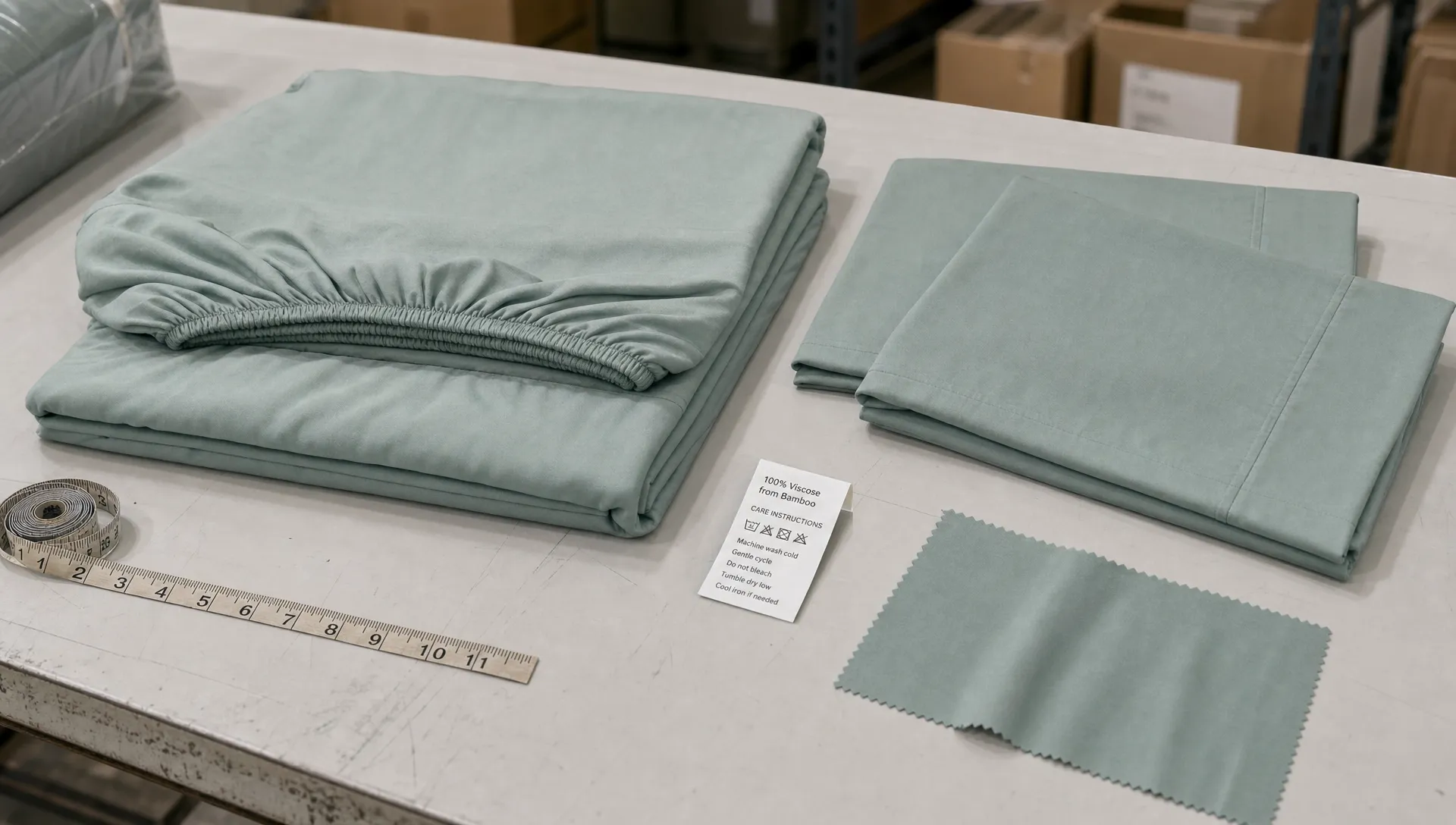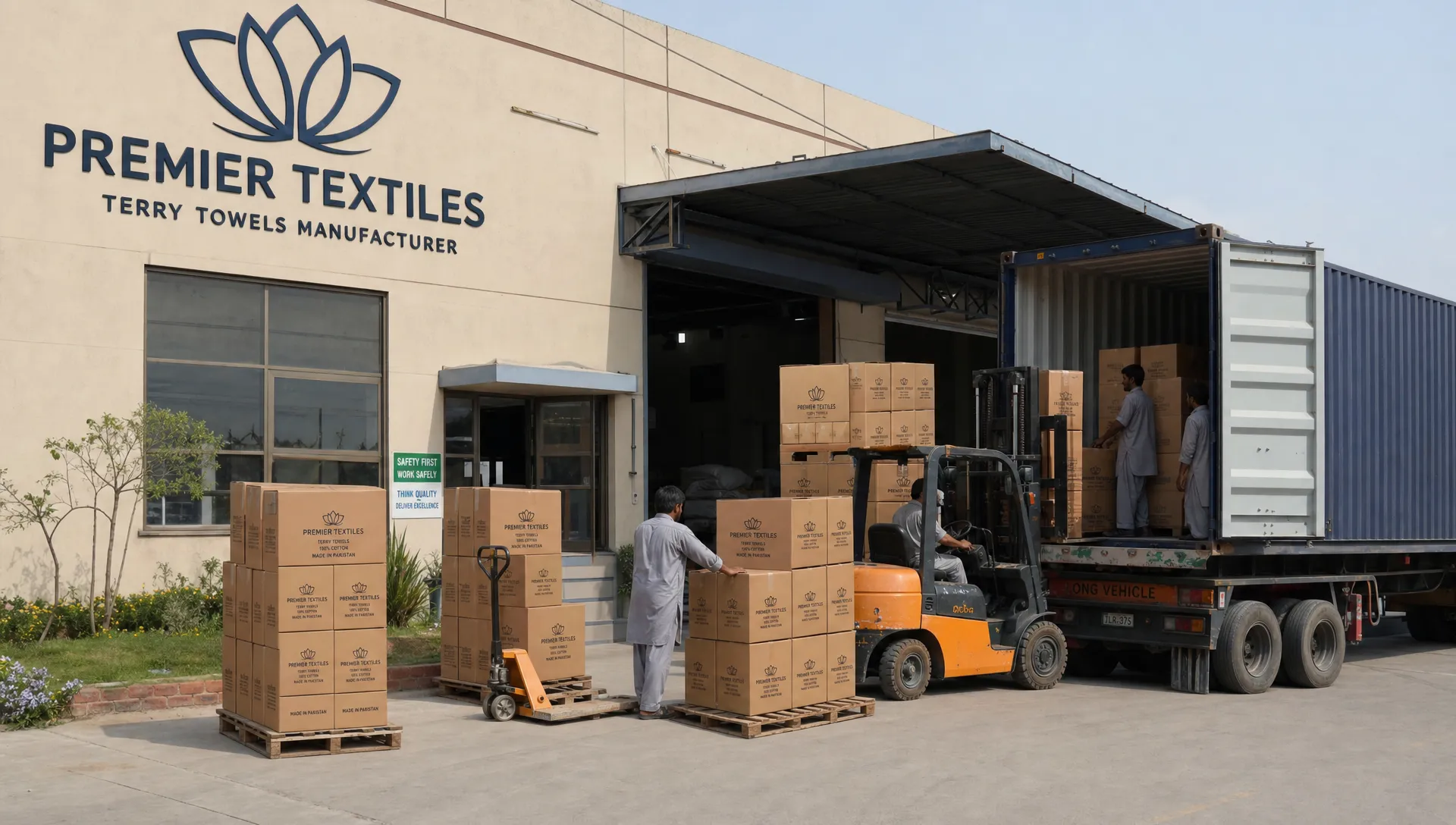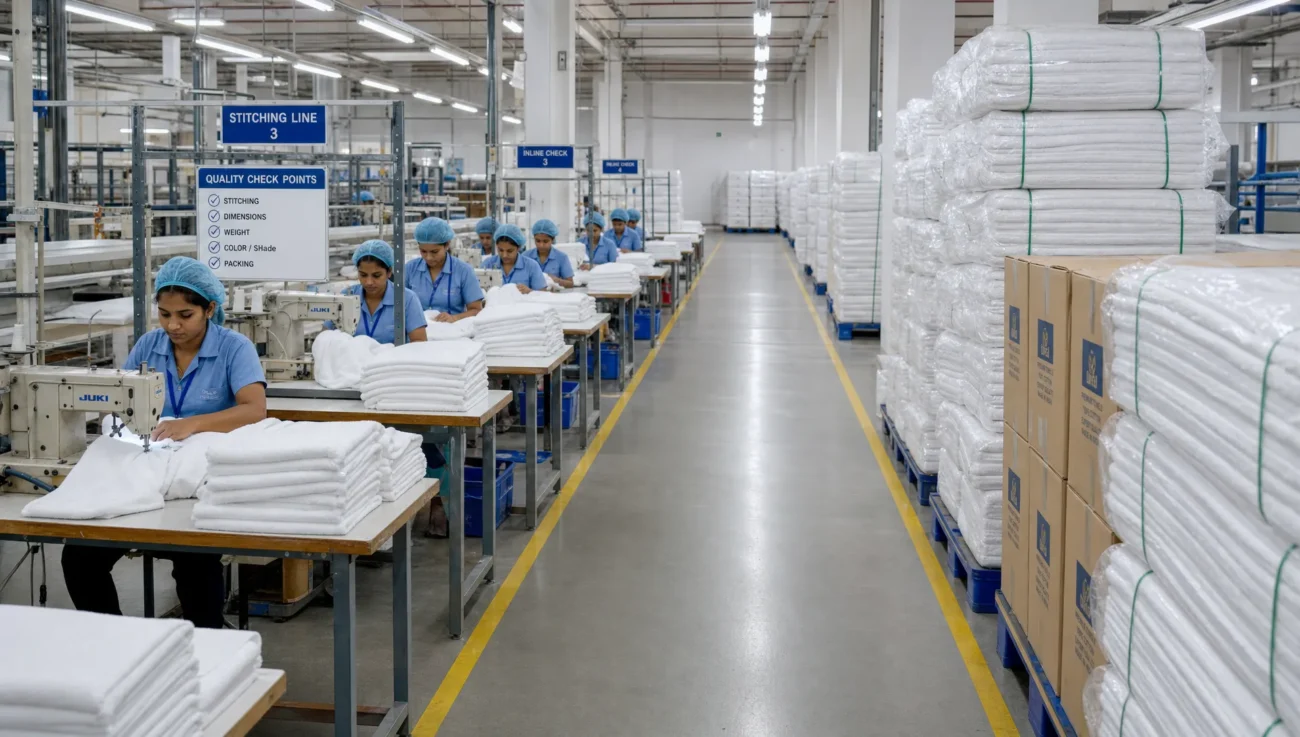
Choosing a towel factory in Pakistan is not only a price decision. For importers, hotel groups, wholesalers, distributors and private-label brands, the real question is whether the factory can deliver the same quality across thousands of pieces, meet your compliance requirements and ship on schedule without surprises.
Pakistan has a strong textile manufacturing base, and many buyers source terry towels, hotel linens, bathrobes and bedding from the country because of its cotton supply chain, export experience and OEM capabilities. Still, not every supplier is suitable for every buyer. A hotel chain in Germany may need OEKO-TEX documentation and repeatable white towel quality, while a distributor in Canada may care more about carton labeling, barcode packaging and mixed-size bulk orders.
This guide explains what buyers should check when evaluating a towel factory in Pakistan, whether you are visiting in person, arranging a remote audit or reviewing a supplier before placing your first bulk order.
Start with the factory's product fit
Before discussing price, confirm that the factory actually specializes in the towel category you need. A supplier that performs well with promotional towels may not be the right match for luxury hotel towels. A factory focused on hotel terry may not have the same setup for bamboo bedding, bathrobes or microfiber products.
Ask what the factory produces regularly, not only what it can theoretically make. Regular production usually means the team already understands the fabric behavior, shrinkage patterns, finishing requirements, packing standards and common buyer expectations for that category.
For towel buyers, product fit usually includes:
- Bath towels, hand towels, face towels and bath mats
- Hotel towels with consistent whiteness, absorbency and durability
- Dobby, jacquard, embroidered or private-label towel ranges
- Bathrobes, spa textiles and hospitality linen programs
- Stocklot availability for buyers who need fast-moving inventory
If your focus is hospitality, compare your needs with dedicated luxury hotel towel manufacturing capabilities rather than relying on a generic textile supplier. Hotels have different standards for wash durability, hand feel and repeat ordering than retail promo programs.
Review raw material controls
Towel quality begins before weaving. The fiber, yarn count, twist level and spinning method affect softness, absorbency, linting, durability and cost. A serious towel factory in Pakistan should be able to explain which yarns it uses and why they are suitable for your target market.
For premium terry towels, buyers often look for 100% cotton, combed cotton, ring-spun yarn or organic cotton where required. For budget or promotional towels, open-end yarn or blended constructions may be acceptable, but the tradeoffs should be clear. If the factory cannot explain the construction behind the price, it is difficult to compare offers fairly.
Ask for material details in writing, including fiber composition, yarn count, GSM, weave type, pile construction and finishing treatment. If the towels are marketed as organic, bamboo, recycled or certified, request supporting documentation and confirm that the certificate scope covers the specific material or product being offered.
Check technical specifications, not just samples
A sample can feel impressive, but bulk production must match measurable specifications. Buyers should define a spec sheet before ordering, then use it to check pre-production samples, production samples and final goods.
For towels, the most important technical points are size, GSM, absorbency, shrinkage, color fastness, linting and stitching quality. These details affect how the towel performs after repeated washing, especially in hotels, gyms, spas and laundries.
| Specification | What to check | Why it matters |
|---|---|---|
| GSM | Weight per square meter | Impacts thickness, absorbency, drying time and cost |
| Size tolerance | Finished towel size after washing | Prevents inconsistent shelf sets and hotel linen issues |
| Absorbency | Water uptake and wetting speed | Determines whether the towel performs well in daily use |
| Shrinkage | Dimensional change after laundering | Critical for hotels and commercial laundry programs |
| Color fastness | Resistance to washing, rubbing and bleaching where relevant | Reduces complaints about fading or staining |
| Linting | Fiber shedding during use and wash | Important for hospitality, spa and premium retail buyers |
| Stitching | Hem strength, seam consistency and loose threads | Affects durability and perceived quality |
Do not approve a sample based only on touch. Softness can be improved through finishing, but poor yarn, weak hems or unstable dyes may become obvious after several washes. For a repeat program, ask for wash-test results or run your own wash trial before bulk approval.
Inspect weaving, dyeing and finishing capabilities
A reliable towel factory should have strong control over its production stages, whether processes are handled in-house or through approved partners. The key issue is not always full vertical integration. The key issue is accountability and process control.
During a visit or audit, ask how the factory manages weaving, dyeing, bleaching, finishing, cutting, stitching, inspection and packing. If dyeing or finishing is outsourced, ask how batches are tracked and how the factory prevents shade variation between lots.
For white hotel towels, check whiteness consistency and bleaching control. For colored towels, ask how shade matching is handled against Pantone, lab dips or buyer-approved standards. For jacquard or dobby towels, inspect pattern clarity, border consistency and pile definition.
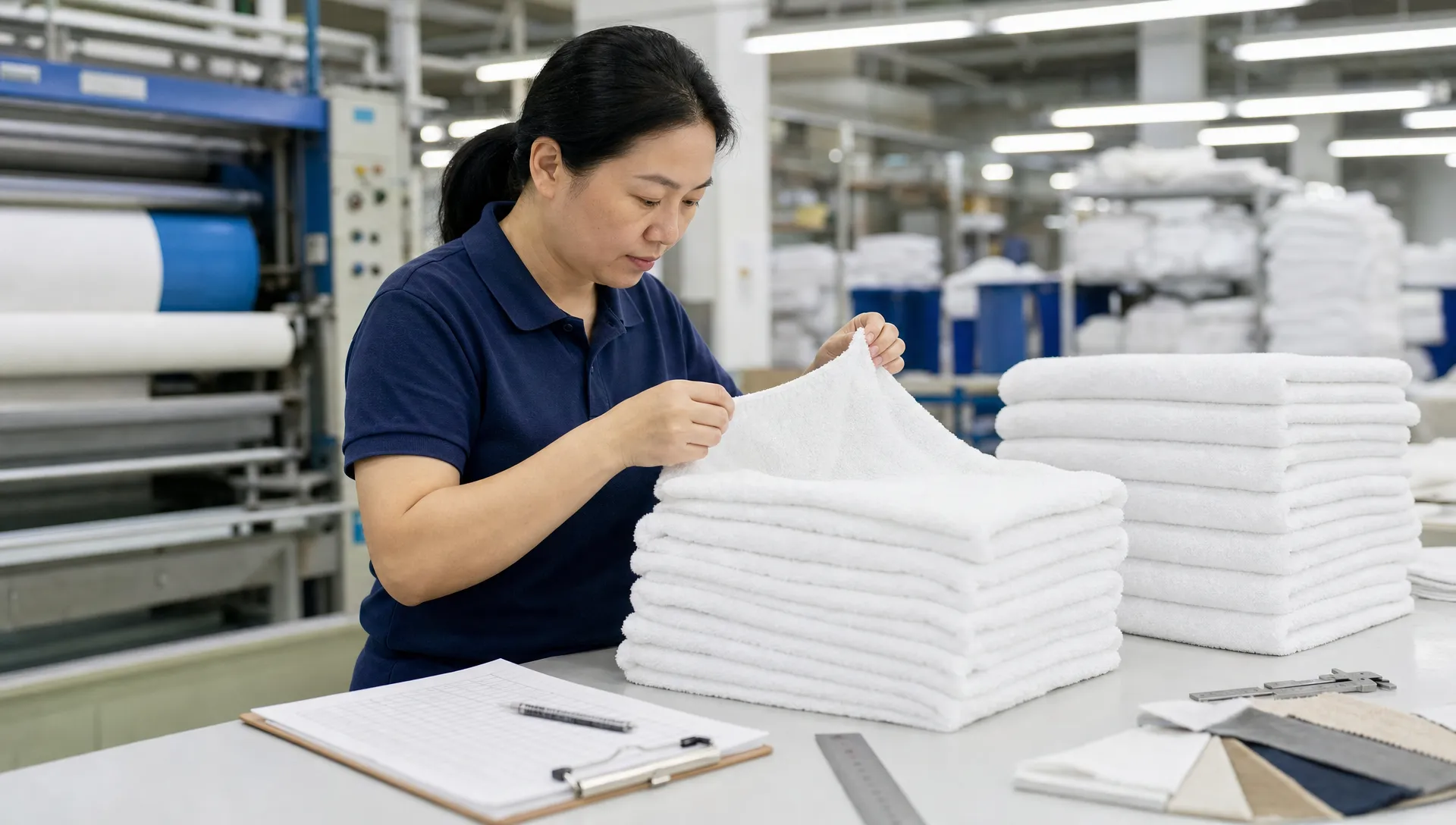
Finishing also deserves attention. A towel may look fluffy in the showroom but lose volume after washing if the finishing is not suitable for the end use. Buyers serving hotels, laundries and spas should prioritize practical durability over showroom softness.
Verify certifications and compliance documents
Compliance requirements vary by market. Buyers in Europe may focus on chemical safety, REACH expectations and OEKO-TEX documentation. Buyers in the USA, Canada, Japan, Australia and South Africa may have their own labeling, fiber content, flammability, packaging or customs requirements.
A factory should provide documents that can be verified, not just logos on a website or sales presentation. For OEKO-TEX, buyers can verify certificate validity through the official OEKO-TEX label check. If you are sourcing for hotels, Extreme Towel's guide on how to source OEKO-TEX certified towels for hospitality gives a more detailed framework for checking certification scope, sample testing and supplier claims.
Depending on your product and market, you may need to review:
- OEKO-TEX certification for tested textile safety
- GOTS or organic certification if organic cotton claims are made
- ISO 9001 or similar quality management documentation if requested by your company
- Social compliance audits such as BSCI, SEDEX, WRAP or buyer-specific audits where applicable
- Restricted substances declarations for EU and other regulated markets
- Fiber composition, care label and country-of-origin documentation
A certificate is useful only when it matches the factory, product category, material and validity period. If a supplier sends a certificate under another company name, expired documentation or a file that does not match the goods, request clarification before moving forward.
Evaluate the quality control system
Quality control should not happen only at final packing. By then, the factory may have already produced a large quantity of goods that are difficult to correct. A dependable towel factory in Pakistan should have checks at each key stage.
Ask how the factory inspects incoming yarn, greige fabric, dyed lots, stitched towels and packed cartons. Review the defect classification system and ask what happens when a batch fails inspection. A professional supplier should be comfortable discussing rework, rejection, shade segregation and corrective action.
For larger orders, buyers often use AQL inspection methods through their own team or a third-party inspection company. Even if you use an external inspector, the factory should still have internal quality control records. Final inspection is stronger when the factory has already caught obvious defects before the buyer's inspector arrives.
Common towel defects to check include uneven GSM, missing pile, stains, oil marks, shade variation, loose threads, poor hemming, skewed borders, weak embroidery, incorrect labels, bad folding and carton shortages.
Confirm customization and private-label capability
Many international buyers need more than standard towels. Private-label programs may require custom colors, woven labels, hangtags, barcodes, logo embroidery, dobby borders, jacquard designs, polybags, carton marks and pallet configurations.
A supplier offering OEM towel manufacturing should ask for your technical pack, artwork files, color standards, packaging requirements and target market. If the supplier quotes immediately without clarifying these details, the price may not include everything you expect.
For branding, ask to review previous examples of embroidery, woven labels, printed inserts and export cartons. Check whether the factory can follow retailer packaging manuals if you supply one. If your products will ship to multiple countries, confirm language requirements for care labels and packaging claims.
Custom packaging can add value, but it also creates room for errors. Barcodes, carton dimensions, inner pack quantities and label placement should be approved before mass packing begins.
Ask about capacity, lead time and order planning
A strong price is not helpful if the supplier cannot ship when your season, hotel opening or retail launch requires the goods. Capacity questions should be practical and specific.
Ask what production capacity is available for your category during your order window. Do not ask only for total factory capacity, since a factory may produce several product lines at once. You need to know how much of that capacity can be allocated to your order, with your construction, color range and packaging.
Discuss lead times for sampling, lab dips, pre-production samples, bulk production, inspection and shipping document preparation. If your order has multiple SKUs, colors or sizes, add time for approvals. A rushed approval process often causes more delays than a realistic schedule agreed at the start.
For repeat buyers, it is worth asking how the factory manages continuity. Can it maintain the same yarn source, dye recipe, GSM and labeling format for future orders? Repeatability is especially important for hotel groups and distributors who reorder the same towel range throughout the year.
Review export experience and documentation
International buyers should confirm that the factory understands export processes for their destination market. A Pakistan-based towel supplier may ship worldwide, but each buyer still needs accurate documentation and communication.
Ask which Incoterms the factory can support, such as FOB, CFR or CIF, depending on your buying model. Confirm how commercial invoices, packing lists, certificates of origin, inspection reports and any buyer-specific documents will be prepared. If you work with a freight forwarder, introduce the forwarder early so shipment details are aligned before production finishes.
Buyers from the USA, Canada, Europe, Japan, Australia and other markets should also confirm labeling and customs expectations with their own import broker. The factory can support documentation, but the importer is usually responsible for meeting destination-country requirements.
A supplier with real export experience should respond clearly to questions about carton markings, container loading, palletization, packing lists and shipping communication. If documentation is treated as an afterthought, shipment delays become more likely.
Compare pricing with a full cost view
When comparing offers from different towel factories, make sure each quote is based on the same specification. A lower price may reflect lower GSM, a smaller finished size, different yarn, simpler packaging, fewer quality checks or less expensive finishing.
Ask the supplier to break down what is included in the quote. At minimum, confirm product construction, size, GSM, color, logo method, packaging, carton quantity, Incoterm, sampling charges if any and document requirements. You do not need every internal factory cost, but you do need enough detail to compare like with like.
For hospitality and retail buyers, lifetime performance matters. A towel that fails after a few washes can cost more in complaints, replacements and brand damage than a slightly higher-priced towel with better durability.
Check communication quality before the order
Communication is a practical risk indicator. A factory that communicates clearly during inquiry and sampling is more likely to handle production issues professionally. Slow responses, vague answers or constantly changing details during the quotation stage should not be ignored.
Good supplier communication includes clear written specifications, realistic timelines, documented approvals and prompt notice if an issue appears. A professional factory should not hide production challenges. It should explain the problem, offer options and record the agreed solution.
Time zones can affect communication between Pakistan and buyers in North America, Europe, Japan or Australia. Set expectations for response times, meeting windows and approval deadlines at the beginning of the relationship.
Look for red flags during supplier evaluation
Not every warning sign means you should reject a supplier, but several warning signs together should slow the process. A factory audit exists to reveal problems before they become expensive.
Be cautious if a supplier refuses to provide basic specifications, avoids certificate verification, cannot explain raw materials, pushes for bulk approval without a proper sample or gives unusually low pricing without a clear reason. Also watch for inconsistent company names across documents, poor packing areas, weak recordkeeping and no clear person responsible for quality decisions.
If you cannot visit the factory, request a live video walkthrough, production photos, sample records and references where appropriate. You can also use a third-party inspection company for supplier verification, in-process checks or final inspection.
Use a simple factory evaluation scorecard
A scorecard helps buyers compare suppliers objectively. It also prevents the discussion from becoming too focused on unit price. You can adapt the categories below to your buying model.
| Area to evaluate | Key question | Suggested priority |
|---|---|---|
| Product expertise | Does the factory regularly produce the towel type you need? | High |
| Raw material control | Can it document yarn, fiber and fabric specifications? | High |
| Quality control | Are inspections done before final packing? | High |
| Compliance | Are certificates valid and relevant to your order? | High |
| Customization | Can it manage labels, logos, packaging and buyer manuals? | Medium to high |
| Capacity | Can it meet your volume and timeline realistically? | High |
| Export support | Does it understand documentation and shipment coordination? | Medium to high |
| Communication | Are answers clear, consistent and documented? | High |
| Price transparency | Is the quote based on a complete specification? | Medium to high |
This kind of scorecard is useful for wholesalers comparing several factories, hotel groups planning long-term supply and private-label brands building a new product line.
Prepare your buyer file before contacting factories
A well-prepared buyer usually receives better quotes and more accurate timelines. Before contacting a towel factory in Pakistan, prepare a short sourcing file with your requirements.
Include finished sizes, GSM, material, color standards, towel type, quantity per SKU, packaging style, logo requirements, certification needs, destination country, preferred Incoterm and target delivery date. If you have an existing towel sample, send clear photos and measurements, then ship a physical sample if the project is serious.
If you are unsure about the ideal specification, ask the factory for recommendations based on end use. For example, a hotel towel program, spa towel, retail gift set and budget wholesale towel may all require different constructions. Buyers looking at broader sourcing options can also review how a Pakistan-based towel and bathrobe exporter supports multiple product categories for international customers.
Frequently Asked Questions
What should I ask a towel factory in Pakistan before placing an order? Ask about product specialization, material specifications, GSM, size tolerance, quality control steps, certification documents, customization options, lead time, export documentation and packing requirements. Request written confirmation before approving bulk production.
How do I know if a towel supplier is reliable? A reliable supplier provides clear specifications, verifiable documents, consistent samples, realistic timelines, quality control records and transparent communication. You can also use factory audits, video walkthroughs and third-party inspections to reduce risk.
Should I visit the factory before buying towels in bulk? A visit is helpful for large or long-term orders, but it is not always required. If you cannot visit, request detailed samples, compliance documents, live video calls, production photos and independent inspection reports.
Which certifications matter when sourcing towels? OEKO-TEX is commonly requested for textile safety, especially in hospitality and retail. Organic claims may require GOTS or another recognized organic certification. The right certification depends on your market, product claim and customer requirements.
Why do towel prices vary so much between factories? Prices vary because of cotton quality, yarn type, GSM, size, finishing, dyeing, stitching, packaging, certification, order quantity and quality control standards. Always compare quotes against the same specification.
Work with a towel factory built for B2B buyers
The best towel factory in Pakistan for your business is the one that can match your quality expectations, compliance needs, branding requirements and delivery schedule, not simply the one with the lowest unit price.
Extreme Towel manufactures and exports terry towels, hotel linens, bamboo bedding and bathrobes for hotels, hospitality brands, wholesalers, distributors and private-label customers worldwide. If you need custom OEM manufacturing, bulk production, quality control support and export-ready packaging, you can start by sharing your towel specifications with Extreme Towel and building a sourcing plan that fits your market.