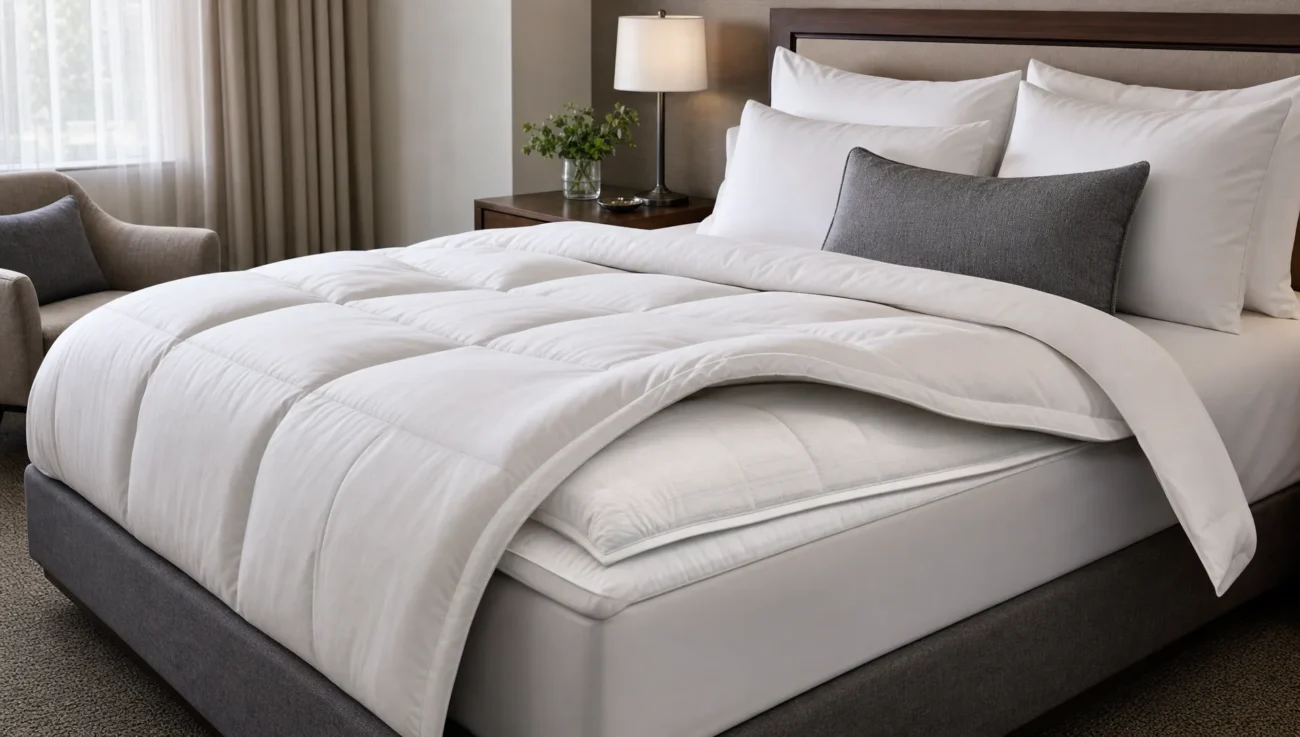
Hotel guests rarely think about the engineering behind a comforter. They notice whether the bed feels clean, warm, soft and quiet. Hotel operators, on the other hand, notice whether that same comforter survives repeat laundering, resists clumping, fits the bed after shrinkage and still looks presentable after dozens of room turns.
That is the balancing act behind hotel bed comforters: they must create a strong first impression for the guest and keep performing under commercial use. A residential comforter might be washed occasionally. A hotel comforter, duvet insert or quilted top layer is part of a high-frequency textile system that faces industrial washing, drying, handling, storage and constant inspection.
For hospitality buyers, the right choice is not simply the softest option in a sample room. It is the comforter that delivers the right sleep experience at the lowest realistic cost per use.
Why hotel bed comforters are different from home bedding
In a home, bedding is chosen around personal taste. In a hotel, bedding must satisfy many sleepers across many room types. It also has to work within housekeeping routines, laundry equipment, replacement budgets, storage space and brand standards.
A comforter that feels wonderfully plush but dries slowly can create operational bottlenecks. A lightweight comforter that lasts for years but feels flat may weaken the perceived quality of the room. The best hotel specifications usually sit between those extremes.
Hotels also buy bedding for different climates and markets. A resort in Spain or South Africa may prioritize breathable, lighter layering. A boutique property in Germany, Canada or the Netherlands may need better insulation through colder seasons. Properties in Japan or Australia may care more about compact storage, fast drying and easy handling across room categories. The product has to fit both the guest expectation and the property workflow.
Fill selection: the core of comfort and resilience
The fill determines much of the warmth, loft and feel of a comforter. It also influences drying time, allergen management, maintenance requirements and replacement cycles.
Down and feather fills are often associated with luxury because they offer excellent loft and a light, airy feel. However, natural fills can require more careful cleaning and handling. They may also raise sourcing, allergen and consistency concerns for some hospitality buyers.
Synthetic fills, especially polyester fiber fills, are widely used in commercial bedding because they are consistent, washable and easier to specify at scale. Modern microfiber fills can mimic some of the softness and loft guests associate with down while offering practical benefits for hotels that need predictable performance across hundreds or thousands of units.
The fill should not only feel soft on day one. It should recover its loft after compression, resist bunching inside the shell and maintain even coverage after laundering. A comforter that develops cold spots because the fill migrates to the edges will fail the guest experience even if the fabric shell still looks acceptable.
| Comforter component | Comfort contribution | Durability concern | What buyers should define |
|---|---|---|---|
| Fill type | Warmth, loft and weight | Clumping, compression and drying speed | Natural, synthetic or blended fill |
| Fill weight | Insulation and drape | Overheating, bulk and slow processing | Seasonal or all-season target |
| Shell fabric | Softness, breathability and noise level | Pilling, tearing and seam stress | Fiber blend, weave and finish |
| Quilting pattern | Even warmth distribution | Fill shifting and broken stitches | Box, channel or patterned quilting |
| Edge finishing | Shape retention and neat appearance | Fraying, seam opening and weak corners | Binding, piping or reinforced seams |
Shell fabric: the surface guests actually touch
Even when a comforter is used inside a duvet cover, the shell fabric still matters. It affects breathability, noise, fill containment, laundering performance and the way the comforter sits on the bed.
Cotton shells feel natural and breathable, which can be valuable for premium rooms. Polyester and polycotton blends can improve durability, drying speed and wrinkle resistance. Microfiber shells can feel smooth and soft, though buyers should evaluate whether they trap too much heat for the intended climate.
Thread count can be useful, but it should not be treated as the only quality signal. Yarn quality, weave, finishing and construction have a major impact on performance. A shell with a high thread count but weak yarns or poor seam strength may not withstand commercial washing. A moderate thread count fabric with better construction can often perform better in hotel operations.
For guest comfort, the shell should also be quiet. A noisy comforter can make the bed feel lower quality, especially in quiet rooms. For durability, the shell should resist abrasion, pilling and tearing around edges where housekeeping staff handle the bedding most.
Construction is where comfort becomes commercial-grade
A hotel comforter is not just fill inside fabric. The stitching pattern, seam quality and edge construction determine whether the fill stays evenly distributed.
Box stitching is common because it helps hold fill in place. Channel quilting can work well for certain designs, but the channels must be narrow enough to limit fill migration. Baffle box construction can create a plusher, loftier appearance, though it may increase cost and bulk. For high-volume hospitality use, simpler quilting patterns are often easier to launder, inspect and replace consistently.
Reinforced edges are especially important. Corners and borders face repeated pulling during bed making, stripping and loading into laundry equipment. Weak seams can open long before the main fabric wears out. In bulk procurement, this kind of failure is expensive because one small construction issue can repeat across an entire order.
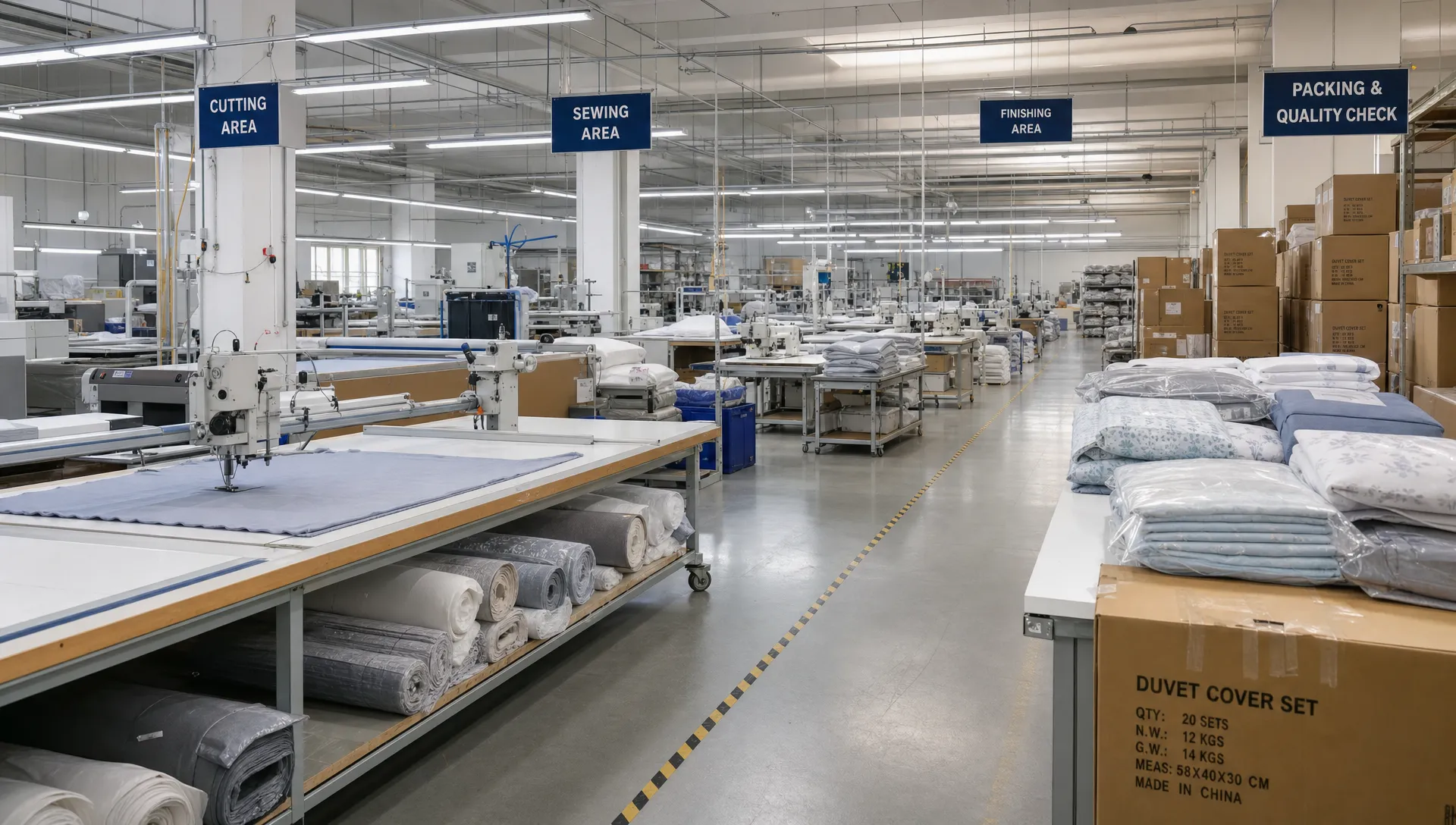
This is why buyers should evaluate comforter construction alongside broader textile compliance and testing practices. A supplier experienced in hospitality fabric manufacturing standards can help align fabric, stitching and finishing choices with the demands of hotel use.
Laundry performance is the real durability test
A comforter can look perfect in a showroom and still fail in a hotel laundry cycle. Commercial laundering exposes bedding to water, heat, detergent, mechanical action and drying stress. Over time, those forces reveal weaknesses in shell fabric, stitching and fill recovery.
Hotel buyers should test samples under realistic conditions before confirming a bulk order. This does not always require a complex laboratory process at the early stage. Even a controlled internal wash trial can reveal whether the comforter shrinks, loses loft, dries unevenly, develops pilling or changes shape.

Common performance checks include post-wash measurements, visual inspection of seams, loft recovery after drying, fill distribution and hand feel after repeated laundering. Buyers can also request relevant textile test information when commercial standards are part of the sourcing requirement. Depending on the market and product type, certifications such as STANDARD 100 by OEKO-TEX may support chemical safety expectations for textiles.
The goal is not to overcomplicate procurement. The goal is to avoid discovering preventable problems after the products are already in service.
Comfort and durability by hotel type
No single comforter specification suits every property. A luxury hotel, airport hotel, resort and serviced apartment may all need different balances of softness, warmth, laundering speed and cost control.
| Property type | Guest comfort priority | Durability priority | Practical specification focus |
|---|---|---|---|
| Luxury hotel | Plush loft, premium drape and quiet shell | Shape retention and appearance | Higher loft fill, refined shell and strong quilting |
| Resort | Breathability and lighter warmth | Fast drying and stain management | Lightweight fill, washable shell and easy layering |
| Business hotel | Consistent comfort across many rooms | High wash endurance and quick turnaround | Durable blends, standard sizing and reinforced seams |
| Extended stay | Home-like comfort and seasonal flexibility | Long service life and easy maintenance | Medium-weight comforter with practical care requirements |
| Boutique hotel | Distinctive room feel and elevated presentation | Reliable construction in smaller batches | Custom sizing, private-label finishing and controlled sampling |
This table is a starting point. The final specification should be shaped by climate, star rating, room rate, laundry model, storage capacity and brand positioning.
The role of weight, warmth and breathability
A comforter that feels luxurious in a cool sample room may feel too warm in a humid climate or a property with strong heating. Guest comfort depends on the full sleep system, including sheets, duvet covers, blankets, mattress protectors and HVAC settings.
For hotels, all-season comforters are appealing because they simplify purchasing. Yet all-season should not mean one product for every location. A hotel group operating in France, Poland and the USA may need different fill weights for different regions or seasons. Even within one country, coastal and mountain properties may require different bedding strategies.
Breathability is also important because overheating can disrupt sleep. A heavy comforter is not automatically better. The right comforter should provide a sense of comfort and coverage without trapping excessive heat. This is one reason many hotels use layered bedding systems, allowing guests or housekeeping teams to adjust warmth more easily.
Size, fit and bed presentation affect lifespan
Comforters that are too small look cheap and shift easily. Comforters that are too large may drag, bunch or create extra stress during bed making. Proper sizing protects both appearance and durability.
Buyers should account for mattress height, topper thickness, desired side drop and shrinkage after washing. They should also decide whether the comforter will be used as a visible top layer or as an insert inside a duvet cover. A visible comforter may need stronger aesthetic finishing and better stain resistance. An insert may prioritize fill stability, laundering and corner loop compatibility.
Inconsistent sizing creates hidden costs. Housekeeping teams spend more time adjusting beds, guest rooms look less uniform and replacement inventory becomes harder to manage. When sourcing broader bedding programs, working with a wholesale hotel linen manufacturer can help align comforters, sheets, pillowcases and related linen specifications across room categories.
Durability is also about cost per use
The cheapest comforter is not always the lowest-cost comforter. If it loses loft quickly, clumps after laundering or needs frequent replacement, the cost per occupied room rises.
Hotels should look at purchase price alongside expected service life, laundry efficiency, storage needs and replacement consistency. A more durable comforter may reduce emergency purchasing, guest complaints and mismatched bedding across rooms. This is especially important for wholesalers, distributors and hospitality brands serving multiple properties.
Cost control also depends on choosing the right specification rather than overbuying. A high-loft luxury comforter may be a smart choice for premium suites but unnecessary for a high-turnover economy property. Likewise, a very basic product may protect upfront budget but weaken guest perception. The best value comes from matching product quality to the room promise.
For a wider view of how textile specifications affect operating budgets, Extreme Towel has covered how commercial linen suppliers help hotels control costs through smarter durability and replacement planning.
How buyers should evaluate hotel comforter samples
Sampling should mirror real hotel conditions as closely as possible. A comforter should be judged after use, compression and washing, not only when it arrives from the supplier.
- Check initial hand feel, loft, weight and noise level.
- Wash and dry the sample several times using realistic laundry conditions.
- Measure shrinkage and confirm the comforter still fits the bed properly.
- Inspect stitching, edges and corners for seam stress or loose threads.
- Hold the comforter up to light and check whether fill distribution remains even.
- Compare drying time with your current laundry workflow.
- Review packaging, labeling and carton consistency for bulk handling.
These checks help purchasing teams compare options objectively. They also make conversations with manufacturers more productive because feedback can be tied to specific performance needs rather than general impressions.
Why customization matters for private-label and wholesale buyers
For private-label brands, wholesalers and distributors, the comforter is part of a broader product promise. Customization may involve dimensions, fabric selection, fill weight, quilting design, care labels, packaging and carton requirements. For hotels, customization may focus more on fit, durability, consistent white shade, branding standards and replenishment planning.
The best results usually come from a clear technical brief. Buyers should specify the market, property type, bed sizes, expected use, laundry conditions, packaging needs and quality expectations. The manufacturer can then advise where to improve comfort, where to reinforce durability and where to avoid unnecessary cost.
As a Pakistan-based textile manufacturer and exporter, Extreme Towel supports hotel linen, terry towels, bamboo bedding, bathrobes, OEM manufacturing, private-label customization, bulk wholesale orders, quality control inspections, custom packaging and global export service. For buyers comparing comforter programs as part of a complete hospitality bedding range, the most important first step is defining the performance target clearly.
Frequently Asked Questions
What makes hotel bed comforters more durable than home comforters? Hotel comforters are usually designed with stronger stitching, more practical shell fabrics, stable fill distribution and laundering performance in mind. They must withstand frequent washing, handling and storage.
Are down comforters better for hotels? Down can feel luxurious, but it is not always the best operational choice. Many hotels prefer synthetic or down-alternative fills because they are consistent, washable and easier to manage at scale.
How often should hotels replace comforters? Replacement timing depends on product quality, laundry frequency, guest use, staining, fill condition and brand standards. Hotels should inspect comforters regularly for clumping, odor retention, seam failure, shrinkage and loss of loft.
What is the best fill weight for hotel comforters? There is no universal best fill weight. The right choice depends on climate, HVAC settings, room category, guest expectations and whether the comforter is used alone or as part of a layered bedding system.
Should hotels use comforters or duvet inserts? Both can work. Comforters may be used as decorative or functional top layers, while duvet inserts are usually protected by removable covers. The better option depends on laundering workflow, brand style, hygiene protocols and replacement strategy.
Build bedding comfort that lasts
Hotel comforters succeed when they satisfy both sides of the business: the guest who wants restful sleep and the operator who needs dependable performance. Fill, shell fabric, quilting, sizing and laundry behavior all shape that balance.
If you are planning a hotel bedding, wholesale or private-label program, define your comfort goals and durability requirements before placing a bulk order. Extreme Towel can support hospitality buyers with custom textile manufacturing, quality control and export-ready production for international markets.
Start with a clear specification, test your samples carefully and choose hotel bed comforters built for real commercial use, not just showroom appeal.