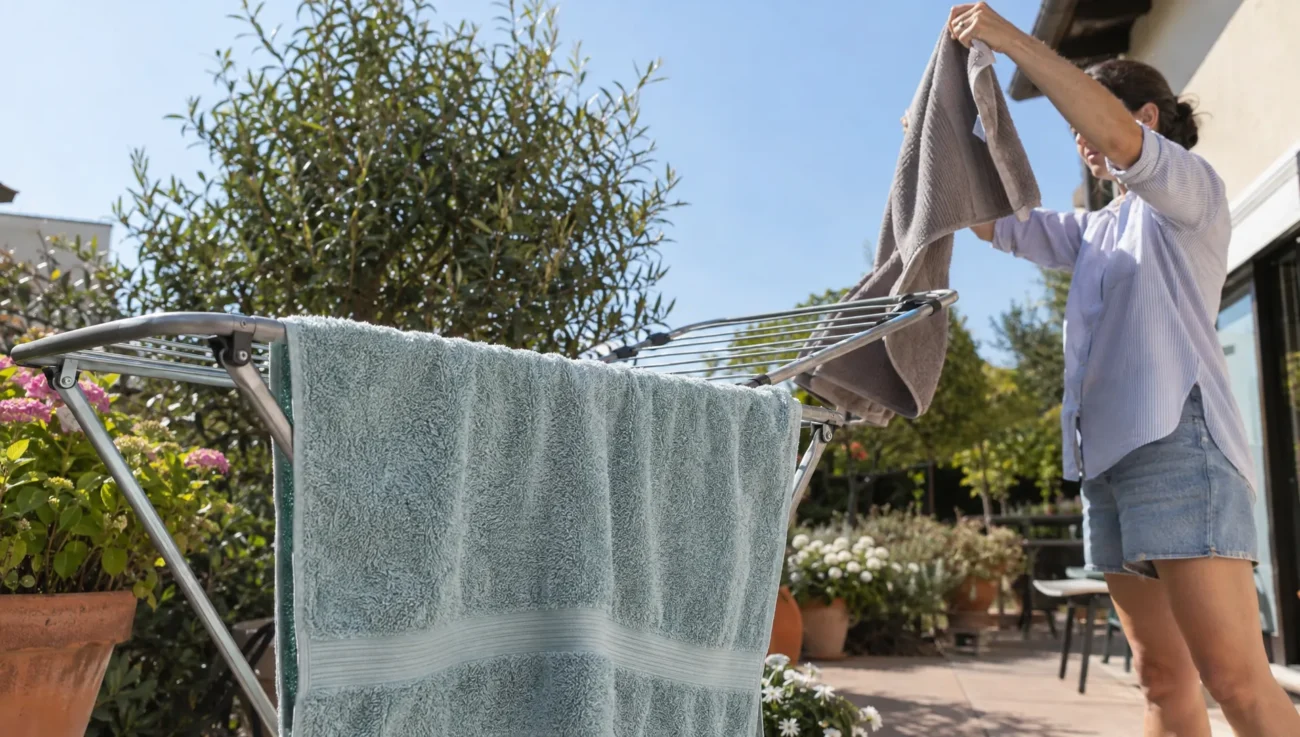
If your cotton bath towels feel soft but push water across your skin instead of soaking it up, laundry residue may be interfering with their performance. Fabric softener, excess detergent and mineral deposits can affect how readily water reaches the cotton fibers. New-towel finishes can also contribute, while older towels may have lost enough pile to reduce their capacity.
Start by distinguishing a washable buildup problem from physical wear. A towel with intact, full loops deserves a controlled wash-and-rinse trial before you replace it. A thin towel with missing pile will not regain its original capacity through a different detergent.
The same approach works in a household bathroom or a hotel laundry: identify the likely cause, change one part of the process and compare the results. Aggressive chemical treatments are not the best starting point.
Why cotton bath towels lose absorbency
Cotton attracts water, while the spaces within a terry towel help draw moisture into the fabric. Both the fiber surface and the towel’s construction matter. Anything that coats those surfaces or reduces the amount of usable pile can change performance.
Fabric softener and excess laundry products
Liquid fabric softeners leave conditioning ingredients on textiles. That coating can make a towel feel smoother while reducing how readily it wets. Dryer sheets can contribute a similar trade-off.
Detergent presents a different problem: towels need it to remove body oils and soil, but an unsuitable dose or inadequate rinsing can leave residue. Repeated overdosing is especially unhelpful when loads are lightly soiled or the washer uses relatively little water.
Body lotion, hair conditioner and massage oils can add to the buildup. In these cases, simply rinsing the towel without detergent may not remove the underlying soil.
Hard water and mineral deposits
Hard water contains dissolved minerals, particularly calcium and magnesium. Depending on the water chemistry and wash formula, deposits can accumulate on fabric and contribute to a stiff or chalky feel.
If cotton bath towels become rough despite careful detergent dosing, investigate water hardness rather than assuming the fibers are worn out. Check your local water supplier’s report or use a suitable hardness test.
Hardness also affects detergent requirements. Reducing the dose indiscriminately can leave soil behind, so follow the detergent’s guidance for your water conditions and load size.
New-towel finishes and damaged pile
A new towel’s feel is not a reliable guide to its first-use absorbency. Residual processing materials or finishing treatments may affect initial wetting. Follow the supplier’s instructions for washing before use, then assess the towel after it has dried completely.
Physical damage is different. Terry loops provide surface area and hold water, so substantial pile loss reduces the material available to absorb it. Excessive abrasion, repeated harsh processing and snagging can shorten a towel’s useful life.
For commercial handling, preventing snags in terry linens helps protect the pile during collection, washing and storage. A cleaning treatment cannot rebuild loops that have already been pulled out or worn away.
Check the symptoms before choosing a fix
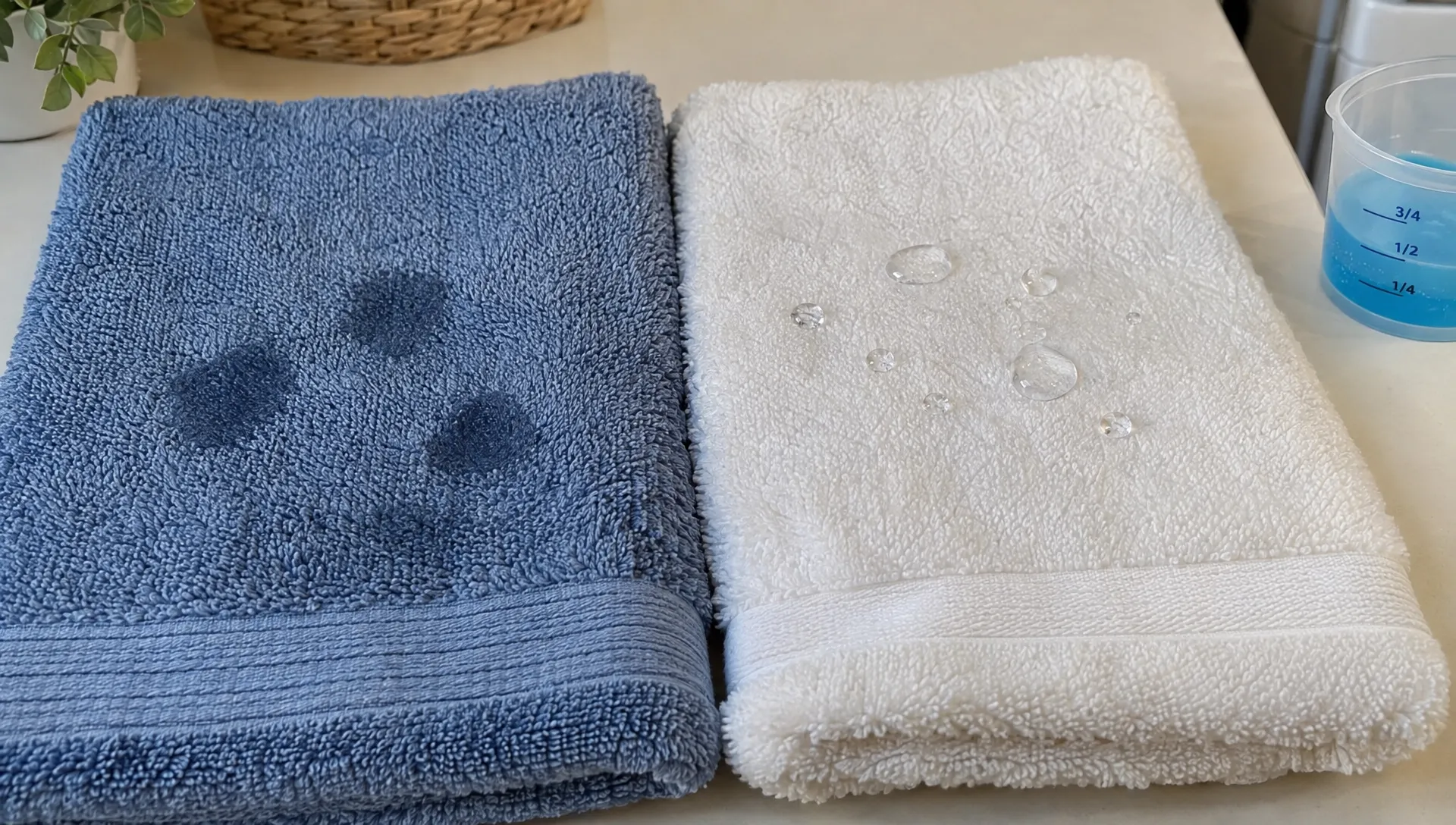
Before changing the whole laundry routine, compare one affected towel with a towel that performs well. Both should be fully dry and at room temperature. Place a few similar-sized drops of clean water on each and observe whether they spread into the fabric or remain on the surface.
This is a practical comparison, not a standardized absorbency test. Drop size, fabric position and ambient conditions affect the result. Use it alongside how the towel performs during normal drying.
| What you notice | What it may indicate | Sensible next step |
|---|---|---|
| Water beads on a soft, full-pile towel | Surface coating or oily residue | Remove softener and review detergent use |
| Fabric feels stiff or chalky | Mineral buildup or inadequate rinsing | Check hardness and wash chemistry |
| A new towel wets slowly | Residual finish or processing materials | Wash according to the supplier’s instructions |
| Dense fabric stays damp for a long time | High water retention or incomplete drying | Review load size and drying conditions |
| Thin areas and missing loops | Physical wear | Assess for replacement or reassignment |
When testing cotton bath towels, distinguish slow wetting from low total capacity. A coated towel may resist the first drops, while a worn towel may wet quickly but become saturated sooner.
How to restore absorbency safely
Start with the care label and a controlled load
Check the towel’s care label before selecting temperature, bleach or drying settings. White cotton does not automatically mean every high-temperature or chemical treatment is suitable. Decorative borders, embroidery and other components may impose restrictions.
Wash towels separately from clothing for the trial. Leave enough room for movement and follow the washer’s load guidance. An overloaded drum makes effective washing and rinsing harder.
Use a detergent compatible with your machine, measured for the load’s size, soil level and water hardness. Skip liquid fabric softener, scent beads and dryer sheets while troubleshooting. The American Cleaning Institute’s laundry basics provide a useful foundation for label-led washing and product selection.
Remove soil first, then assess rinsing
For cotton bath towels carrying body oils or spa products, use a proper detergent wash rather than relying on a water-only cycle. Follow any pretreatment instructions provided by the detergent and textile suppliers, especially for concentrated oily marks.
If the previous routine involved excessive detergent, correct the dose instead of adding another cleaning product. An extra rinse can help remove remaining wash liquor, but it is not a substitute for correct loading and dosing.
After drying, compare the towel with its earlier performance. If there is a clear improvement, repeat the corrected routine as needed rather than escalating immediately to a strong stripping treatment.
For towels that already look clean, feel soapy and have no oily contamination, a rinse-only trial may help identify a rinsing problem. It is not an adequate cleaning method for soiled towels.
Address hard water and dry correctly
If hardness is contributing to deposits, use a laundry product specifically labeled for those conditions. Commercial laundries should ask their chemical supplier to review hardness, dosing and the rinse process together.
Do not improvise an acid treatment in a machine connected to an automatic chemical system. Compatibility with the equipment, textile and other chemicals must be established first.
Dry cotton bath towels according to their care labels and remove them when dry rather than repeatedly running unnecessary heated cycles. Gentle tumbling can separate compressed loops, but additional heat does not remove a softener coating or mineral deposit.
If line drying, shake towels before hanging and spread them out with good airflow. A firmer line-dried feel does not by itself mean poor absorbency. Finish the trial with fully dry towels so the comparison is meaningful.
Do vinegar and baking soda help?
Neither ingredient is a universal towel-restoration treatment. Vinegar is acidic and may help with some mineral-related deposits under suitable conditions, but that does not make it appropriate for every washing machine, textile finish or laundry process.
Baking soda is mildly alkaline. It should not be treated as a replacement for a formulated detergent, particularly when towels contain body oils or heavy soil. Combining vinegar and baking soda largely neutralizes their acid and alkali properties, so the fizz is not proof of effective cleaning.
For cotton bath towels, start with the manufacturer-approved wash routine and a correctly selected laundry product. If mineral removal is necessary, use a product with clear dosing and compatibility instructions rather than an unmeasured household mixture.
Never mix chlorine bleach with vinegar, other acids or ammonia. Dangerous gases can result. The CDC’s bleach safety guidance advises against mixing bleach with other cleaners or disinfectants. Avoid experimental chemical combinations, including adding an acidic treatment to a process that may still contain bleach.
Prevent repeat problems at home and in hotel laundry
Once absorbency improves, keep the successful routine consistent. At home, measure detergent, avoid softener on towels and adjust the load rather than automatically selecting the same dose for every wash.
For hotels, spas and laundries, record the towel type, load weight, chemical dose, water conditions and drying settings used in the successful trial. Change one variable at a time when investigating a recurring problem. Otherwise, it becomes difficult to tell which adjustment helped.
Evaluate cotton bath towels after representative laundering, not just when they arrive. Keep an approved sample for comparison and investigate changes before a whole batch becomes uncomfortable or difficult to dry with.
When purchasing replacements, consider absorbency alongside drying time, construction and durability. GSM measures fabric weight per square meter, not how quickly a towel initially wets. A heavier towel is not automatically the better operational choice. This guide to selecting spa towels for high-volume laundering explains the broader purchasing considerations.
When replacement makes more sense
A towel that improves after corrected washing is worth keeping in service. Replacement becomes more reasonable when pile loss, thin patches, damaged hems or persistent roughness make it unsuitable for its intended use.
If a towel still resists water after appropriate cleaning, ask the supplier or laundry specialist to assess it before applying harsher chemistry. Persistent contamination or an unsuitable finish may need a different approach, but repeated aggressive treatment can create additional damage.
For hospitality use, judge performance as well as appearance. A towel can remain white and neatly folded while no longer providing an acceptable drying experience. Reassign serviceable but guest-unsuitable stock where hygiene requirements and local procedures allow.
Frequently asked questions
Is 100% cotton always absorbent? Cotton is naturally water-attracting, but the performance of cotton bath towels also depends on finishes, construction, cleanliness and wear. Fiber content alone does not guarantee fast wetting or high capacity.
Why does my towel feel soft but not dry me? Conditioning residues or oily soil may interfere with wetting. Pause softener and dryer sheets, check detergent dosing and run a care-label-compliant wash before assessing it again.
Should I wash towels on the hottest setting? Not automatically. Select a temperature allowed by the care label and suitable for the detergent, soil and hygiene requirements. Hotter water does not correct every buildup problem and can be unsuitable for some finishes or components.
Can I make a worn towel absorb like new? Removing deposits can improve a coated towel, but washing cannot restore missing cotton pile. If the towel is thin, damaged or quickly saturated, replacement may be more effective than another treatment.
Assess performance before your next bulk order
For hospitality and private-label purchasing, ask for samples and evaluate cotton bath towels through a laundering trial that reflects your actual conditions. Compare wetting, drying performance, appearance and pile condition before committing to volume.
Extreme Towel manufactures terry towels and hotel linens in Pakistan, with OEM production, private-label customization and bulk export support. Share your intended use and laundry requirements when discussing a supply specification.