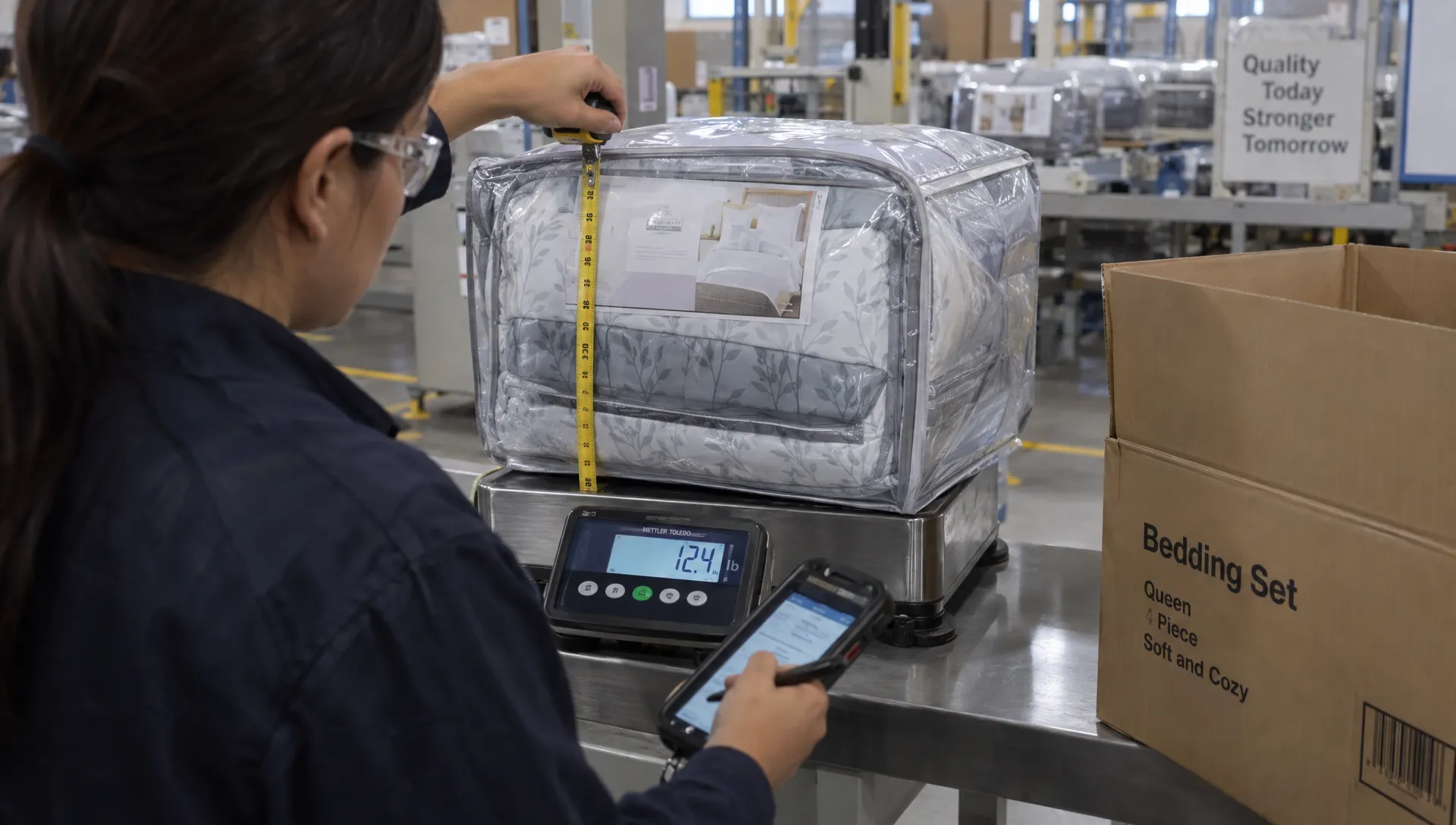
Bamboo fitted sheets can work in commercial laundry, but softness at delivery is not proof of hotel-ready durability. Their performance depends on the actual fiber, fabric construction, wash chemistry and elastic system. A sheet that feels excellent in a guest room may lose its fit or develop damage under a laundry process designed for robust cotton or polyester-cotton linen.
For hotels, hospitality suppliers and wholesale buyers, the purchasing decision should rest on one question: Can the finished sheet repeatedly meet your hygiene requirements while retaining acceptable fit, appearance and strength? A production-representative wash trial provides a more useful answer than a thread-count claim.
Start with the actual fiber composition
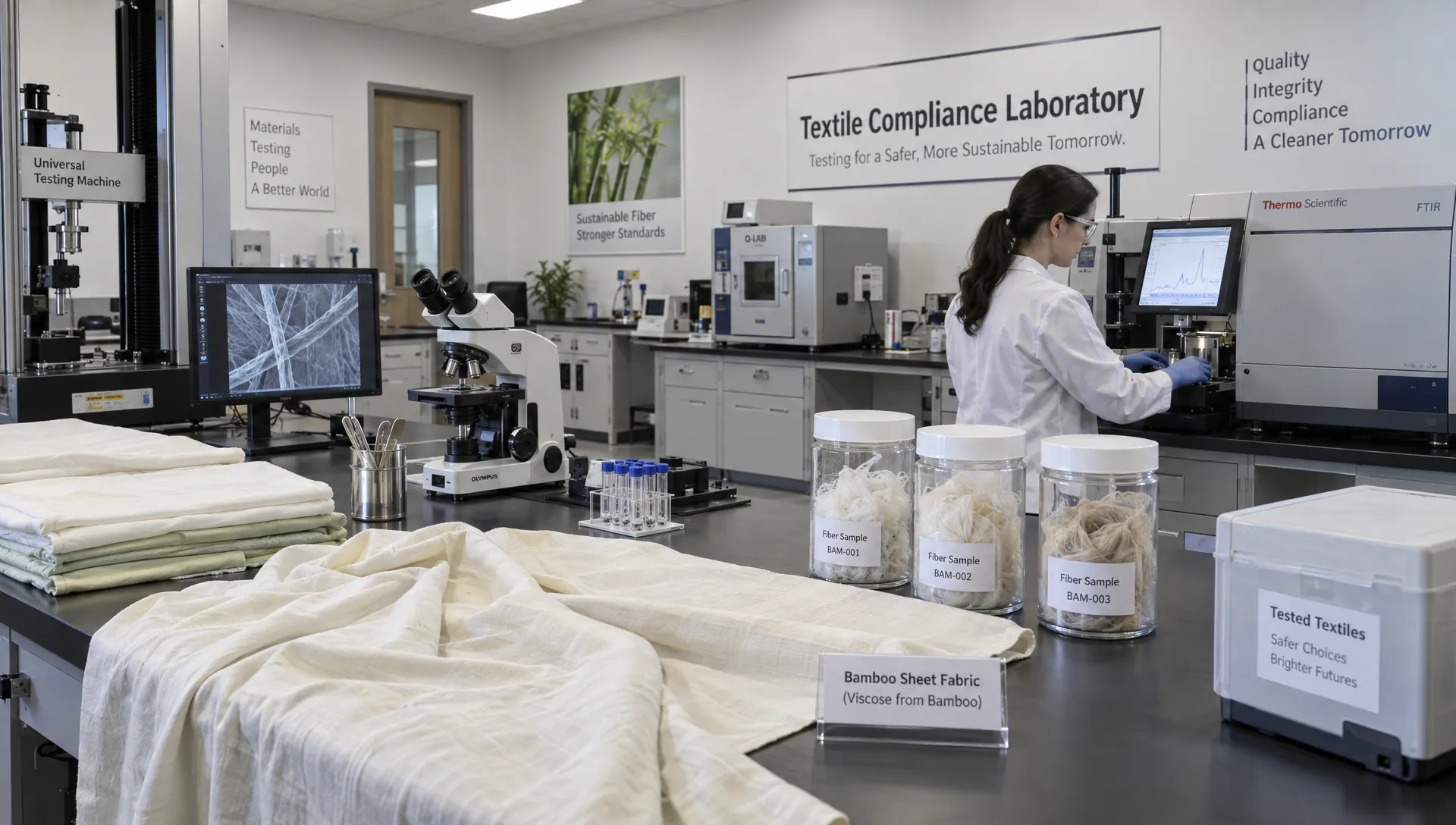
Most bedding marketed as bamboo uses regenerated cellulose, commonly viscose or rayon made from bamboo, rather than mechanically processed bamboo fiber. Some products use lyocell made from bamboo-derived pulp. These materials should not be treated as interchangeable.
Conventional viscose generally has lower strength when wet than when dry. Lyocell typically retains more wet strength, but the finished fabric's performance still depends on yarn quality, weave and finishing. Cotton or polyester blends change the balance again, without automatically making a sheet suitable for industrial processing.
For bamboo fitted sheets, require the exact fiber percentages and fiber type in the purchase specification, not simply the word “bamboo.” In the US, the Federal Trade Commission's guidance on bamboo textile labeling explains why rayon or viscose made from bamboo must be identified accurately.
Also request fabric weight, weave, finished dimensions and care instructions. A high thread count does not establish abrasion resistance, seam strength or wash durability. Nor does the bamboo origin establish antibacterial performance in the finished sheet.
What happens during washing and drying
Wet fabric must withstand mechanical action
Commercial washers expose linen to repeated flexing, rubbing and extraction. For a fabric with reduced wet strength, that mechanical action can contribute to wear, especially at seams, corners and areas already weakened by chemical exposure.
Inspect corner seams, needle holes and the fabric around the elastic casing. Small defects can become more noticeable after repeated processing, even while the main sleeping surface still looks acceptable.
The durability of bamboo fitted sheets therefore needs to be assessed as a finished-product issue, not just a fabric issue. A strong fabric can still fail because of poor stitching, an unsuitable elastic or a pocket cut that puts excessive tension on the corners.
Keep trial loads representative of production. Washing a few samples in an unusually light load may understate the mechanical stress they will face in daily operation. Avoid mixing bedding with items containing exposed hooks or other snagging components.
Wash chemistry must satisfy both hygiene and material compatibility
Alkalinity, oxidizing chemicals, temperature and exposure time all affect the laundering process. Chlorine bleach, oxygen-based bleaching systems and disinfectants are not interchangeable, and their compatibility depends on the complete formulation and the finished textile.
Ask the manufacturer and laundry chemical supplier to agree on an operating window. That should cover detergent chemistry, permitted bleaching or disinfection agents, temperature, exposure time and rinsing requirements. Do not substitute a home-care instruction such as “gentle wash” for a commercial process specification.
Hygiene requirements take priority over preserving a delicate fabric. The CDC's healthcare laundry guidance describes hot-water processing at at least 160°F (71°C) for at least 25 minutes, as well as lower-temperature approaches that depend heavily on controlled chemical treatment. This is healthcare guidance, not a universal hotel washing recipe.
If bamboo fitted sheets cannot tolerate your required, validated process, they are the wrong specification for that application. Lowering the temperature solely to protect the fabric is not an acceptable substitute for demonstrating hygienic performance.
Drying exposes weaknesses in the fabric and elastic
Excessive drying can contribute to shrinkage, surface deterioration and loss of elastic recovery. The actual exposure depends on dryer loading, airflow, program duration and how long items remain in the machine after reaching the required dryness.
Specify permitted drying conditions with the supplier and verify them in your own equipment. An air-temperature setting alone does not describe the complete thermal exposure of the textile.
Fitted sheets also need a compatible finishing route. Do not assume they can follow the same flatwork ironing process as flat sheets. Check whether the equipment accepts elasticated items and whether heat, tension or handling could damage the elastic casing.
A sheet that requires separate handling may still be commercially viable, but the extra sorting, finishing and labor belong in the purchasing calculation.
Shrinkage and elastic recovery determine usable fit
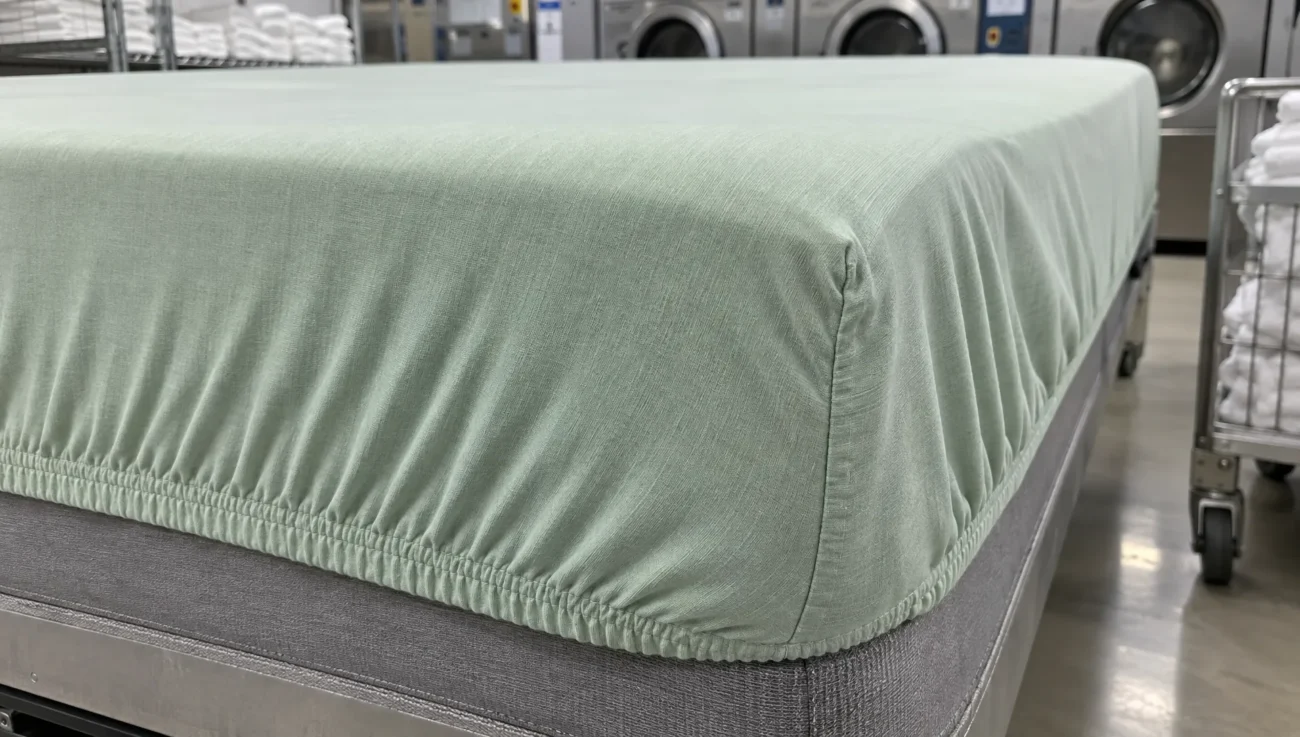
A fitted sheet can remain soft and visually clean yet become unusable because its corners no longer stay on the mattress. Fit depends on body dimensions, pocket depth, mattress shape and elastic recovery after laundering.
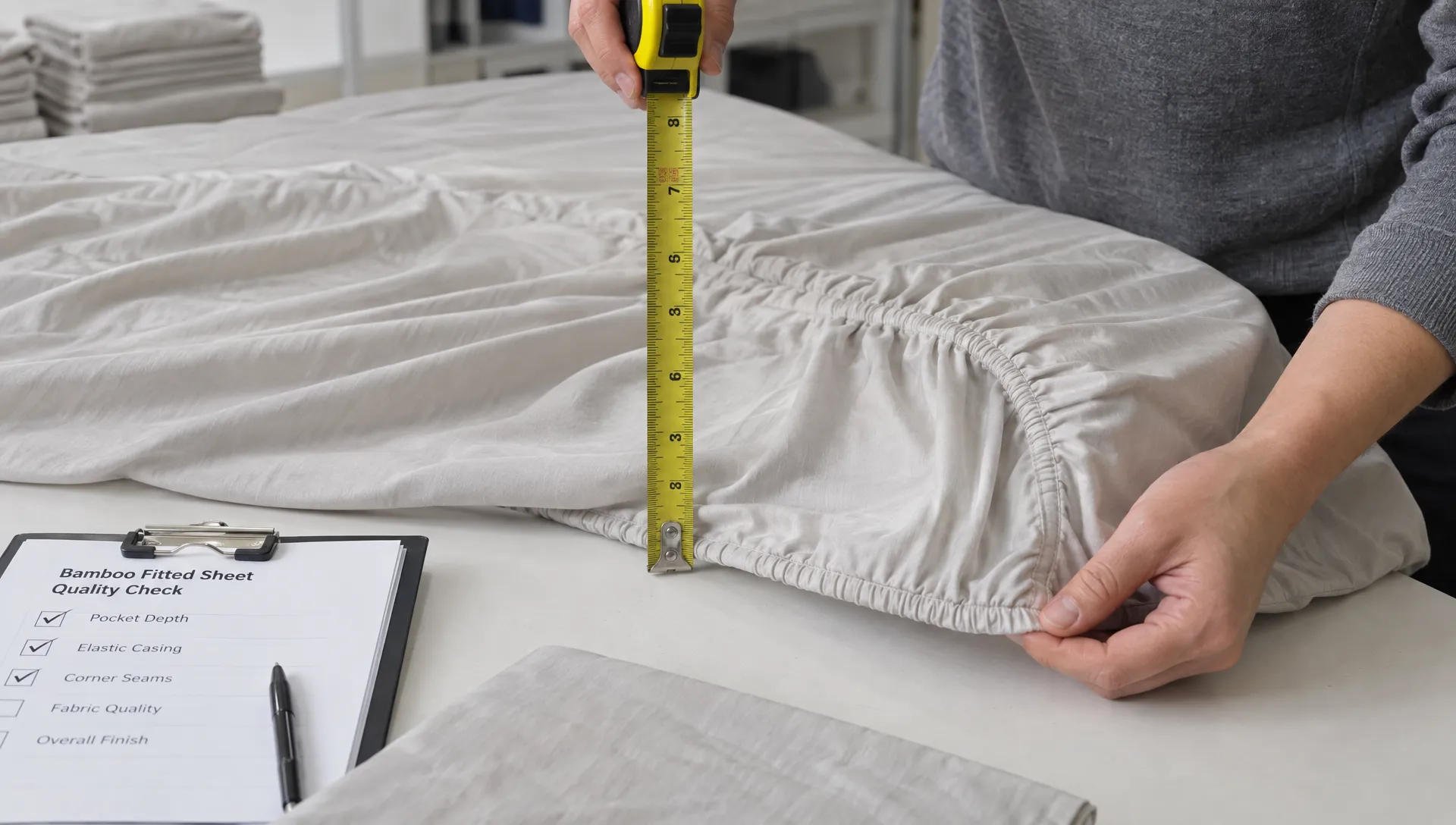
For bamboo fitted sheets, measure the finished item before washing and at agreed checkpoints, then test it on the actual mattress and protector combination. A nominal mattress depth alone may overlook the extra height of a topper or a thick protective cover.
Dimensional change should be recorded separately in the length and width directions. As an illustration, a marked 200 cm gauge length that becomes 194 cm has shrunk by 3%. That calculation describes dimensional change, not whether the sheet still fits satisfactorily.
| Component | What to check after laundering | Operational consequence |
|---|---|---|
| Sheet body | Length and width change | Excessive tension or loose fabric |
| Usable depth and corner alignment | Corners lifting during use | |
| Elastic | Recovery after stretching | Poor grip around the mattress |
| Corner seams | Open stitching, holes or distortion | Repairs or early rejection |
| Fabric surface | Pilling, abrasion or thinning | Appearance-related removal from service |
Do not assess elastic only while it is relaxed. Fit the sheet, remove it and check whether the elastic returns satisfactorily. Housekeeping feedback matters here: difficult installation or repeated corner lifting can make an otherwise intact sheet impractical.
How to qualify bamboo fitted sheets for commercial laundry
A useful qualification trial tests the production specification through the process it will actually encounter. Domestic washing results can provide background information, but they do not establish suitability for your commercial washer, chemicals and finishing equipment.
Establish a measurable baseline
Use samples representative of the proposed bulk order, including the same fabric, finishing treatment, seams and elastic. Give each sample an identifier so damaged or rejected items do not disappear from the records.
Before the first wash, record dimensions, pocket depth, fit, appearance and visible construction defects. Keep an unwashed reference sample for comparison. Include your current cotton or polyester-cotton fitted sheet as a benchmark if it already performs reliably in the same operation.
Agree on rejection criteria before testing starts. Those criteria should reflect mattress coverage, guest-facing appearance and operational needs rather than a generic claim of “hotel quality.” For broader procurement context, Extreme Towel's guide to how hospitality fabric manufacturers meet commercial standards discusses related textile quality considerations.
Run the actual wash and finishing sequence
Process samples through normal washing, extraction, drying and finishing. Record the program, chemical dosing settings, load conditions and any deviations. A trial using unusually gentle conditions answers a different question from a trial using your standard linen process.
For bamboo fitted sheets, an illustrative inspection schedule might include checkpoints after 5, 10, 25 and 50 cycles. These are planning examples, not an industry acceptance standard or a promise of service life. Extend the trial to suit the intended use and risk of the purchase.
Where different laundries will process the same product, evaluate the relevant operating conditions at each site. Results from one controlled laundry do not automatically transfer to an outsourced facility using different chemistry or finishing equipment.
Do not change the process midway without recording it. If a change improves performance, confirm that it also maintains hygiene requirements and can be implemented consistently in production.
Inspect more than softness and color
At each checkpoint, compare dimensions, mattress fit, surface condition, seams and elastic recovery. Photograph the same areas under similar conditions so changes are easier to evaluate.
| Trial measure | Practical assessment |
|---|---|
| Dimensional stability | Measure marked distances using the same method each time |
| Functional fit | Install on the specified mattress with its normal protector |
| Seam condition | Inspect corner joins and elastic casing for opening or damage |
| Surface quality | Compare pilling, abrasion and appearance with the reference |
| Handling time | Record installation difficulties and special finishing needs |
| Rejection rate | Record every item removed and the reason for removal |
For larger contracts, laboratory testing can supplement the operational trial with agreed methods for dimensional change, strength and colorfastness. Ask which test method and laundering conditions were used. A report is useful only when its scope relates to the purchasing decision.
Compare cost per usable laundry cycle
Purchase price alone can hide a costly specification. Replacement frequency, special handling, rewashing and difficult bed-making all affect the cost of keeping a fitted sheet in service.
Compare bamboo fitted sheets with your established linen using cost per usable cycle, not just cost per piece. Define a usable cycle as one after which the sheet still meets your hygiene, appearance and fit requirements.
A simple acquisition measure is:
Acquisition cost per usable cycle = purchase cost ÷ usable cycles achieved. This is only part of the calculation. Add attributable laundry processing, extra labor, repairs and replacement-related costs where your records allow.
Avoid projecting a full service life from a short trial. Passing 25 cycles establishes performance through that checkpoint; it does not prove the sheet will last 100 cycles. Track routine production results after approval and retain rejection reasons, including elastic failure and poor fit.
A higher-priced specification may be economical if it stays usable longer. A lower-priced one may also be the better choice if it meets the same requirements without additional handling. The comparison needs measured results.
Frequently asked questions
Can these sheets be washed at high temperatures? Only where the supplier's documented specification and your trial support the complete process. Temperature alone is not enough: exposure time, chemicals, mechanical action and drying also matter. If required hygiene conditions exceed the textile's tolerance, choose a different specification.
Are bamboo fitted sheets less durable than cotton? There is no universal ranking. Conventional viscose's reduced wet strength is a relevant concern, but finished-product durability also depends on construction, finishing and laundry conditions. Compare production-representative samples against the cotton specification you actually use.
Can chlorine bleach be used? Do not assume compatibility. Obtain written guidance for the fabric, color, finishing treatment and elastic. Even white bedding may contain components that do not tolerate the intended chlorine exposure. Confirm suitability with both the textile supplier and laundry chemical provider.
Does a bamboo-cotton blend solve shrinkage or elastic failure? Not automatically. A blend may change fabric behavior, but it does not determine elastic quality, seam construction or finished fit. Test the complete sheet rather than accepting the blend percentage as evidence of commercial suitability.
Specify the laundry requirements before ordering
Extreme Towel manufactures bamboo bedding and offers OEM production, private-label customization and bulk export supply. When discussing bamboo bedding manufacturing options, provide your mattress dimensions, protector or topper details, laundry process and acceptance criteria.
Ask for production-representative samples and written care guidance before committing to volume. Approval should follow demonstrated compatibility with your operation, not softness alone.