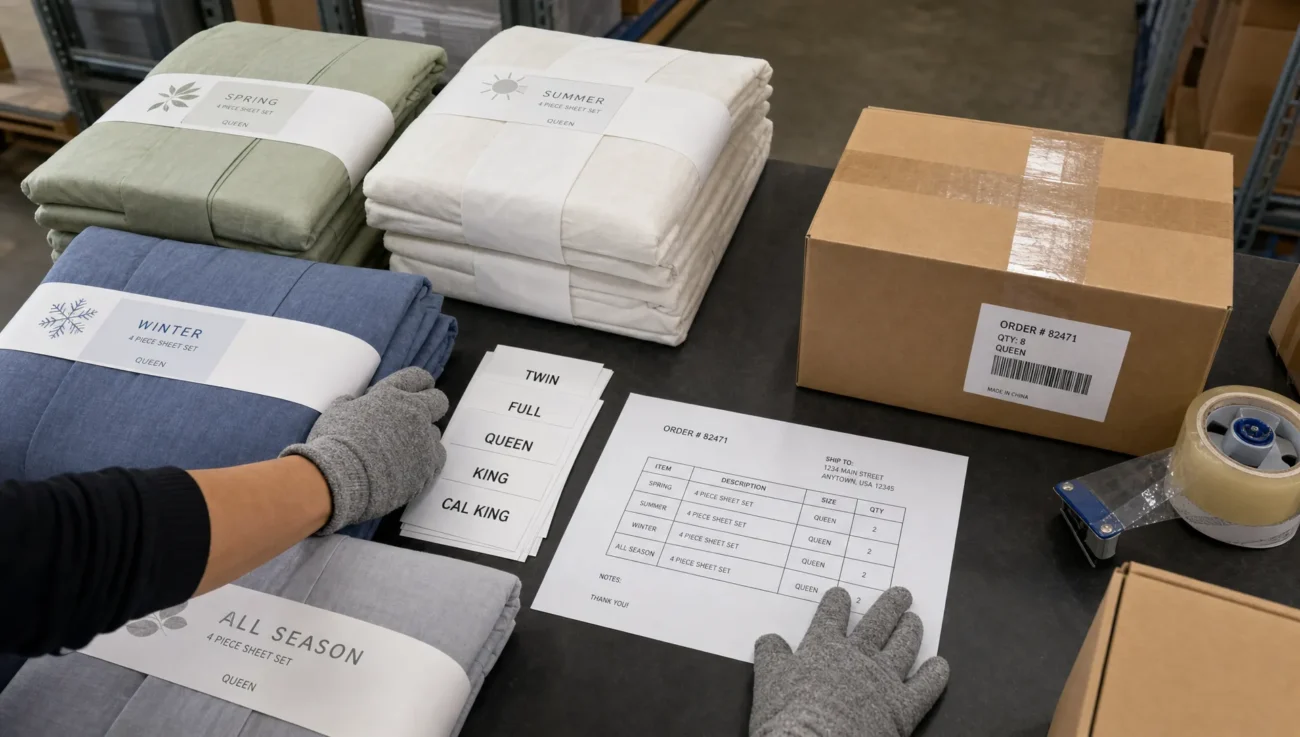
Seasonal retail planning is where bedding margins are often won or lost, especially when you buy bulk bedding sets months before customers start searching for them. A strong plan helps retailers match the right fabrics, sizes, colors and packaging to each demand peak instead of reacting after shelves are already thin. It also gives your manufacturing partner enough time to sample, produce, inspect and ship without forcing last-minute compromises.
For bedding buyers, wholesalers and private-label brands serving markets such as the USA, Canada, Europe, Australia, Japan and South Africa, the goal is not simply to order more. The goal is to build a seasonal purchasing rhythm that protects availability, cash flow and brand consistency at the same time.
Why bulk bedding sets need seasonal planning
Bedding demand changes with weather, gifting seasons, moving periods, hotel refurbishments and promotional calendars. Lightweight sheets may move faster in warmer months, while cozy textures, richer colors and giftable packaging often matter more during colder or holiday periods. Retailers that use the same buying logic all year can end up overstocked in slow colors and undersupplied in the products customers actually want.
Seasonal planning also reduces manufacturing pressure. Fabric sourcing, dyeing, cutting, stitching, labeling, inspection, packing and export documentation all take coordination. When your order calendar gives each stage enough time, your supplier can focus on consistency rather than speed alone.
Build a retail calendar before placing purchase orders
A seasonal plan for bulk bedding sets should connect your sales calendar with your production calendar. Start with the date products need to be in store, in your warehouse or available on your online channel. Work backward from there, allowing time for sampling, approvals, bulk production, quality control, shipping, customs clearance and distribution.
This backward planning matters because retail demand peaks are rarely isolated. A back-to-school campaign may overlap with apartment moves. Black Friday may lead directly into Christmas gifting. Spring refresh promotions may arrive soon after winter clearance. A single bedding program can therefore need several delivery drops rather than one large shipment.
| Planning window | Retail question | Procurement action |
|---|---|---|
| 6 to 9 months before peak | What seasonal story will the range support? | Confirm fabrics, sizes, target price bands and packaging direction. |
| 4 to 6 months before peak | Which SKUs need sampling and approval? | Review prototypes, lab dips, trims, labels and carton specifications. |
| 3 to 4 months before peak | What quantities should be committed? | Lock size ratios, color ratios, shipment windows and inspection standards. |
| 1 to 2 months before peak | Are launch quantities protected? | Confirm packing lists, export documents and warehouse receiving plans. |
| During the season | What is selling faster than expected? | Trigger replenishment if fabric and capacity have been reserved. |
The earlier you separate seasonal launch stock from replenishment stock, the easier it becomes to manage risk. Launch stock supports presentation and availability. Replenishment stock supports winners once the market responds.
Segment bulk bedding sets by season, channel and customer
Retailers rarely need one version of bulk bedding sets for every customer. A discount chain, department store, online marketplace, hospitality supplier and premium home brand may all sell bedding, but their customers compare products differently. Some shoppers focus on price and easy care. Others look at hand feel, fabric composition, design story, sustainability claims or gift-ready packaging.
Start by dividing your assortment into clear product tiers. A good, better and best structure can help buyers control price architecture without confusing the customer. The entry tier may focus on dependable basics and repeatable colors. The middle tier can introduce stronger fabric stories, improved finishing or more attractive packaging. The premium tier may support bamboo, higher thread counts, refined trims or more detailed presentation.
If your brand is still shaping its range architecture, the principles in Extreme Towel's guide to building a custom bedding program for your retail brand can help you connect product tiers, specifications and brand promise before ordering at scale.
Plan size ratios by market, not habit
Size planning is one of the easiest places to lose margin. A ratio that works in the USA may not match demand in Germany, Poland, France, Spain, the Netherlands, Japan or Australia. Mattress dimensions, duvet habits and local naming conventions vary, so buyers should confirm the exact finished measurements for every fitted sheet, flat sheet, duvet cover and pillowcase.
Do not rely only on last year's total units. Review sell-through by size, return reasons, customer service feedback and stockouts. If queen sizes sold out because they were underbought, the historical sales report may understate true demand. If king sizes looked strong only because they were heavily discounted, the same report may overstate future demand.
Match fabric and color to the buying moment
Seasonal bedding should feel relevant at first glance. Spring and summer ranges often lean toward breathable fabrics, lighter colors and fresh patterns. Fall and winter ranges may support deeper tones, warmer styling and giftable sets. For retailers testing a softer natural hand feel, wholesale bamboo bedding sheets can be considered as part of a seasonal or premium assortment.
Color planning should balance novelty with continuity. Core whites, creams, grays and neutrals support repeat demand. Seasonal colors create excitement but should be limited to volumes your retail channels can realistically sell before markdown periods begin.
Forecast quantities without overbuying
The safest forecast for bulk bedding sets begins with actual demand signals, then adjusts for the season ahead. Use prior sales by SKU, size, color, store cluster and online channel, but do not stop there. Add context from promotions, pricing changes, new packaging, competitor activity, weather patterns and customer acquisition plans.
A practical forecast can start with a simple formula:
Planned units = baseline weekly sales x weeks of coverage + expected promotion lift + safety stock – on-hand inventory – confirmed incoming inventory
This formula is not a replacement for buyer judgment, but it makes assumptions visible. If a buyer expects a 30 percent lift from a holiday campaign, the team can ask what supports that assumption. Is the discount deeper? Is the product featured in advertising? Will more stores carry the range? Clear assumptions make post-season reviews more useful.
| Forecast input | Why it matters | What to check before ordering |
|---|---|---|
| Baseline sales | Shows normal demand without unusual promotions | Remove clearance spikes and stockout periods from the average. |
| Promotion plan | Influences short-term volume | Confirm discount depth, ad placement and campaign duration. |
| Size curve | Protects availability in high-demand sizes | Review sales, lost sales and returns by size. |
| Color curve | Reduces markdown risk | Separate core colors from seasonal fashion colors. |
| Safety stock | Covers delays and demand variance | Set higher buffers for best sellers than for experimental SKUs. |
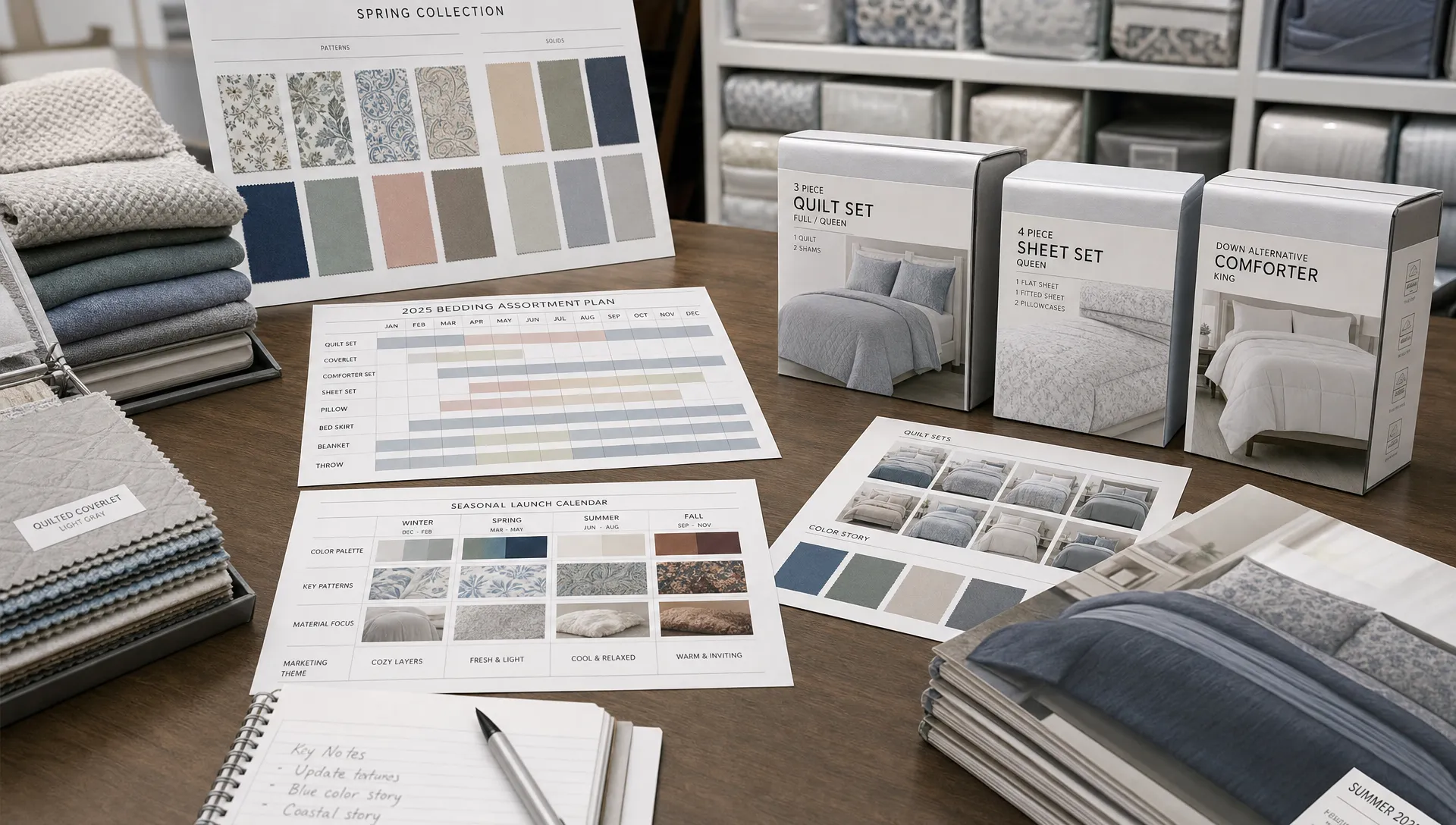
Align production lead times with retail launch dates
Production timing for bulk bedding sets should be agreed before purchase orders are finalized. Lead time is not only the sewing period. It includes raw material planning, weaving or fabric procurement, processing, finishing, trims, label printing, packaging development, inspection and export preparation.
Retailers sometimes compress timelines by delaying decisions on labels, care instructions, carton marks or packaging artwork. These details may look small compared with fabric and stitching, but they can hold an order if they are not approved in time. A disciplined approval process keeps the whole program moving.
Use sampling as a risk control step
Sampling should test the decisions that matter in bulk production. Confirm fabric hand feel, shrinkage expectations, stitching quality, elastic performance, zipper or closure function, label placement and packed presentation. If the bedding set includes multiple components, check that each part matches the specification and fits the target mattress or duvet size.
For custom dimensions, sampling is even more important. Retailers working with non-standard mattresses or regional size requirements may find it useful to review how custom size bed sheets are specified before confirming bulk measurements.
Reserve capacity for replenishment winners
Not every seasonal product deserves replenishment. Some colors and patterns are designed to sell through once. Core bedding, however, may justify reserved fabric or planned repeat production. Discuss replenishment options early, including minimum quantities, fabric availability and the latest date a repeat order can be placed for the same season.
This approach helps buyers avoid two common mistakes: buying too much of every SKU at launch or discovering too late that a best seller cannot be repeated quickly.
Control quality, packaging and compliance before shipment
For cross-border retail, bulk bedding sets also need labeling and packaging discipline. A product can be well made but still create receiving problems if cartons are poorly marked, barcodes are incorrect or fiber content labels do not match the market's requirements. Quality control should cover both the textile and the retail-ready presentation.
For the US market, the Federal Trade Commission explains textile labeling requirements in its Textile and Wool Acts guidance, including fiber content, country of origin and business identity. EU markets also have textile fiber labeling rules, and buyers should confirm local language, care label and importer requirements before production.
A practical inspection checklist can include:
- Finished measurements for every component in the set
- Fabric weight, color consistency and visible defects
- Stitching, seams, hems, elastic and closures
- Care labels, brand labels, barcodes and hangtags
- Folding method, inner packaging, carton quantity and carton marks
- Metal detection or other buyer-required safety checks where applicable
Packaging deserves special attention for seasonal retail. Gift boxes, belly bands, inserts and branded bags can improve shelf appeal, but they also add approval steps. Confirm dielines, artwork, material strength and packing efficiency early so packaging does not delay the finished goods.
Work with the right manufacturing partner
A good supplier discussion turns bulk bedding sets from a purchase order into a planned retail program. Instead of asking only for a unit price, buyers should share target markets, launch dates, expected order quantities, size ratios, packaging needs, inspection standards and shipping requirements. The more complete the brief, the easier it is for a manufacturer to identify cost risks, timing issues and specification gaps.
Private-label and OEM programs need especially clear communication because the supplier is helping protect your brand, not just producing a generic product. If you are comparing factories, Extreme Towel's guide on choosing private label bedding manufacturers explains how to evaluate capability, product briefs and manufacturing fit.
Key questions to ask before confirming a seasonal order include:
- What is the realistic timeline from sample approval to shipment?
- Which materials or colors need the longest reservation period?
- What minimum order quantities apply by fabric, size and color?
- Can the supplier support custom labels, retail packaging and carton marks?
- What quality control steps happen during production and before shipment?
- Which documents are provided for export and customs clearance?
The best time to ask these questions is before seasonal capacity tightens. Once peak production periods arrive, flexibility becomes harder to secure.
Review the season and improve the next order
Seasonal planning should end with a post-season review. Compare forecasted demand with actual sales, sell-through, returns, markdowns and customer feedback. Separate product issues from planning issues. A color may have failed because demand was weak, but it may also have failed because it arrived late, was priced too high or lacked online visibility.
Review supplier performance as well. Did samples arrive on time? Were specifications followed? Did inspections reveal repeat issues? Were cartons labeled correctly? Did shipping documents match buyer requirements? These details help you decide whether to repeat, modify or replace the program next season.
Strong retailers build a learning loop. Each season improves the next forecast, the next size curve and the next supplier brief.
Frequently Asked Questions
How early should retailers plan seasonal bedding orders? Most retailers should start planning bulk bedding sets 6 to 9 months before a major seasonal peak. The exact timeline depends on fabric availability, customization, packaging complexity, shipping route and approval speed.
What causes overstock in bedding programs? Overstock often comes from weak size ratios, too many seasonal colors, unrealistic promotion forecasts, late deliveries or ordering the same mix across markets with different mattress sizes and customer preferences.
Should seasonal bedding be ordered in one shipment or multiple drops? Multiple drops can reduce inventory pressure and help retailers react to demand, but they require early coordination with the manufacturer. One shipment may be simpler, yet it can increase storage costs and markdown risk if the forecast is wrong.
What information should a bedding supplier receive before quoting? A supplier should receive product specifications, size measurements, fabric preferences, target quantities, colorways, packaging requirements, labeling needs, destination markets, quality standards and expected shipment dates.
Plan your next seasonal bedding program with more control
Seasonal demand will always involve uncertainty, but your procurement process can make that uncertainty easier to manage. By building a calendar, segmenting the assortment, forecasting by size and channel, confirming quality requirements and involving your supplier early, you can protect both availability and margins.
Extreme Towel is a Pakistan-based textile manufacturer and exporter supporting terry towels, hotel linens, bamboo bedding, bathrobes, OEM manufacturing, private-label customization, bulk production and export support. If your retail brand is planning its next bedding season, you can start a supplier conversation through Extreme Towel and turn your forecast into a clearer production plan.