Comparing wholesale towel sets for a retail program means comparing more than softness and factory price. Buyers need a complete, shelf-ready product that delivers consistent quality, supports a clear price position and can be replenished without changing what customers receive.
A sample bath towel may look excellent while the matching hand towel sheds, the packaging hides the piece count or the minimum order leaves too much inventory in a slow-selling color. The most useful comparison therefore starts with the retail offer, then works backward through product specifications, packaging, landed cost and supply reliability.
Define the Retail Offer Before Requesting Quotes
Give every supplier the same set configuration. A “six-piece set” is not a complete specification: it could contain different combinations of bath towels, hand towels and washcloths, with substantially different costs and customer expectations.
Start with a shared comparison brief:
| Decision | What to specify | Why it matters |
|---|---|---|
| Set composition | Exact quantity of each towel type | Prevents misleading price comparisons |
| Finished dimensions | Size of every component and agreed tolerances | Determines usable size and consistency |
| Product positioning | Value, everyday or premium | Guides material, construction and packaging choices |
| Color assortment | Launch colors and planned core colors | Shapes inventory exposure and replenishment |
| Sales channel | Store shelves, marketplace or direct-to-consumer | Changes packaging and product-data requirements |
| Target economics | Expected net selling price and required margin | Establishes a realistic cost ceiling |
Keep the opening assortment manageable. Every additional color creates another sellable SKU, while every new size combination adds another specification to maintain.
When comparing wholesale towel sets, request prices for the same configuration and order quantity before judging which supplier offers better value. Extreme Towel’s overview of wholesale towel supply for retailers provides additional sourcing context, while your comparison brief should remain specific to the planned retail program.
Make Product Names Understandable to Shoppers
Use titles that explain the contents without requiring customers to inspect every photograph. “Six-piece cotton towel set: two bath towels, two hand towels and two washcloths” communicates more than “luxury bathroom collection.”
Clear category distinctions matter across online retail. The alloy and steel wheel categories at Velgensupermarkt illustrate how naming separates products that serve related needs but are not interchangeable. Apply that same discipline to bath towels, bath sheets and complete sets.
Use matching terminology on the packaging, product listing and purchase order. A bath sheet should not become a bath towel simply because the shorter label fits the artwork.
Evaluate Every Component, Not Just the Largest Towel
Suppliers sometimes lead with the most impressive component. Ask for complete packaged samples so you can evaluate the product customers will actually buy.
For wholesale towel sets, consistency across components matters as much as the quality of an individual towel. Check whether the bath towel, hand towel and washcloth share the intended shade, border appearance, texture and overall finish.
GSM, or grams per square meter, describes fabric mass per unit area. It does not independently establish absorbency, durability or premium quality. A heavier towel can also increase package size, shipping weight and drying time.
Record fiber composition, finished dimensions, component weight, pile construction and hem quality. For a deeper technical checklist, use the guide to towel specifications buyers should compare, then add set-level checks rather than repeating a single-towel inspection.
Pay particular attention to shade matching. Components with different constructions may take dye differently, so approval should cover the complete set under consistent lighting.
Run a Repeatable Wash and Handling Test
Establish a written testing protocol before comparing samples. Use the same wash settings, detergent, drying method and number of cycles, following the proposed care instructions.
Record dimensions before washing and after each agreed checkpoint. Measure shrinkage in both directions rather than reporting one overall percentage. Photograph hems, borders and pile surfaces so later assessments do not rely on memory.
Compare absorbency, visible lint, seam integrity and color change. A simple in-house absorption check can help screen samples, but contractual performance claims should use an agreed method and, where appropriate, a qualified laboratory.
The best wholesale towel sets for your program should meet documented acceptance criteria, not simply win an informal touch test. Set those criteria according to your positioning and likely customer use rather than borrowing universal thresholds.
Keep an approved reference sample with its specification revision. Require production to match that reference, and define how inspection findings will be handled before shipment.
Compare Packaging as Part of the Product
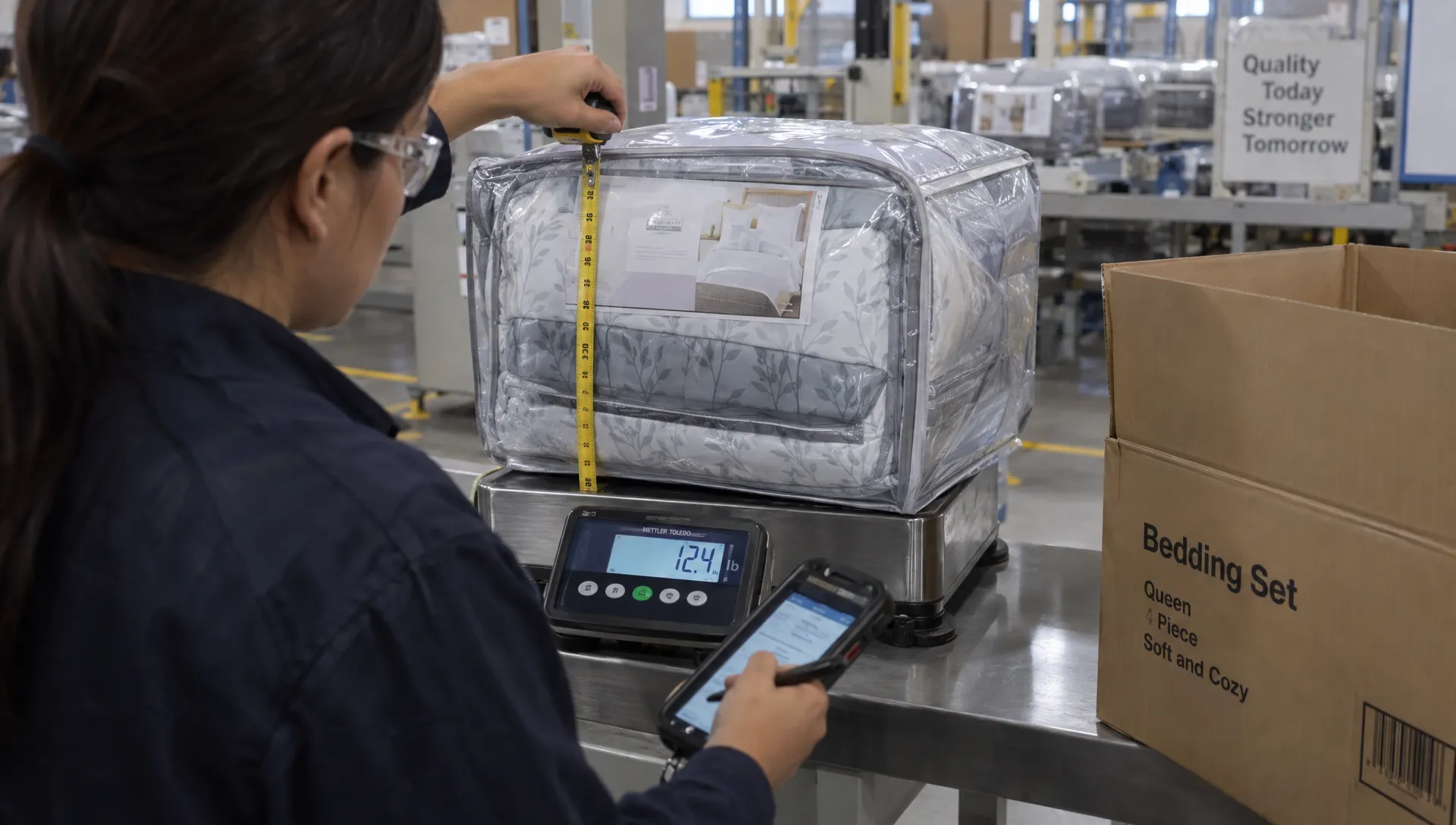
Packaging affects shelf presentation, warehouse handling and the cost of getting an order to the customer. Ask suppliers to quote the complete retail pack, not just loose towels.
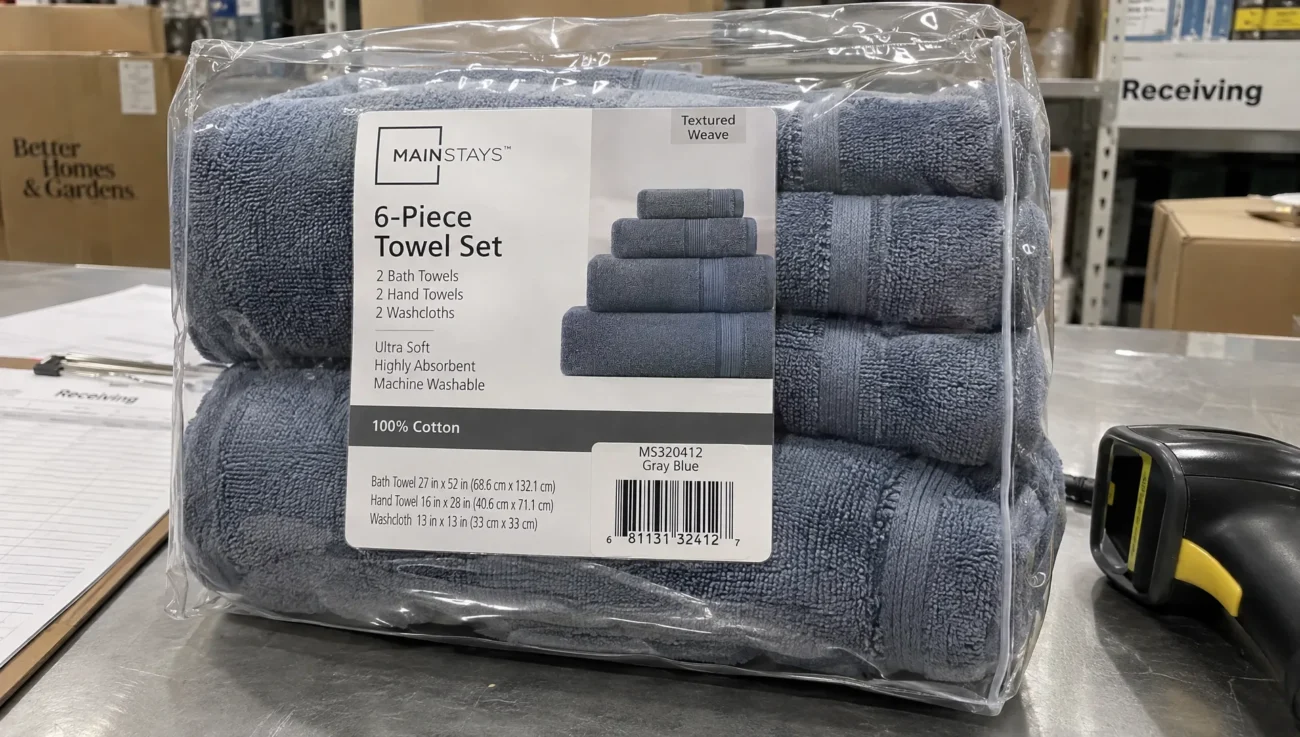
Confirm the package dimensions, packed weight, piece-count statement, barcode location and protection against dust or handling damage. For ecommerce, inspect whether the package remains presentable after ordinary fulfillment handling and whether it needs a separate shipping carton.
Test the actual barcode on the intended packaging material. Folds, reflective finishes and curved surfaces can make an otherwise correct code difficult to scan.
For stores, assess whether customers can understand the set without opening it. For online listings, photograph the included pieces separately as well as together. Packaging should reinforce the contents, not suggest that decorative props are included.
Calculate the Cost of a Sellable Set
A low quotation for wholesale towel sets can become expensive once freight, packaging corrections and unsellable inventory are included. Compare costs at the same delivery point, in the same currency and under the same named Incoterms rule.
Build landed cost from the quoted product and packaging price, freight, insurance, duties and applicable destination charges. Include inspection, receiving or relabeling costs when they are part of your purchasing process. Treat recoverable taxes separately where relevant.
The following example is illustrative, not a supplier quotation or a defect-rate benchmark:
| Cost assumption per received set | Supplier A | Supplier B |
|---|---|---|
| Product and retail packaging | $12.00 | $12.50 |
| Allocated freight and import charges | $2.00 | $1.80 |
| Landed cost | $14.00 | $14.30 |
| Assumed unsellable share | 4% | 1% |
| Effective cost per sellable set | $14.58 | $14.44 |
The calculation is landed cost ÷ sellable proportion. Supplier A’s example is $14.00 ÷ 0.96. It excludes any supplier credit, salvage proceeds or rework expense, which should be modeled separately if applicable.
Use inspection evidence and your own sales history to estimate losses. Then assess margin using expected net sales revenue after discounts, with channel fees, fulfillment and return-handling costs included consistently. A theoretical full-price margin does not describe the economics of a heavily promoted product.
Check Whether the Assortment Can Be Replenished
Retail buyers need availability after launch, not only an attractive first shipment. Ask how minimum orders apply: per purchase order, per color, per set configuration or per packaging design.
A supplier offering wholesale towel sets may have an acceptable total minimum but a color-level minimum that creates excess stock. Model the order against expected sales by SKU rather than dividing units equally across colors.
Separate lead time into sample approval, material preparation, production, packing and transit. Clarify which stages begin only after artwork approval or payment.
Confirm how repeat orders will match the approved shade and construction. Ask what happens when a material becomes unavailable, and prohibit unapproved substitutions in the purchase terms.
For seasonal programs, agree on order deadlines and contingency decisions early. For year-round basics, prioritize repeatable specifications and dependable core-color replenishment over an unnecessarily broad launch assortment.
Use a Weighted Scorecard for Wholesale Towel Sets
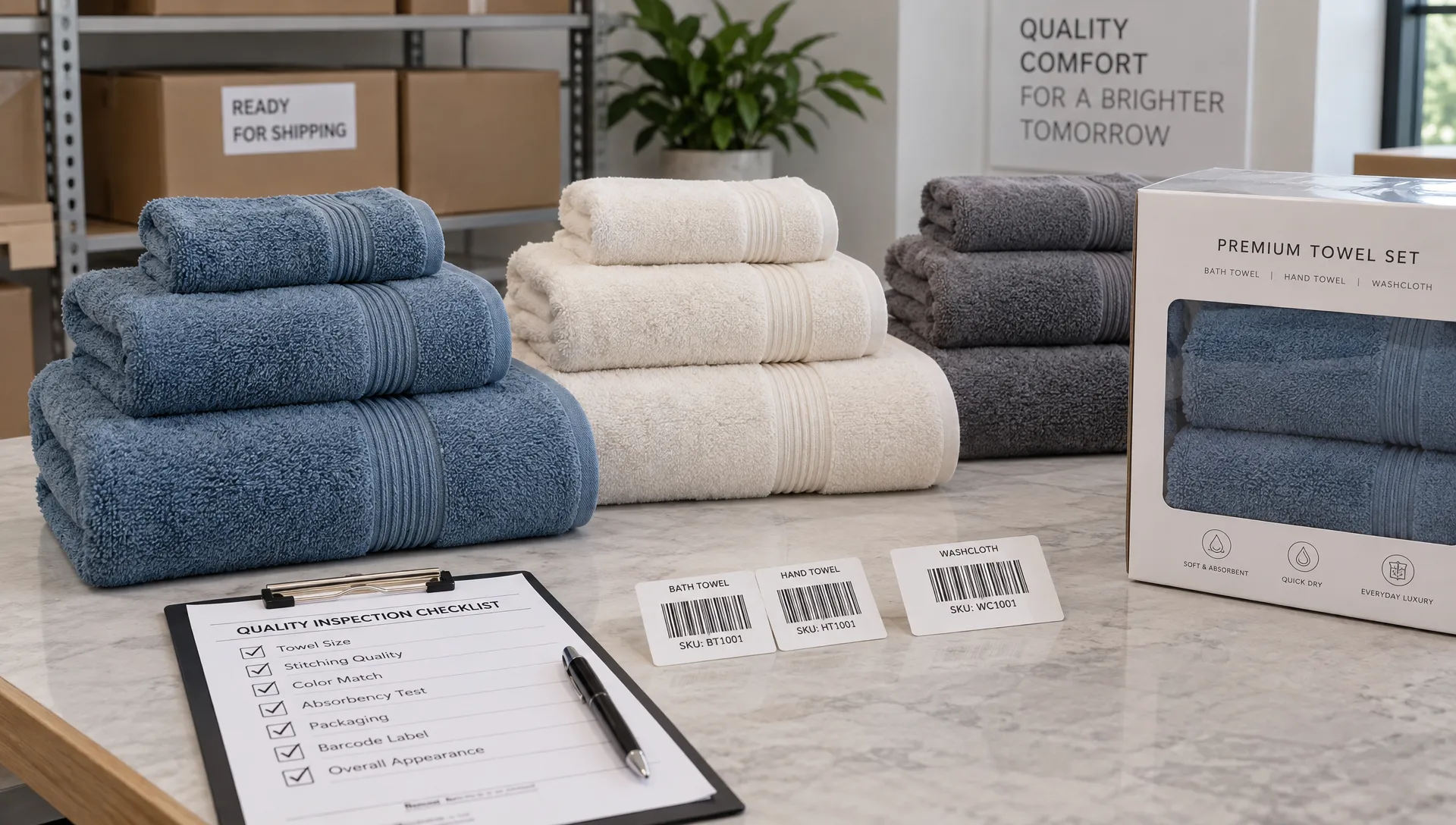
A scorecard helps buying, quality and merchandising teams compare the same evidence. Set weights before final quotations arrive so a particularly attractive price does not quietly change your priorities.
The example below suits a general retail program. Adjust it for your channel and positioning.
| Evaluation area | Example weight | Evidence to review |
|---|---|---|
| Complete-set quality | 25% | Wash results, shade matching and component consistency |
| Retail packaging and presentation | 20% | Approved pack, scans and handling checks |
| Effective sellable-unit cost | 20% | Comparable landed-cost worksheet |
| Replenishment capability | 15% | MOQ structure, timelines and repeat-order controls |
| Commercial clarity | 10% | Payment terms, defect remedies and change controls |
| Labeling and documentation readiness | 10% | Destination-specific label review and supporting records |
Score each category from one to five and calculate a weighted average. Attach evidence to the score rather than relying on impressions from a sales call.
When scoring wholesale towel sets, treat essential legal requirements and serious quality failures as pass-or-fail gates. A high combined score should never compensate for incorrect fiber labeling, an unresolved safety issue or an unacceptable test result.
Verify Labels and Claims for Each Destination
Do not assume one label design will suit every market. Review applicable fiber-content, origin, responsible-business, language and product-safety requirements for each destination. Care-labeling obligations also vary.
For US sales, the FTC’s guidance on textile labeling requirements is a useful starting point. International programs should receive a destination-specific compliance review rather than simply copying the US artwork.
Check claims such as “organic,” “antibacterial” or “sustainably produced” against relevant documentation and its scope. A certificate relating to a facility or material does not automatically substantiate every claim on a finished set.
Fiber descriptions also need care. Rayon or viscose made from bamboo should not be assumed to qualify for a plain “bamboo fiber” label. Verify the actual composition and required terminology before approving packaging.
Turn the Comparison Into a Clear Purchase Brief
Once you shortlist suppliers, convert the findings into a controlled specification. Wholesale towel sets are easier to reorder when product details, packaging and acceptance rules are recorded together rather than scattered across emails.
Your final brief should include:
- Product details: Piece count, component sizes, fiber composition, construction, colors and agreed tolerances.
- Retail requirements: Packaging artwork, packed dimensions, barcode data, care information and channel-specific labeling.
- Quality controls: Approved reference samples, test methods, inspection arrangements and acceptance criteria.
- Commercial terms: SKU quantities, minimum orders, delivery milestones, named Incoterms rule, payment terms and remedies for nonconforming goods.
Assign a revision number to the specification and require written approval for changes. Make clear whether an accepted defect will trigger replacement, credit, rework or another agreed remedy.
For a new program, consider a controlled initial order where commercially feasible. Inspect received stock and track return reasons by SKU. This helps distinguish a genuine product problem from unclear photography, incorrect expectations or packaging damage.
Frequently Asked Questions
What should a wholesale towel set include? It should include the exact components stated in the purchasing specification and consumer-facing description. There is no universal configuration, so define both the quantity and finished size of every piece.
What GSM is best for retail towel sets? There is no single best GSM. Choose a specification that supports the intended feel, absorbency, drying behavior, package size and price position, then verify performance through testing.
How do I compare wholesale towel sets with different minimum orders? Model the required purchase by color and configuration. Compare total cash commitment, expected sell-through and inventory exposure, not only the unit price at each supplier’s minimum.
Should every towel in a set have the same GSM? Not necessarily. Components may use different specifications to achieve the intended performance, but the differences should be documented and the complete set should feel visually and functionally coherent.
Can one packaging design serve all export markets? Possibly, but only after checking destination requirements. Language, fiber terminology, business identification and other mandatory information may require market-specific versions.
Build a Comparable Request for Quotation
Send shortlisted manufacturers one specification, one quantity breakdown and one packaging brief. Request that any exceptions be listed separately, so a lower quotation does not conceal a changed product.
Extreme Towel offers Pakistan-based textile manufacturing, private-label customization, bulk production, custom packaging and export support. Share your retail brief with Extreme Towel to discuss the proposed set configuration and manufacturing requirements. Confirm capabilities, minimum quantities, testing arrangements and delivery terms for your particular order before committing.