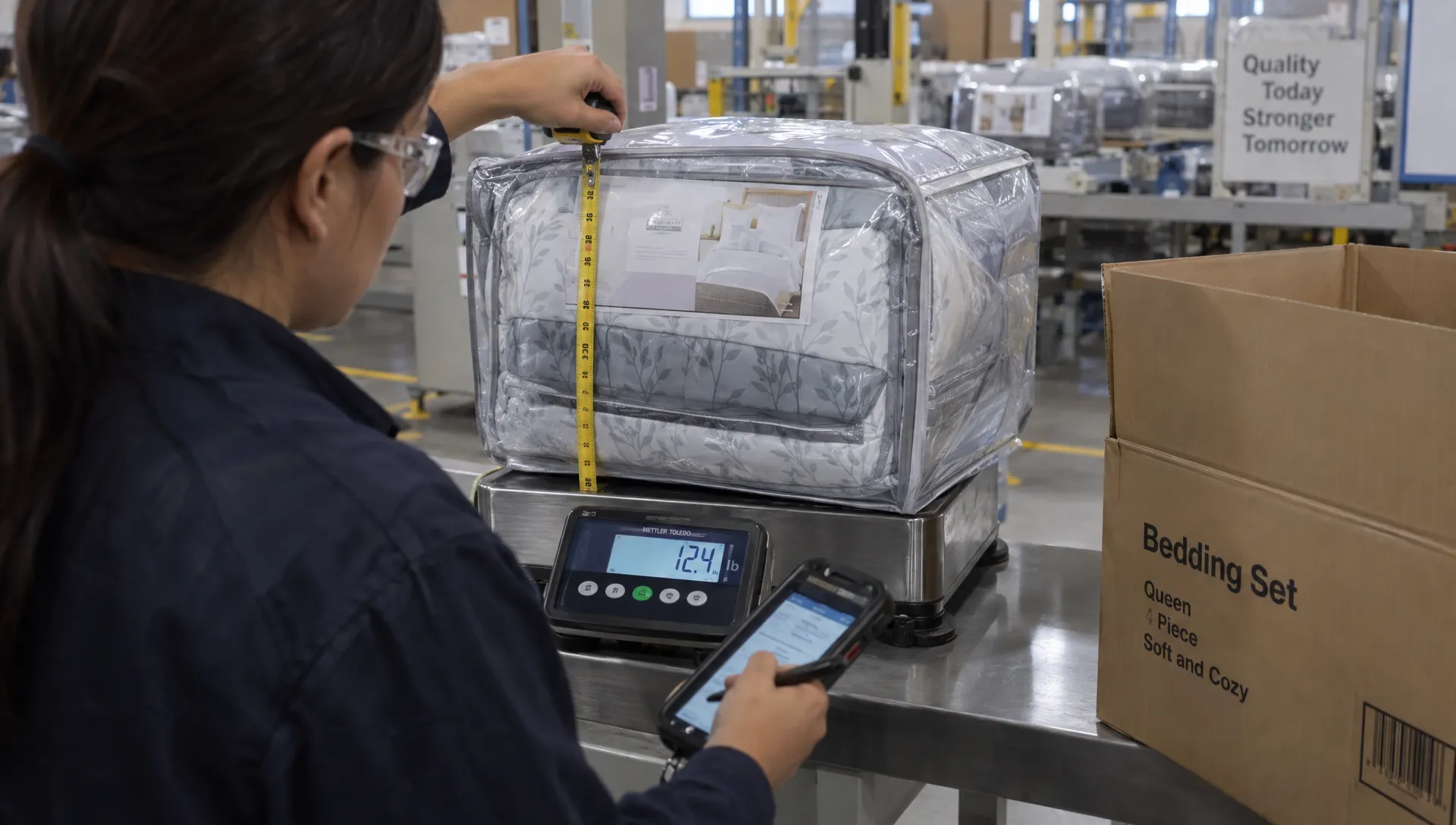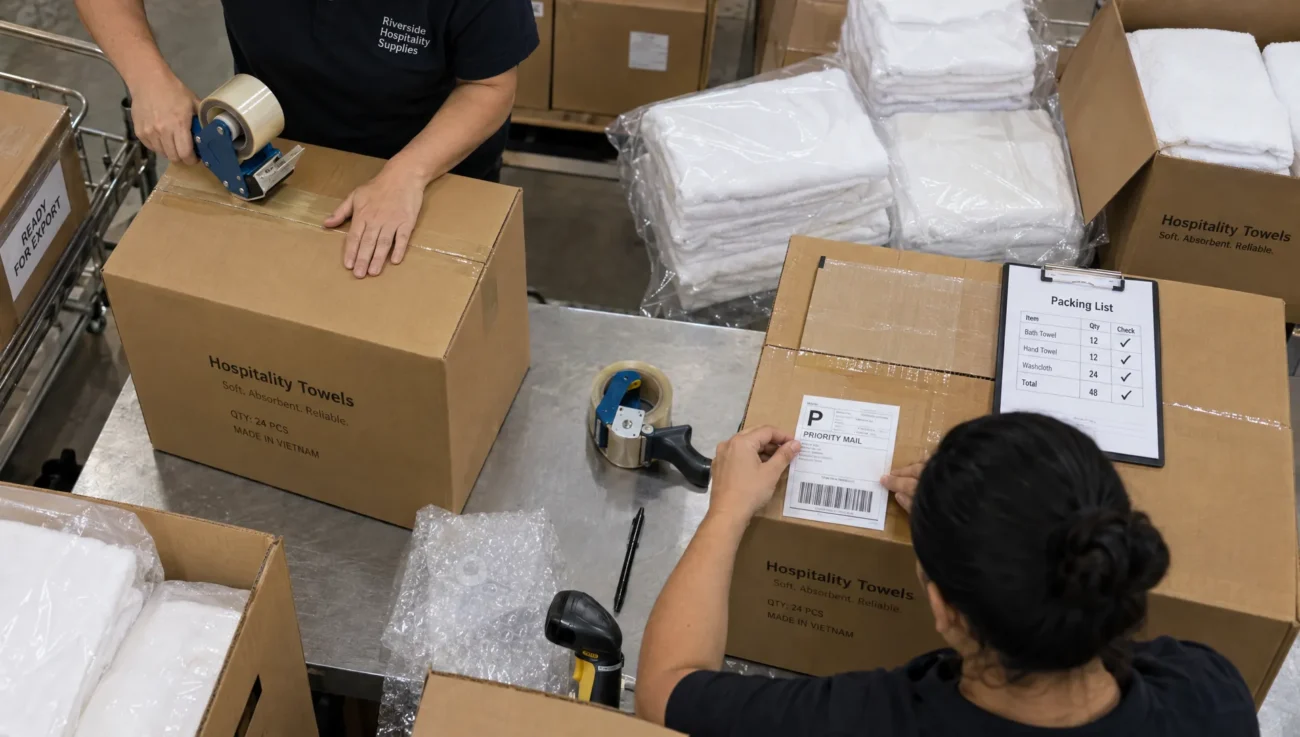
A useful quote from hospitality towel suppliers should tell you exactly what will be delivered, what the order will cost and how quality will be verified. A unit price alone cannot answer those questions. Two apparently similar offers may cover different towel specifications, packaging arrangements or delivery responsibilities.
For hotel purchasing teams, distributors and private-label buyers, those differences affect more than the initial invoice. They can change receiving costs, laundry performance, replenishment schedules and the options available if goods arrive outside specification.
The goal is not to make every quotation unnecessarily long. It is to remove ambiguity before a purchase order or deposit commits your business. Request a quotation that references a clear specification sheet, identifies every included service and separates confirmed charges from estimates. Then make sure the agreed details carry through into the purchase order and supply agreement.
What should hospitality towel suppliers include in a quote?
Every quote needs three layers: a defined product, a transparent commercial offer and a documented delivery and acceptance process.
At minimum, it should identify the supplier’s legal entity, quotation number, issue date, buyer and destination. Each towel type should have its own line item, with a reference to the applicable specification or approved sample.
A quotation is a comparison tool, not a substitute for a complete supply agreement. Important conditions should be incorporated into the documents both parties accept, especially tolerances, inspection rights, delivery responsibilities and remedies for nonconforming goods.
The following sections explain what to request and where vague wording can create avoidable costs.
1. Product specifications tied to each line item
Descriptions such as “premium hotel bath towel” leave too much open to interpretation. A quote should either state the specifications directly or reference a dated, version-controlled specification sheet.
That reference should cover fiber composition, finished dimensions, fabric weight in grams per square meter (GSM), color, construction and finishing details. Specify whether dimensions and weight apply before washing or after an agreed laundering procedure, and record the permitted tolerances.
When hospitality towel suppliers quote several products, each size and construction should have a distinct item code. A bath towel and hand towel should not share a generic description that makes later substitution difficult to detect.
For white towels, define how shade consistency will be assessed. For colored towels, identify the approved color reference rather than relying on a photograph. Border style, hems, hanging loops and label placement also belong in the specification when they matter to your operation.
Extreme Towel’s guide to wholesale towel specifications buyers should compare can help structure the technical attachment. The quotation should then identify exactly which version has been priced.
2. Quantities, minimums and transparent pricing
Ask for the ordered quantity, minimum order quantity and unit of sale for every item. “Per dozen” and “per piece” are easy to confuse when quotations use different formats.
The minimum may apply to the total order, each size, each color or each customized design. Those distinctions matter when buying a coordinated towel range or replenishing only one item.
Pricing should show the currency, unit price and extended total for each line. Any volume discount needs a stated quantity threshold and an explanation of whether it applies across mixed products or only identical items.
Require hospitality towel suppliers to identify surcharges separately rather than burying them in a final total. Depending on the order, these might include sample development, embroidery setup, special labels, testing, inspection or nonstandard packaging.
The quote should also state its validity period and any permitted price-adjustment conditions. If freight is estimated rather than fixed, label it accordingly and explain when the amount will be confirmed.
Finally, agree on quantity tolerances. If production may result in an overrun or shortfall, record the permitted range, whether buyer approval is required and how the final invoice will be calculated.
3. Customization and packaging costs
Private-label requirements need their own scope, not a brief note saying “branding included.”
Identify the branding method, logo dimensions, placement, thread colors or woven-label details. The quote should state which artwork files are required, whether a preproduction approval is included and who pays for revisions after approval.
Ask hospitality towel suppliers to distinguish one-time development charges from recurring per-piece costs. This makes the first order easier to compare with later replenishment orders and prevents setup fees from becoming an unexplained repeat charge.
Packaging deserves the same precision. Record pieces per pack, packs per carton, protective wrapping, carton markings and any required barcodes. If you need retail-ready presentation, specify it separately from bulk hotel packing.
Request estimated carton dimensions, gross weight and total shipment volume, with final figures confirmed before dispatch. These details help calculate freight and plan warehouse receiving.
Where packaging or labels must satisfy destination-market requirements, state who prepares the wording, who approves it and what supporting documentation is required. Do not assume standard export packaging automatically meets every buyer’s labeling needs.
4. Delivery terms and the full cost of receiving goods
A quoted delivery term should include the applicable Incoterms rule, a precise named place or port and the version used. “FOB Pakistan” does not identify a specific port, while “delivered” does not explain customs or unloading responsibilities.
The ICC’s Incoterms 2020 rules allocate specified delivery obligations, costs and risk between buyer and seller. They do not, by themselves, establish payment terms or ownership transfer.
For containerized cargo handed to a carrier before vessel loading, discuss whether FCA better reflects the actual handover than FOB. The right rule depends on the transport arrangement, not simply the supplier’s usual quotation template.
Hospitality towel suppliers should make clear which logistics charges their price includes and which remain with the buyer. Confirm export handling, main carriage, cargo insurance where applicable, destination handling, customs clearance and final delivery.
For a landed-cost comparison, add applicable duties, brokerage and other receiving costs. Treat recoverable import taxes separately from nonrecoverable costs, using advice appropriate to your destination country.
Request the country of origin and proposed customs classification, but have the classification and duty treatment checked by your customs broker. Preferential tariff treatment should not be assumed merely because goods originate in Pakistan.
5. Sampling, testing and acceptance criteria
A quote should explain how the ordered specification becomes an approved production standard. Hospitality towel suppliers should identify the sample process, approval stages and any associated charges before bulk manufacturing begins.
Clarify whether the sample is an existing stock item, a development sample or a production-representative sample. A stock sample may demonstrate general workmanship without confirming the exact construction, color or branding of your order.
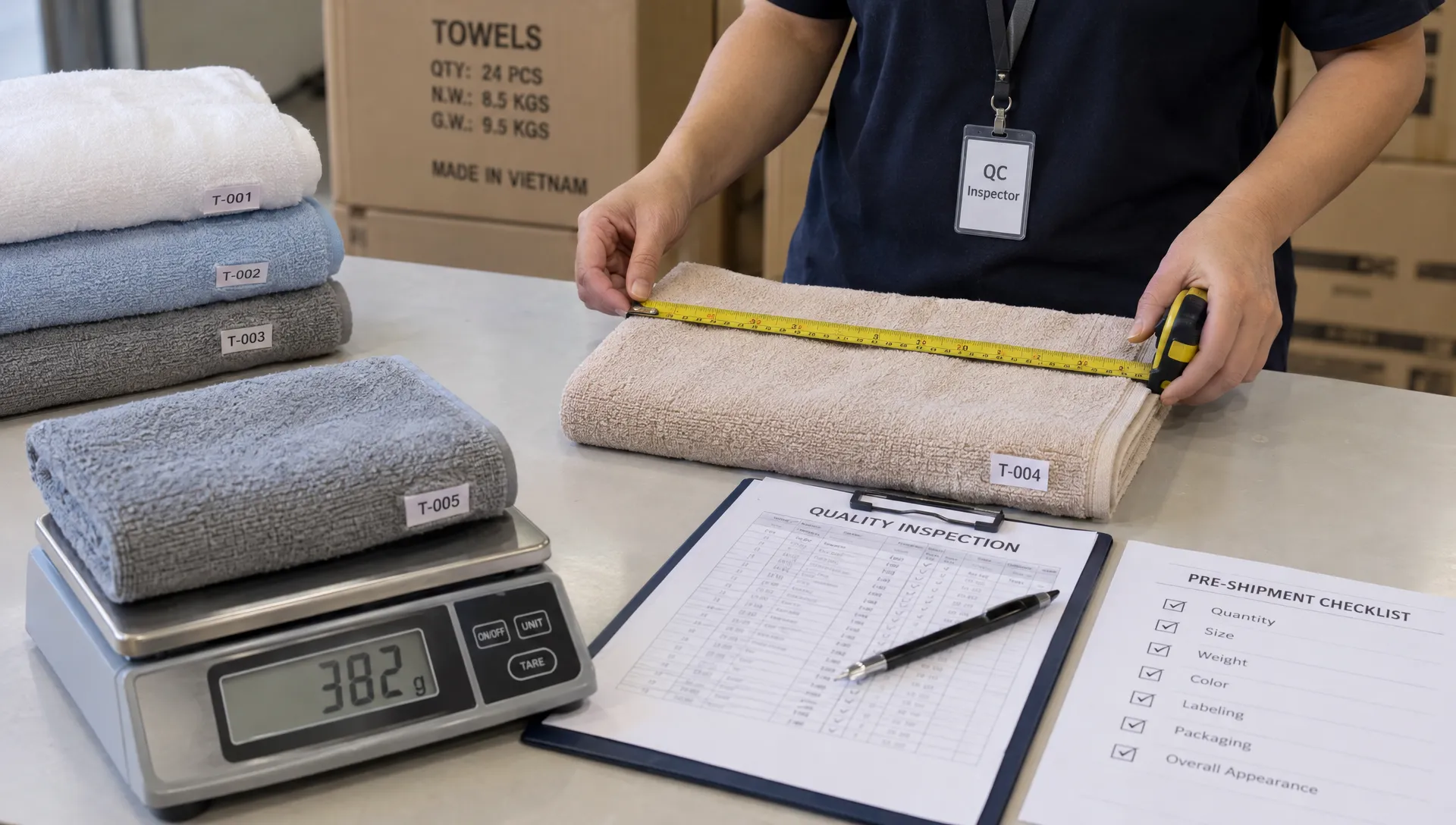
Acceptance criteria should identify the characteristics to inspect, the test methods and the agreed limits. Relevant checks can include dimensions, GSM, shrinkage, absorbency, colorfastness, stitching and visible defects. For laundry-related performance, define the washing and drying procedure so results can be compared meaningfully.
If pre-shipment inspection is required, state who performs it, when it occurs, who pays and what happens after a failed inspection. If an acceptance sampling plan is used, record its inspection level and acceptance quality limits rather than writing only “AQL inspection.”
For certification claims, request the certificate details and confirm that their scope covers the goods being quoted. Buyers requesting OEKO-TEX STANDARD 100 can use this guide to verifying certification when sourcing hospitality towels. Certification does not replace the separate performance requirements in your purchase specification.
6. Lead times with clear starting points
“Delivery in six weeks” is incomplete unless the quote explains when the clock starts and what delivery means.
Separate sample preparation, approval, bulk production, inspection, dispatch and estimated transit time. The production lead time may begin only after deposit receipt, final artwork approval or confirmation of all specifications. Record those dependencies explicitly.
Distinguish the factory-ready date from the shipment date and estimated arrival date. A manufacturing commitment is not automatically a commitment that goods will reach your hotel or warehouse by the same deadline.
For hospitality towel suppliers handling customized orders, the quotation should also explain how buyer revisions affect the schedule. An artwork change after approval may require a new sample, revised pricing or a later production slot.
Where an opening date or seasonal rollout makes timing critical, ask whether partial shipments are permitted and how additional freight would be allocated. Record the notification process for delays and any agreed contractual remedy, rather than assuming one applies.
Reorders need their own lead-time confirmation. An approved design can simplify development, but it does not guarantee immediate production availability or identical transport conditions.
7. Payment terms, documentation and claims
Payment terms should show the deposit, balance payment trigger, currency and payment method. If payment is linked to inspection, shipment or presentation of documents, specify the required evidence.
“Balance before delivery” is ambiguous when delivery could mean factory handover, vessel loading or arrival at the buyer’s premises.
Ask hospitality towel suppliers to list the documents included with the order. Depending on the transaction, these may include the commercial invoice, packing list, transport document, origin documentation and agreed inspection or test reports. Confirm any special document requirements with your broker before production finishes.
Claims handling also belongs in the commercial terms. Define the inspection period after receipt, required supporting evidence and the process for reporting shortages, transit damage or specification failures.
State the remedies to be considered, such as replacement, rework or a credit, and agree on responsibility for associated freight and handling costs. A broad promise to “resolve quality issues” gives neither party a clear procedure.
Finally, require written approval for material substitutions and changes to dimensions, branding or packing. Revised specifications should trigger a revised quote or documented change approval before production proceeds.
Compare quotes on a common cost basis
The simplest way to compare offers is to give each supplier the same quotation template. Normalize the quantities, specifications, packaging, delivery point and inspection requirements before comparing totals.
The following example uses invented figures solely to demonstrate the arithmetic. It is not a towel price benchmark or freight estimate. Both offers assume 10,000 identical towels, equivalent packaging and the same receiving point.
| Cost element | Offer A | Offer B |
|---|---|---|
| Towel unit price | USD 2.40 | USD 2.55 |
| Product total | USD 24,000 | USD 25,500 |
| Quoted logistics to the same receiving point | USD 5,200 | USD 2,900 |
| Subtotal before duties, taxes and other excluded costs | USD 29,200 | USD 28,400 |
Offer B has the higher unit price but the lower subtotal. A final landed-cost comparison would still need applicable duties, brokerage, taxes and any other excluded charges.
When hospitality towel suppliers leave a field blank, do not interpret it as included or free. Ask for written clarification. An offer that appears cheaper because it omits testing, packaging or destination charges has not yet been compared fairly.
Cost is only one part of the decision. A quotation that clearly documents quality and delivery commitments may present less purchasing risk than an incomplete offer with a marginally lower total.
Frequently asked questions
Should the quote include exact towel specifications? Yes. They can appear in the quotation or in a referenced specification sheet, but the reference should identify a specific version. Avoid descriptions that allow unapproved substitutions.
Does a quote need a guaranteed arrival date? It should distinguish production commitments from transport estimates. If arrival by a particular date is essential, discuss whether the supplier can accept that obligation and document the conditions and remedies in the agreement.
What is the difference between a unit price and landed cost? The unit price covers the quoted product on its stated commercial basis. Landed cost adds the applicable expenses of getting the goods to the agreed receiving point, such as freight, duties, brokerage and handling, while accounting appropriately for recoverable taxes.
Should hospitality towel suppliers include certification documents with every quote? If certification is a purchasing requirement, the quote should identify the relevant certification and provide details for verification. Confirm the certificate’s validity and scope rather than accepting a logo or an unsupported “certified” description.
Can an approved sample replace a specification sheet? No. A sample is useful for appearance and workmanship, but a written specification defines measurable requirements, tolerances and acceptance conditions. Keep both tied to the same order.
Request a quote that your purchasing team can use
Extreme Towel is a Pakistan-based manufacturer and exporter offering terry towels, hotel linen, OEM production, private-label customization and custom packaging.
When discussing your requirements with Extreme Towel, provide the towel specifications, quantities by size and color, branding requirements, destination and required receiving date. Ask for a line-item quotation that separates product costs, customization, packaging and delivery responsibilities. That gives your team a clear basis for comparing the offer and agreeing on the final order terms.