Searching for “hotel bed sheet manufacturer pakistan” produces plenty of claims about quality, capacity and competitive prices. For a hotel group, distributor or private-label buyer, those claims matter only when the supplier can support them with production records, repeatable samples and clear commercial terms.
The strongest evaluation asks a practical question: Can this manufacturer repeatedly deliver sheets that fit your beds, survive your laundry process and meet your agreed specifications? A soft sample or low quotation cannot answer that alone. Use the evidence-based process below to compare suppliers before committing to a bulk order.
Look Beyond the “hotel bed sheet manufacturer pakistan” Search Results
Start with a written evaluation framework rather than a collection of quotations. Otherwise, a supplier quoting lighter fabric or looser dimensional tolerances may appear cheaper than one offering the product you actually need.
The following weighting is an illustrative purchasing tool, not an industry standard. Adjust it to reflect your hotel category, laundry conditions and sourcing risks.
| Evaluation area | Suggested weight | Evidence to request |
|---|---|---|
| Laundry performance | 30% | Before-and-after measurements, wash-test records and trial results |
| Specification compliance | 20% | Fiber composition, fabric construction and finished-size tolerances |
| Production control | 20% | Process map, subcontracting disclosure and order scheduling |
| Bulk quality assurance | 15% | Inspection procedures, defect classifications and lot traceability |
| Commercial and export readiness | 15% | Complete quotation, shipping responsibilities and written remedies |
Score each supplier against the same requirements. Mark an unsupported claim as unverified rather than giving it the benefit of the doubt.
When evaluating a hotel bed sheet manufacturer in Pakistan, treat critical failures separately from the weighted score. A supplier that cannot identify who manufactures your goods or refuses written specifications should not qualify simply because its price is attractive.
Verify Who Actually Manufactures Your Sheets
A manufacturer may perform some operations internally and subcontract others. That arrangement is not automatically a problem. Undisclosed outsourcing and unclear accountability are.
Ask for a process map covering fabric sourcing, weaving, processing, cutting, sewing, finishing and packing. Identify which company performs each stage and who controls quality between stages.
Useful verification includes a factory visit, an independent audit or a live walkthrough that follows the relevant production route. General showroom footage does not establish manufacturing capability. Request records connected to comparable sheet orders, with customer-sensitive information removed where necessary.
Capacity claims also need context. Ask about available capacity during your delivery window, not just the factory’s maximum monthly output. Confirm whether the quoted schedule includes fabric procurement, processing, sample approval and inspection.
A credible response explains the production sequence and its constraints. It should also identify who will communicate delays and whether any production location can change without your approval.
Make the Product Specification Measurable
Your specification is the reference point for sampling, quotation and inspection. Without it, “hotel quality” can mean something different to every supplier.
A hotel bed sheet manufacturer in Pakistan should be able to review your requirements, flag inconsistencies and explain which tolerances it can achieve reliably. Do not accept a specification assembled from marketing descriptions alone.
Check Finished Fit, Not Just Size Names
“Queen,” “king” and “double” are insufficient for international orders. Mattress dimensions vary by market, brand and property. Mattress toppers can also change fitted-sheet requirements.
Record mattress length, width and total depth, then specify finished sheet dimensions and acceptable tolerances. For flat sheets, account for the tuck-in allowance your housekeeping team needs. For fitted sheets, define pocket depth, elastic placement and the required fit after laundering.
Decide whether acceptance measurements apply before washing, after an agreed wash sequence or both. These are different requirements and should not be left implicit.
For a more detailed dimensional brief, use Extreme Towel’s guide to sourcing fitted sheets for hotel programs. It is particularly relevant when your properties use different mattress depths.
Define Fabric Construction and Finish
Specify fiber composition, weave, yarn details where relevant, fabric weight and finishing requirements. If thread count is included, define how it is counted and verified. A high number alone does not establish strength, comfort or laundry performance.
Percale and sateen should be assessed against your intended guest experience and operating conditions, rather than ranked as universally better or worse. If percale is on your shortlist, Extreme Towel’s percale bed sheet manufacturing page provides a relevant starting point for a product-specific inquiry.
Include visual criteria such as whiteness, shade consistency and stripe appearance where applicable. Ask the supplier to disclose finishes that could influence initial softness or subsequent washing performance.
Test Samples in Your Actual Laundry Process
A showroom sample demonstrates appearance at one moment. It does not prove that the sheet will retain its dimensions, seams or handle through your operating cycle.
Ask each shortlisted hotel bed sheet manufacturer in Pakistan for samples made to the same specification. Record sample identifiers so that fabric lots and production details remain traceable.
Compare Before-and-After Results
Measure the samples before washing, then run an agreed trial through your hotel laundry or contracted laundry provider. Use the detergent system, temperatures, drying conditions and finishing process the sheets will actually encounter.
Assess dimensional change in both directions, seam integrity, pilling, appearance and fitted-sheet retention. Involve housekeeping staff as well as purchasing. A sheet can pass a visual check yet be difficult to fit or finish efficiently.
Dimensional change can be recorded using:
Dimensional change (%) = (post-wash measurement − original measurement) ÷ original measurement × 100
A negative result indicates shrinkage. State the measurement method and acceptance limits in advance so that suppliers are judged consistently.
A short trial helps identify early failures, but it cannot establish a full service life. If a supplier claims a particular number of commercial washes, request the test conditions and supporting records rather than treating the number as a guarantee.
Approve a Production-Representative Sample
Confirm whether the sample comes from stock fabric, a development run or the intended bulk fabric lot. This distinction affects how confidently you can predict order performance.
After approval, retain a signed reference sample and specification with both buyer and supplier. For larger programs, consider a pilot order before scaling. That pilot should test production consistency, packing, delivery and laundry performance together.
Require written approval for changes to fiber composition, fabric source, construction or finishing. An attractive original sample provides little protection if the bulk order is made differently.
Check Bulk Quality Controls Before Shipment
The next test for a hotel bed sheet manufacturer in Pakistan is whether its inspection system can detect departures from the approved sample before goods leave the factory.
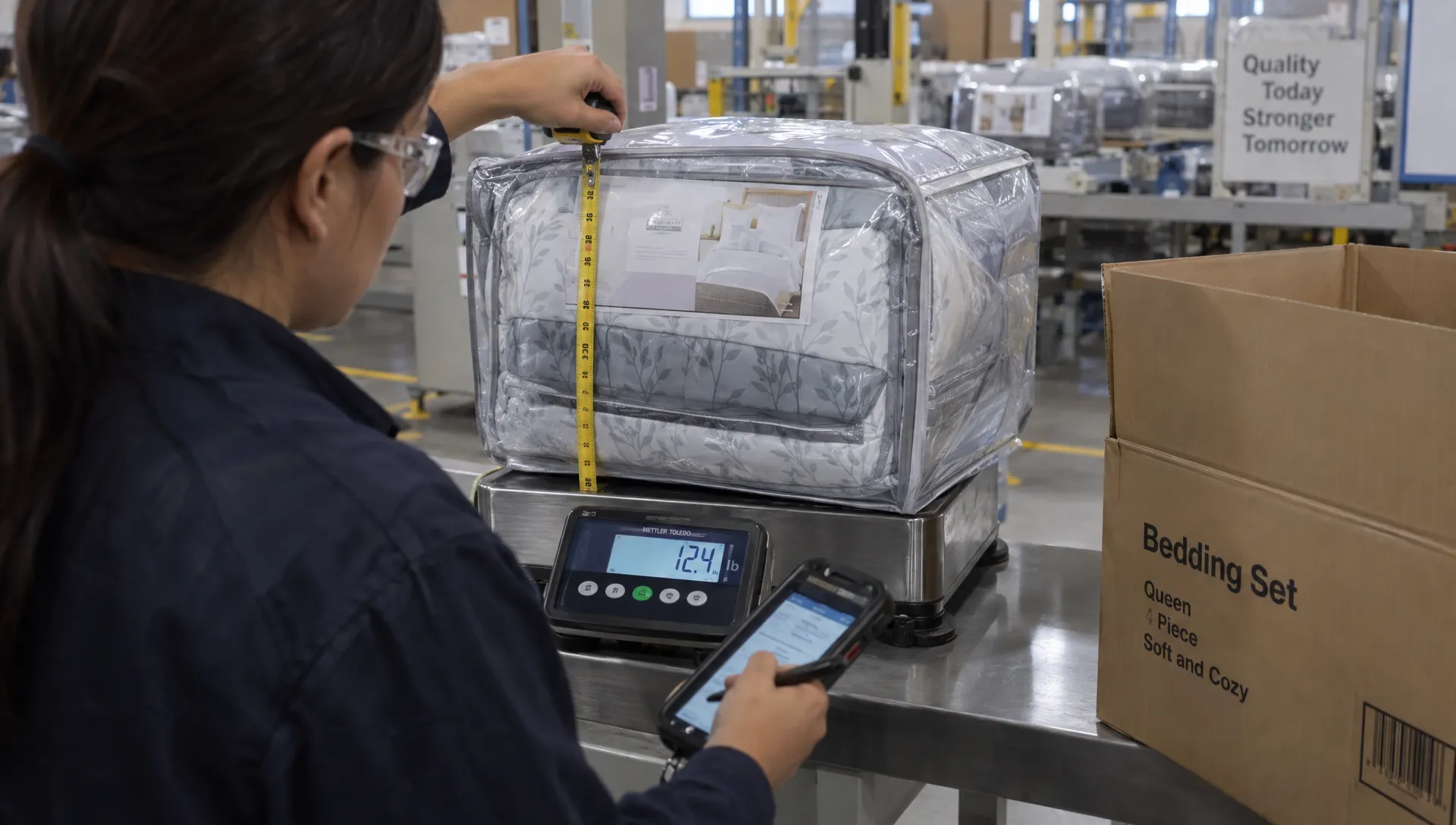
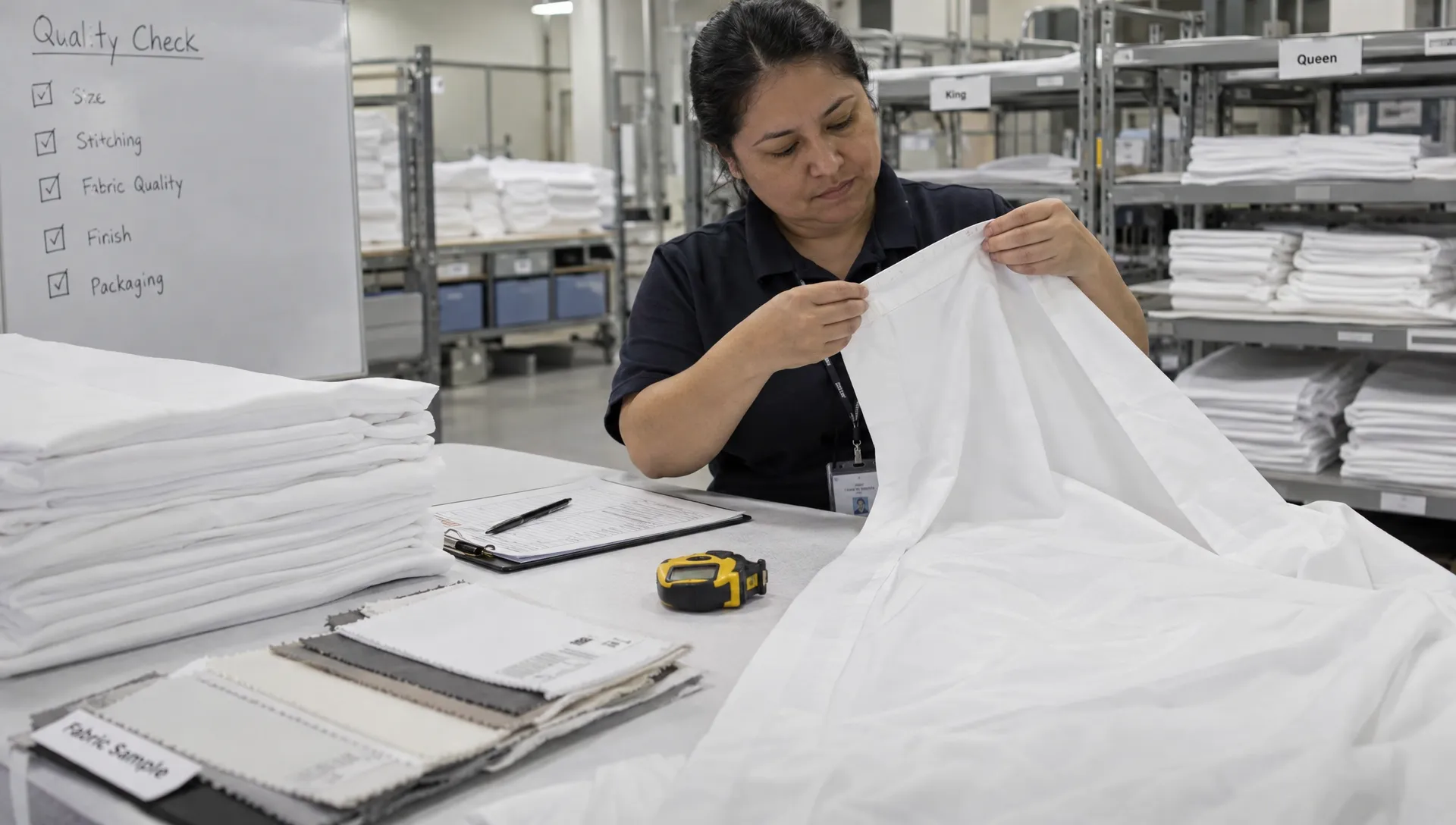
Ask where inspections occur and what records they generate. Fabric checks, in-process sewing checks and finished-product inspection serve different purposes. A final inspection alone may discover problems too late for economical correction.
Define defects by their effect on use. Holes, open seams, incorrect sizes, contamination, uneven hems and packing errors should not all receive identical treatment. Agree on critical, major and minor defect categories before production.
If you use acceptance quality limit (AQL) sampling, specify the sampling standard, lot size, inspection level and acceptance criteria. AQL inspection is a lot-acceptance method, not a promise of zero defects. Critical issues may need separate zero-acceptance or full-check requirements.
Inspection records should connect findings to identifiable production lots. Agree whether failed lots will be sorted, reworked or remade, then define how they will be reinspected before release.
Verify Certificates Without Overreading Them
Request certificates only when they address your purchasing requirements. Check the issuing body, certificate holder, validity and product scope rather than accepting a logo in a brochure.
For example, OEKO-TEX STANDARD 100 concerns testing textiles for harmful substances. It does not, by itself, establish resistance to industrial laundering or prove that a sheet meets your dimensional specification.
Confirm that any document offered by a hotel bed sheet manufacturer in Pakistan covers the relevant product or material. A certificate associated with a different factory, fabric or product range may not support your order.
Keep compliance evidence separate from performance evidence. Certificates can answer specific questions, while wash trials and inspection records answer others.
For destination markets such as the United States, Canada, Japan, Australia and European countries, have your importer or compliance adviser confirm applicable labeling and product requirements before packaging is printed.
Compare Landed Cost and Contract Responsibilities
Compare quotations only after aligning specifications, quantities and delivery terms. Confirm whether the price includes labels, packaging, testing, inspection and any other agreed services.
Ask for the named delivery location and the applicable Incoterms version. The International Chamber of Commerce’s Incoterms rules allocate specified transport responsibilities, costs and risks between buyer and seller. They do not replace payment terms, product acceptance criteria or a complete sales contract.
Check freight, insurance where applicable, duties, taxes, brokerage and destination handling with the parties responsible for them. Confirm carton dimensions and shipment volume rather than estimating freight from sheet quantities alone.
A useful comparison is:
Landed cost per accepted sheet = total landed order cost ÷ number of sheets accepted for use
This calculation helps expose the effect of unusable goods. For longer-term purchasing, also track replacements and actual laundry performance rather than assuming the cheapest purchase price produces the lowest operating cost.
A hotel bed sheet manufacturer in Pakistan should also provide a milestone-based schedule. Distinguish production completion from shipment departure and arrival. Ask what happens if sample approval is late, inspection fails or a transport booking changes.
Agree on Remedies and Repeat-Order Controls
Commercial reliability includes how a supplier responds when something goes wrong. Before placing the order, agree on the claim window, required evidence and available remedies for nonconforming goods.
Define whether a verified defect leads to replacement, rework or credit, and who pays associated transport costs. Separate manufacturing defects from damage caused by handling or use outside the agreed laundry conditions.
Clear dimensions, material disclosures and written policies are basic trust signals across bedding purchases. Ocodile’s guide to choosing a trustworthy floor bed seller illustrates this principle from a consumer perspective. For hotel sourcing, extend those checks to measurable acceptance criteria and enforceable commercial terms.
For repeat orders, require a current specification revision and a change-control process. Retain reference samples and order records so that a reorder is not based on memory or a product name alone.
Your evaluation of a hotel bed sheet manufacturer in Pakistan should end with three outcomes: approved, approved subject to specific corrections or rejected. Document unresolved issues before paying a deposit, not after production begins.
Frequently Asked Questions
What documents should I request before placing a bulk order? Request a detailed specification, production and subcontracting information, sample records, relevant certificates, an inspection plan and a complete quotation. The contract should also state payment terms, delivery responsibilities and remedies for nonconforming goods.
Is thread count the best way to compare hotel sheets? No. Evaluate it alongside fiber composition, weave, fabric construction, finishing and laundry results. Compare sheets against the same specification rather than treating a higher thread count as automatic proof of better performance.
Should I reject a supplier that uses subcontractors? Not automatically. Focus on disclosure, traceability and control. The supplier should identify outsourced stages, explain its checks and accept responsibility for the finished order.
How many washes should a sample trial include? Set the trial with your laundry provider according to your operating conditions and purchasing risk. A short trial can reveal early problems, but a service-life claim needs more extensive evidence under defined conditions.
Prepare an Evidence-Based Supplier Inquiry
Before contacting a hotel bed sheet manufacturer in Pakistan, assemble your mattress measurements, fabric requirements, estimated quantities, laundry conditions and destination details. Include the evidence you expect at sampling, production and shipment stages.
Extreme Towel offers hotel linen production, OEM manufacturing, private-label customization, quality control inspections and global export support. To discuss your program, share your sourcing requirements with Extreme Towel and request a written proposal covering the specification, sampling plan, inspection arrangements and commercial terms.
Use the same evaluation framework for every shortlisted supplier. The strongest choice is the one whose evidence supports your requirements and whose commitments are clear enough to verify.