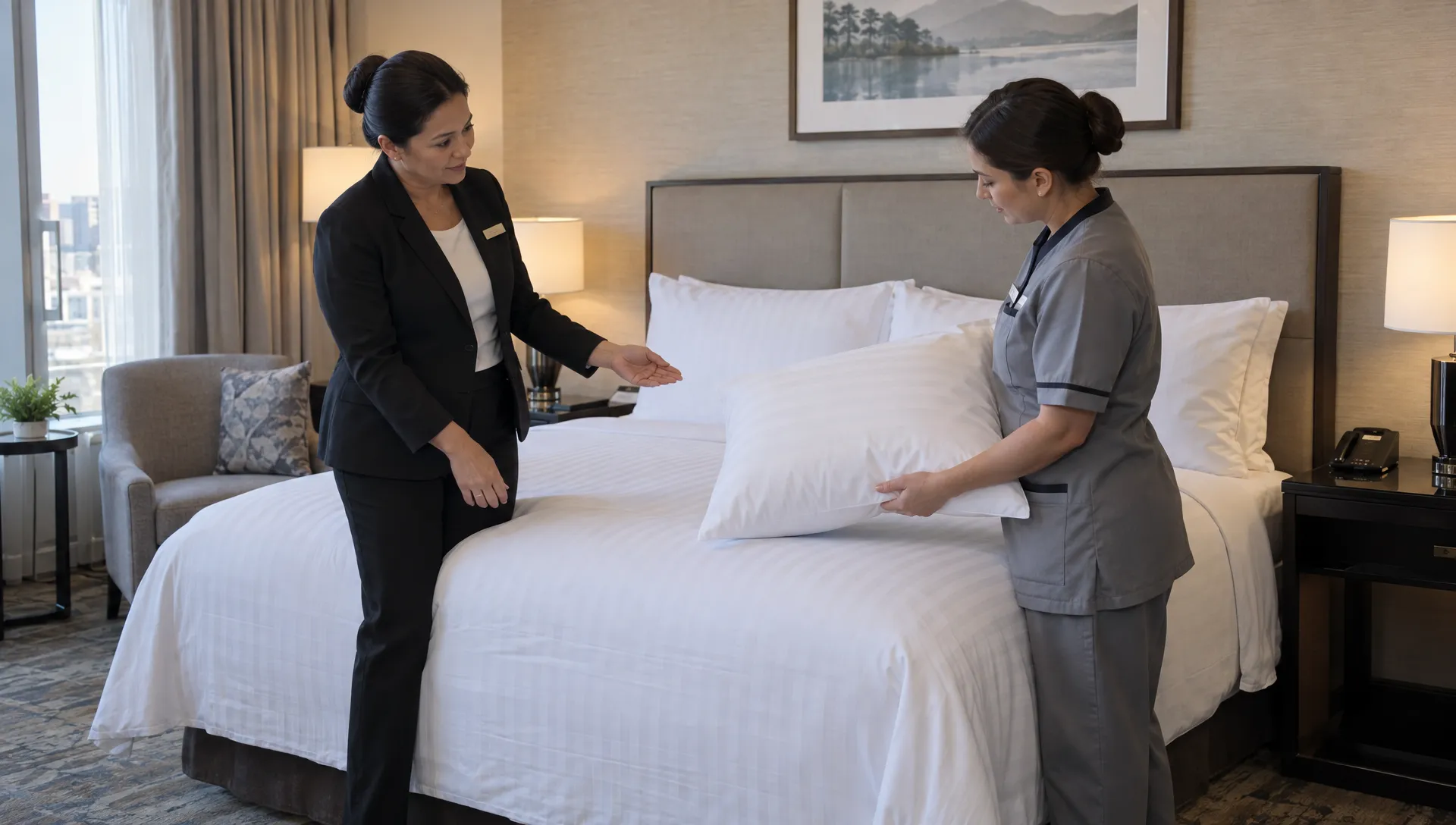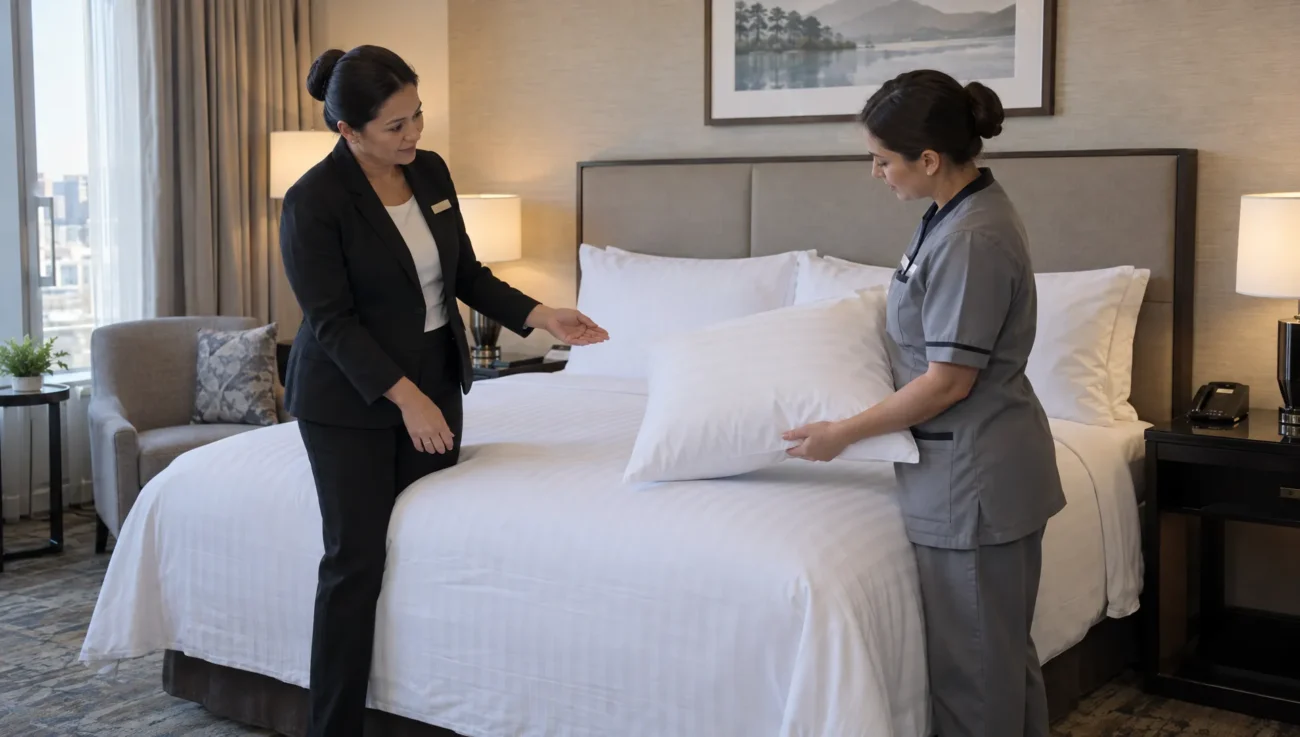
Color mismatch in bed sheets and pillowcases often starts before a bedding set reaches the packing line. Separate dye lots, different fabric constructions or inconsistent finishing can make two products labeled “ivory” look noticeably different on the same bed. Laundering can widen that difference later.
For hotels, wholesalers and private-label brands, prevention requires more than choosing a color name. Use an approved physical reference, control production lots and evaluate every component together, both before and after washing. The following approach turns those requirements into practical purchasing and quality-control checks.
Identify what is causing the mismatch
Two fabrics can share a color designation without producing the same visual result. Before asking a supplier to adjust a shade, establish whether the difference comes from dyeing, construction, lighting or use.
| Potential cause | What you may notice | Preventive control |
|---|---|---|
| Different dye lots | One component looks slightly darker or warmer | Approve lots together and keep matched groups traceable |
| Different fibers or weaves | Similar color but different brightness or sheen | Review the actual finished fabrics side by side |
| Lighting differences | A match in daylight becomes a mismatch indoors | Check under agreed lighting conditions |
| Optical brighteners | Whites appear bluish, yellowish or unevenly bright | Align brightener requirements and measurement settings |
| Unequal laundering or age | Replacement pieces stand out against existing stock | Track wash history and assess replenishment samples |
This diagnosis matters because adding more dye will not necessarily correct a difference caused by surface sheen or optical brighteners.
Define the color standard for bed sheets and pillowcases
Approve a physical master swatch on the intended fabric, not just a photograph, screen image or color name. Digital references are useful for communicating the initial direction, but camera settings and displays can change how a shade appears.
Keep matching references with the buyer and manufacturer. Label them with the fabric specification, color identifier, approval date and revision. Store reference material away from light, dust and contamination, with a protected archive sample available when the working reference needs checking.
Your specification should define both visual approval and instrumental assessment where appropriate. If using CIEDE2000 color difference, written as ΔE00, agree on the measurement conditions and acceptance limit before bulk production. The formula is standardized in ISO/CIE 11664-6, but there is no single tolerance suitable for every bedding program.
A numerical result should support the visual decision, not replace it. Two components can each fall within tolerance against the master yet still look different from one another. Require direct component-to-component comparison as well.
Approve the fabric and finishing process together
To keep bed sheets and pillowcases visually consistent, specify more than fiber content and thread count. Yarn characteristics, weave, fabric weight and finishing all influence how the surface reflects light.
For example, a smooth sateen pillowcase can look brighter than a matte percale sheet even when their measured colors are close. If contrasting constructions are intentional, approve the finished combination rather than expecting identical appearance from separate swatches.
Lab dips help establish the dye recipe on a small scale. They should use the intended production substrate, but they are not a substitute for reviewing bulk fabric after finishing. Changes in bleaching, softening or other treatments can shift the final appearance.
Require approval at defined stages: the initial color sample, finished bulk fabric and a sewn set assembled from the proposed production materials. Any subsequent change to fiber blend, fabric source or finish should trigger a review of whether color approval remains valid.
If the underlying construction is still being selected, first establish your requirements for durable bed sheet fabrics. Color consistency is easier to manage when the substrate is stable.
Keep dye lots linked through cutting and packing
Where construction and order volume allow, sourcing matching components from the same dyed fabric lot reduces one source of variation. It does not eliminate the need to inspect: shade can still vary between rolls or across a single roll.
For bed sheets and pillowcases made from separate production lots, require joint approval before cutting. Approving a sheet lot on Monday and a pillowcase lot on Friday, each in isolation, leaves room for a visible difference when the set is assembled.
Ask the manufacturer to maintain traceability from dyed fabric through finished goods. Roll identification, cutting records and carton lot codes should make it possible to identify which materials went into each matched group.
A practical packing rule is to assemble sets only from approved matching groups. Do not allow packing teams to substitute a different lot simply because the label carries the same color code.
For larger programs, agree on a physical shade range showing acceptable variation. This should define controlled limits, not provide permission to mix visibly different pieces within a retail pack or hotel room allocation.
Inspect under the lighting customers actually use
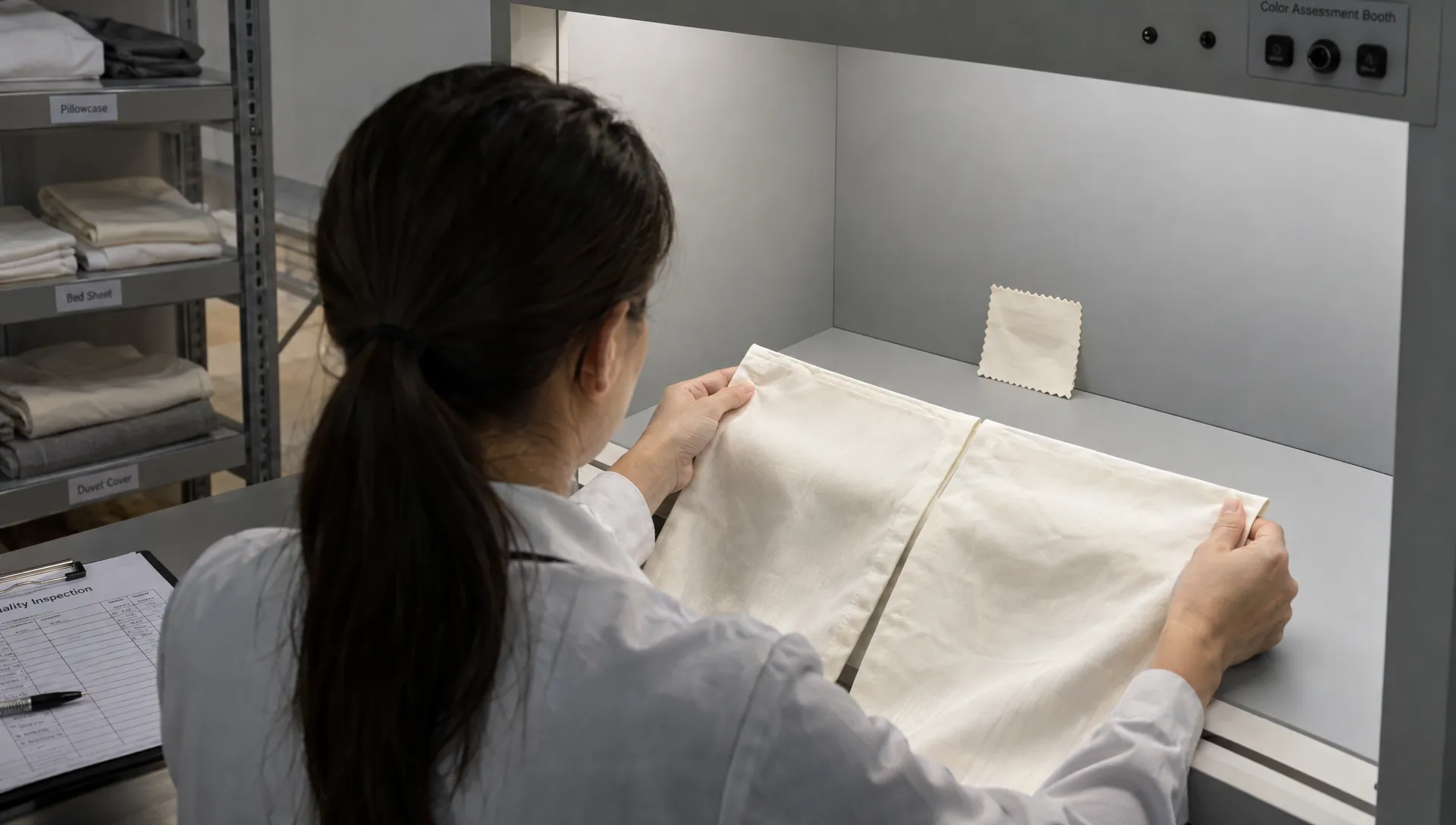
Evaluate bed sheets and pillowcases under controlled lighting and at least one additional light source relevant to their destination. A bedding set may look acceptable under daylight-type illumination but visibly different under a hotel room’s warm LED lighting.
This behavior can result from metamerism, when two materials match under one light source but not another because their spectral reflectance differs. A single office-light inspection can miss it.
Agree on a primary light source, such as a D65 daylight simulator, then add representative room or retail lighting. Keep the viewing background neutral and compare equivalent fabric areas at the same orientation. Folds, shadows and different viewing angles can exaggerate apparent differences.
Instrument readings also need consistent handling. Use the same measurement geometry, fabric orientation, backing and number of layers, with readings from multiple locations. For whites containing fluorescent brighteners, specify and control the instrument’s UV setting.
Record whether a rejection concerns actual shade, brightness, sheen or a light-dependent mismatch. That distinction helps the mill investigate the right process rather than repeatedly adjusting a dye recipe that is not the root cause.
Test whether the match survives laundering
A set that matches when unpacked may separate in appearance after washing. Different dye systems, finishes or brightener treatments can respond differently to detergent, temperature and bleaching chemistry.
Test the proposed components together using the intended care process. For hospitality programs, obtain the actual laundry conditions rather than relying on a generic “commercial wash” description. Relevant details include detergent chemistry, bleach type, wash temperature, drying conditions and finishing equipment.
For laboratory assessment, AATCC TM61 provides accelerated laundering procedures used to evaluate colorfastness. Select the applicable procedure with the testing laboratory. It should not automatically be treated as a complete simulation of the property’s laundry process, particularly where bleach or other treatment conditions differ.
Assess two separate outcomes: color change in each fabric and staining of adjacent materials. Then compare the washed components against one another after drying and conditioning under consistent conditions. Retain unwashed controls so the starting shade remains available for comparison.
Matching fade behavior matters as much as matching initial color. Include an agreed wash assessment in the approval process for bed sheets and pillowcases, especially when they use different fabrics or will enter an intensive laundry program.
Make shipment checks and reorders traceable
Before shipment, inspect complete assembled sets rather than reviewing only loose swatches. Sampling should cover the production lots included in the order, with enough visibility to detect an unapproved lot substitution. A single attractive sample cannot demonstrate consistency across every carton.
Your purchase specification should clearly record:
- Approved reference: Master sample identification, fabric specification and revision.
- Inspection conditions: Lighting, visual assessment method and any instrumental requirements.
- Lot controls: Approved matching groups and the required traceability records.
- Wash approval: Agreed procedure, assessment stages and acceptance requirements.
- Nonconforming stock: Identification, segregation and approval steps before release.
Keep retained finished samples from accepted deliveries, identified by production lot and shipment. These support investigations and provide context for replenishment orders, although protected master references should remain the primary approval standard.
For replenishment, compare new bed sheets and pillowcases with both the master and representative stock already in service. Older linen may have changed enough that a perfect match to the original standard no longer matches the room inventory.
Include these expectations when evaluating private-label bedding manufacturers, so responsibility for approvals, testing and corrective action is clear before an order is placed.
Handle an existing mismatch without creating another
If a delivery arrives with inconsistent shades, separate the affected lots before distribution. Record carton identifiers, component codes and photographs taken under consistent lighting, then compare the goods with the approved physical reference. Photographs help document the issue but should not be the sole basis for shade acceptance.
Next, determine whether the problem affects every set, specific lot combinations or only particular lighting conditions. This can reveal whether the appropriate response is repacking approved combinations, replacing one component or asking the manufacturer to investigate production.
Avoid experimenting with extra bleach, household dye or unapproved chemical treatments to force a match. These can change fabric strength, finish and future wash behavior without producing a stable result.
For hotel stock that has aged unevenly, keep visibly compatible pieces together and replenish by room group where practical. Mixing brand-new white pillowcases with heavily used sheets can create an obvious contrast even when the new goods meet specification.
Frequently asked questions
Should bed sheets and pillowcases come from the same dye lot? Where they use the same fabric, a shared dye lot can reduce variation. It is not always practical, and it does not guarantee uniformity. When separate lots are necessary, approve the components together and maintain traceable matching groups through packing.
Why do white pillowcases look different from white sheets? Differences can come from fiber composition, optical brighteners, finishing or laundering history. One item may appear bluer or brighter while another looks warmer. Compare them under consistent lighting, then investigate the fabric specification and wash conditions before treating the difference as a dyeing defect.
Is a low Delta E value enough to approve a matching set? No. The result depends on the formula and measurement conditions, and it does not fully describe texture or sheen. Combine instrumental checks with side-by-side visual inspection under agreed light sources, including a check after the specified wash assessment.
Put color requirements into your next manufacturing brief
A reliable color program starts with a reference everyone can inspect and a process everyone has agreed to follow. Define the fabric, finished shade, lighting conditions, lot controls and laundering requirements before bulk production begins.
Extreme Towel offers custom OEM manufacturing, hotel linen production and private-label customization from Pakistan. To discuss a bedding order, share your manufacturing requirements with Extreme Towel, including your reference samples, intended laundry process and replenishment needs. Agree on the available approval and inspection arrangements before placing the order.