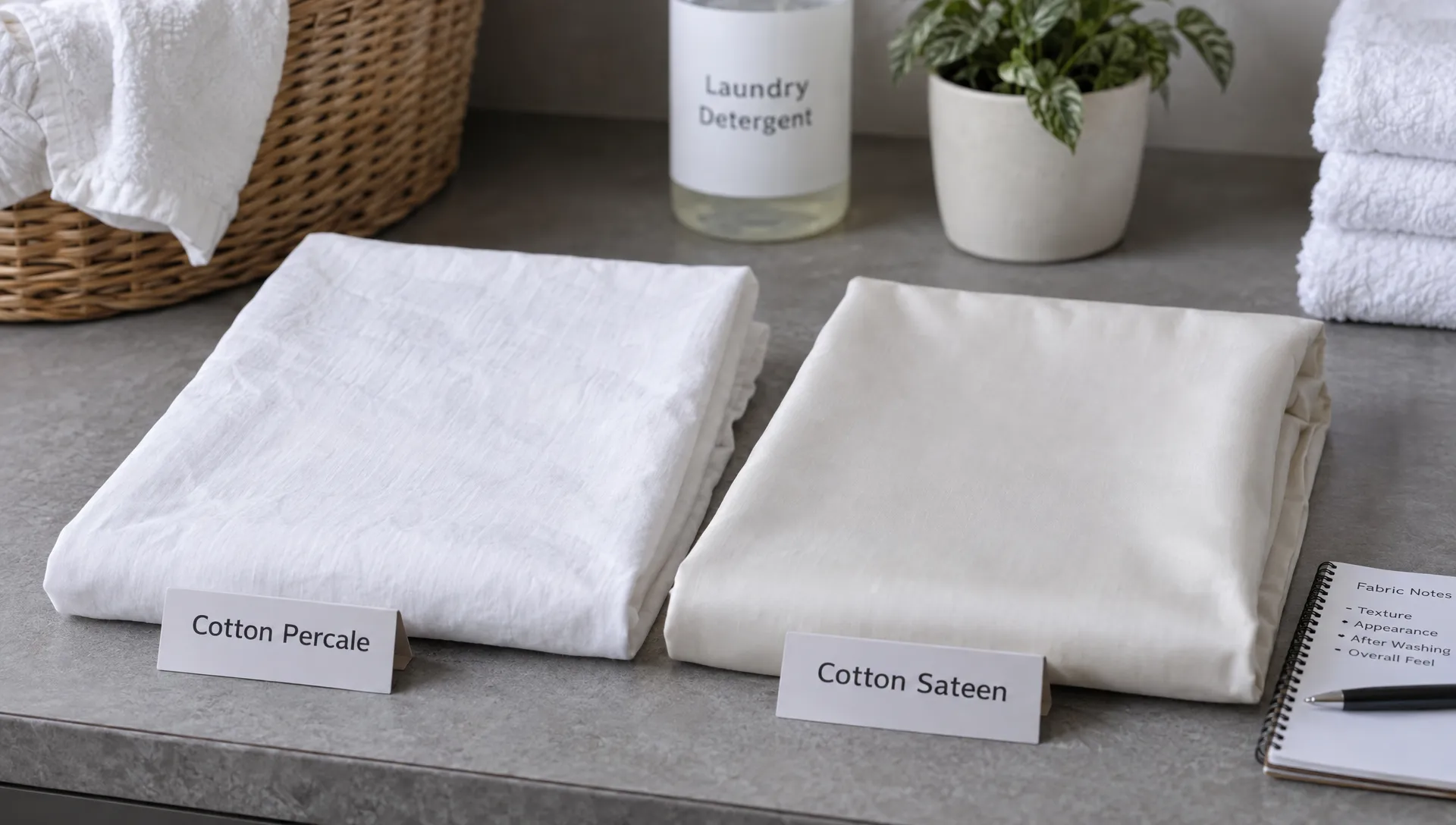
Choosing premium cotton sheets often comes down to two weaves: percale and sateen. Percale usually feels crisp and matte, while sateen feels smoother and has a subtle sheen. Neither is automatically better. The right choice depends on the sleep experience you want, the laundering process the sheets must withstand and the consistency you need across repeat orders.
For hotels, distributors and private-label brands, that makes this more than a question of softness. A fabric that feels impressive in an unwashed sample still needs to fit properly, retain its appearance and perform after repeated laundering.
Percale and sateen at a glance
Both weaves can be made from 100% cotton. Their differences begin with how the yarns interlace, not with a different fiber ingredient.
| Buying consideration | Cotton percale | Cotton sateen |
|---|---|---|
| Construction | Plain weave, with a one-over, one-under interlacing pattern | Longer yarn floats, commonly in a four-over, one-under repeat |
| Surface appearance | Matte and relatively understated | Smoother-looking with a subtle sheen |
| Typical hand feel | Crisp, light and structured | Smooth, supple and more fluid |
| Sleep experience | Often preferred by people who like an airy feel | Often preferred by people who like a more enveloping feel |
| Wrinkling | Creases can be more noticeable | Often appears less creased, but is not wrinkle-free |
| Wear considerations | Short floats generally offer good resistance to snagging | Longer surface floats can be more exposed to abrasion and snagging |
These are tendencies, not guarantees. Yarn quality, fabric density and finishing can change the result substantially. Two products sold as premium cotton sheets may share the same weave name yet behave differently in use.
What gives percale its crisp feel?
Percale's frequent interlacings create a balanced surface without long exposed yarn floats. The resulting fabric typically feels more structured than sateen and has little surface shine.
That crispness does not mean the fabric must feel rough. Well-made percale can become more relaxed with laundering while retaining its characteristic dry, fresh hand. Buyers seeking a deliberately silky feel, however, may prefer a different construction.
What gives sateen its smooth finish?
Sateen places longer sections of yarn across the fabric face. Those floats create a smoother surface that reflects light differently, producing its recognizable sheen and fluid drape.
Cotton sateen is not the same as polyester satin. “Sateen” describes a weave construction commonly used with cotton, while a satin product may use other fibers. Always check the fiber composition rather than judging by appearance alone.
Which weave suits your guests or customers?
For hot sleepers and lighter bedding
Percale is often the better starting point when customers want a crisp, less enveloping sheet. It can suit warm bedrooms, lightweight bedding collections and hotels seeking a fresh, matte presentation.
However, weave alone does not determine cooling performance. A densely constructed percale can feel less airy than a lighter sateen. Fabric weight, yarn size, finishing and the rest of the bedding system all affect comfort. A heavy duvet or insulating mattress protector can outweigh a modest difference between sheet fabrics.
When comparing premium cotton sheets for warm-weather use, assess finished samples rather than treating “percale” as a cooling guarantee.
For a smooth, draped presentation
Sateen is a strong candidate when immediate softness and a gently lustrous appearance are central to the collection. Its drape can suit bedrooms where the bedding is intended to look fluid rather than sharply tailored.
Some sleepers find sateen warmer, particularly in heavier constructions. That can be welcome in cooler rooms, but it is not a universal property. Let the target customer's preference guide the decision instead of assuming that a smoother sheet is necessarily more luxurious.
How the weaves behave in commercial laundry
Wrinkles and finishing requirements
Percale often shows creasing more clearly, especially when sheets remain compressed after washing or are overdried. A hotel that wants a smooth, tightly presented bed should evaluate the fabric through its actual drying and finishing equipment.
Sateen may look smoother with less visible creasing, but it still wrinkles. Neither weave should be described as wrinkle-free unless a specific treatment supports that claim and its performance has been verified.
For premium cotton sheets in hospitality, approval should include the appearance after laundering, not just the look of a freshly unpacked sample.
Abrasion, pilling and surface changes
Percale's short floats can help limit snagging. Sateen's longer surface floats need closer attention during abrasion and snagging assessments, especially where rough handling or contact with damaged equipment is possible.
Pilling cannot be predicted from the weave name alone. Fiber length, yarn quality, fabric construction and laundering conditions all contribute. Sateen's sheen can also change with washing and wear, so compare washed samples under consistent lighting rather than relying on the original showroom finish.
Shrinkage and service life
Both fabrics can shrink. The amount depends on their construction, processing and care conditions, not simply whether they are percale or sateen.
Check dimensional change in both length and width. A fitted sheet that remains usable across the width may still become too short or lose pocket depth after laundering. Do not assume that either weave will deliver a longer service life without testing representative production samples.
Fiber quality matters more than the weave label
Long-staple cotton can support smoother, stronger yarns, but a fiber description is only one part of the specification. Spinning quality, yarn consistency and fabric finishing also influence the final result.
Pima and Egyptian cotton are not weave types. Pima refers to a cotton type associated with extra-long staple fibers, while an Egyptian cotton claim concerns origin. Neither label establishes how the fabric was woven or guarantees the performance of the finished sheet. Ask for documentation supporting any origin or fiber claims used in your marketing.
Thread count also needs context. It describes the number of threads within a given fabric area, not the fabric's weight or an overall quality score. Ask how the figure is calculated and whether the yarns are single-ply or multi-ply.
The strongest comparison of premium cotton sheets considers fiber, yarn construction, thread count and fabric weight together. A higher number on one specification cannot compensate for weak yarns or unstable finishing. For a broader purchasing framework, Extreme Towel's guide to choosing fabric for bed sheets that last explains how these factors work together.
How to test premium cotton sheets before a bulk order
A useful comparison begins with representative samples and a written evaluation plan. Try to compare similar fiber quality and finishing, then record the remaining differences rather than attributing every result to weave.
Establish a repeatable wash trial
Keep one unwashed control sample from each fabric. Wash the others using the process intended for the finished product, including the detergent system, drying conditions and any ironing or calendaring.
Choose evaluation checkpoints before testing begins. For example, an initial wash can reveal immediate finish changes, while further agreed cycles help expose fit loss or surface deterioration. This is a screening process, not a prediction of an exact service lifespan.
A laboratory can measure dimensional change using a recognized method such as ISO 5077, alongside suitable washing and drying procedures. For commercial buyers, testing through the actual laundry remains valuable because it captures the conditions the sheets will encounter.
Record more than softness
Use the same assessment sheet for both fabrics. Record dimensions, surface appearance, hand feel, seam condition and any pilling or snagging. Photograph samples under the same lighting and assess them without adding a fabric conditioner that is absent from normal operations.
When evaluating premium cotton sheets, separate personal preference from defects. A tester may prefer percale's crispness while another favors sateen's drape. Shrinkage beyond the agreed tolerance or seam failure is a different issue and should not be averaged into a subjective comfort score.
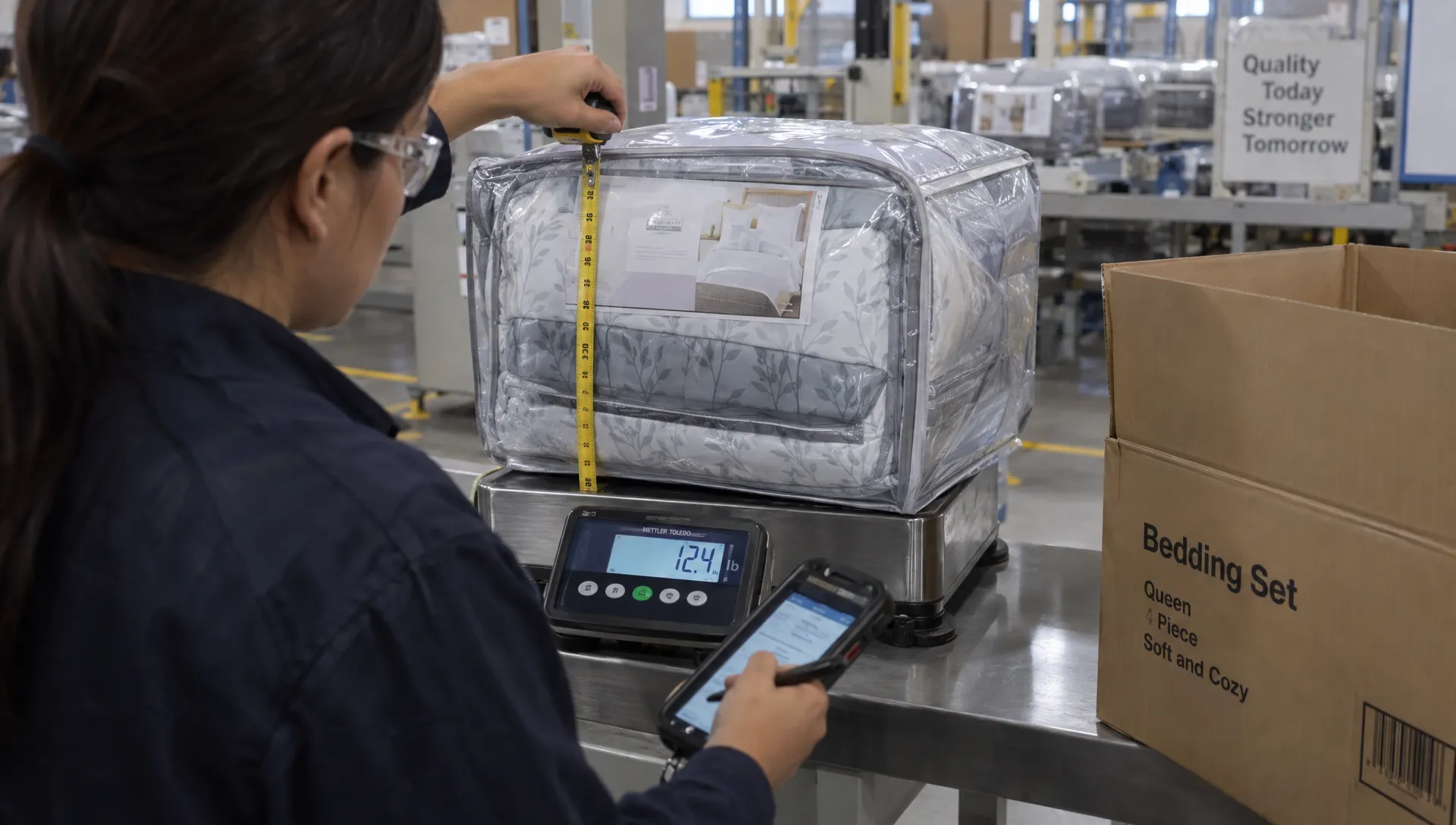
Turn the preferred weave into a clear purchase specification
A successful sample is only useful if the supplier can reproduce its important characteristics. Keep an approved reference sample and attach a written specification to the purchase order.
The specification should cover fiber composition, weave, yarn details, thread-count calculation, fabric weight and finish. It should also identify finished dimensions, measurement methods and agreed tolerances before and after laundering. Include requirements for seams, hems, fitted-sheet elastic and shade consistency where relevant.
For international orders, avoid relying on names such as “queen” or “king” alone. Mattress dimensions and retail conventions differ between markets, and a topper can materially change the required fitted-sheet depth. The guide to custom-size bed sheets and better fit can help buyers translate bed measurements into a clearer order.
When sourcing premium cotton sheets, treat certification as a separate verification task rather than proof of comfort or durability. For example, OEKO-TEX STANDARD 100 concerns testing for harmful substances; it does not establish that a sheet is organic, cooler or longer-lasting. Confirm that any certificate is valid and covers the product being purchased.
Finally, agree on inspection criteria before production. A reference sample without measurable acceptance criteria leaves too much room for disagreement over bulk quality.
Which weave should you choose?
Choose percale when your brief emphasizes a matte appearance, crisp hand and lighter-feeling bedding. It is a practical starting point for hospitality collections that prioritize a fresh presentation, provided the laundry can achieve the required finish.
Choose sateen when your brief emphasizes a smooth surface, fluid drape and subtle sheen. Evaluate its surface appearance carefully after laundering, particularly if the bedding will face intensive handling.
For a distributor or private-label brand serving different customer preferences, offering both may make sense. Keep their positioning distinct rather than presenting one as the universal upgrade. Premium cotton sheets should earn their positioning through a defined customer experience and verified performance, not a weave name alone.
Frequently asked questions
Is percale or sateen better for hotel sheets? Neither is universally better. Percale suits a crisp, matte presentation, while sateen suits a smoother, more lustrous one. Compare both through the hotel's laundry process and assess fit, appearance and guest comfort before approving production.
Are 100% cotton sheets always the best choice? They are a strong option when cotton's feel and absorbency match the brief. They can still wrinkle and shrink. Blends may suit different operational priorities, so composition should be selected alongside care requirements and the intended sleep experience.
Is Pima cotton better than Egyptian cotton? The labels are not directly equivalent: Pima describes a cotton type, while Egyptian identifies origin. Compare verified fiber specifications and finished-fabric performance. Either can be used in percale or sateen, and neither label alone establishes the better sheet.
Does a higher thread count mean better quality? No. Thread count is useful only alongside yarn quality, construction and finishing. A sheet with a higher stated count may feel heavier without being stronger, softer or more breathable.
Discuss your sheet manufacturing requirements
Extreme Towel is a Pakistan-based textile manufacturer serving hospitality, wholesale and private-label buyers with custom manufacturing, bulk production and export support. Its percale bed sheet manufacturing service is relevant for buyers pursuing a crisp cotton bedding collection.
For your next premium cotton sheets inquiry, share the intended market, bed dimensions, preferred hand feel and laundry conditions. Ask the team to confirm available constructions, sampling arrangements and production specifications before committing to a bulk order.