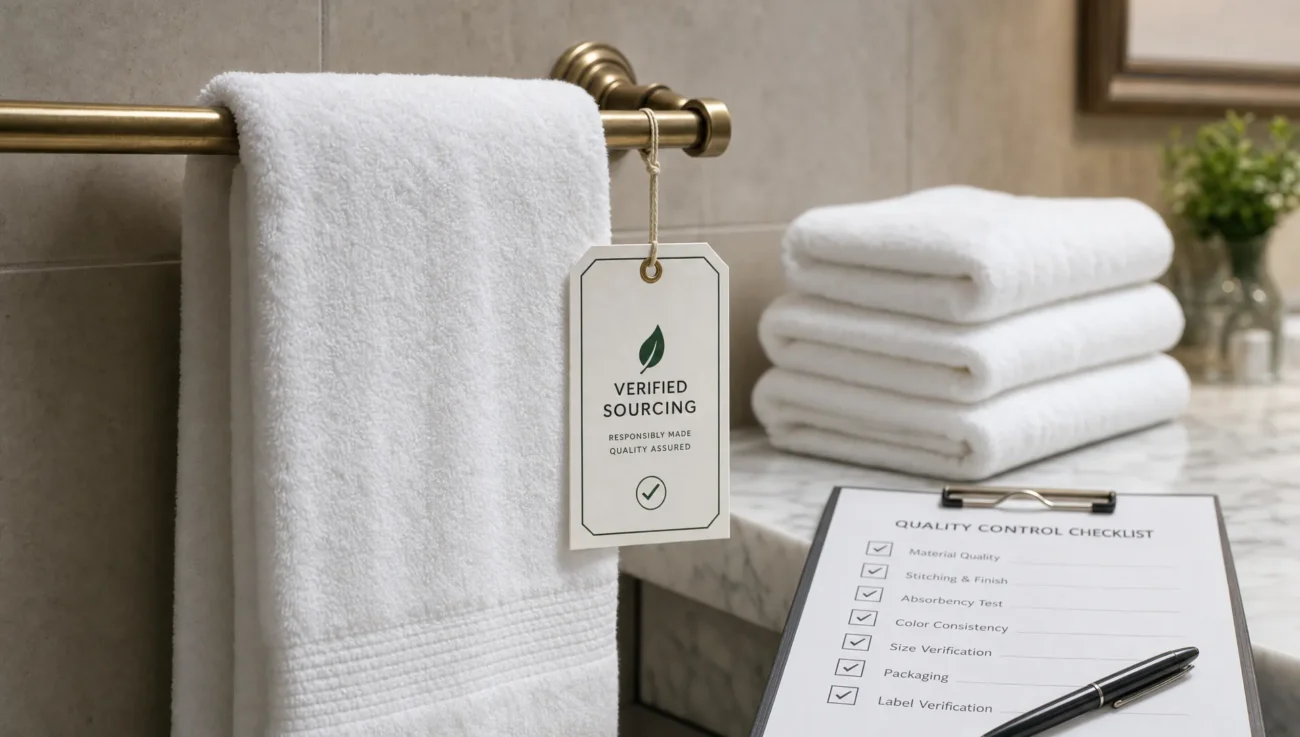
Hospitality towels are not just a line item in a procurement spreadsheet. They influence guest comfort, housekeeping efficiency, brand perception, and long-term operating costs. For hotels, resorts, spas, gyms, and distributors, sourcing certified towels adds another layer of responsibility: you need products that feel premium, withstand repeated laundering, and meet credible textile safety standards.
That is why many buyers now ask specifically for OEKO-TEX certified towels. The challenge is knowing how to verify the claim, compare suppliers fairly, and move from sample approval to a reliable bulk order without surprises.
This guide explains what to check when choosing an OEKO-TEX certified towel manufacturer for hospitality use, from certificates and GSM to labeling, packaging, and export readiness.
What OEKO-TEX certification means for hotel towels
STANDARD 100 by OEKO-TEX is one of the most recognized textile safety certifications in the global textile industry. It indicates that a tested textile article has been checked against OEKO-TEX criteria for substances that may be harmful to human health. For hospitality buyers, that matters because towels stay in direct contact with skin and are washed, dried, folded, and reused thousands of times across their service life.
However, certification should be understood correctly. OEKO-TEX does not automatically mean the towel is organic, luxury grade, biodegradable, or more durable than every uncertified towel. It is primarily a human ecology and substance safety standard. Durability, softness, absorbency, shrinkage, and lint control still depend on yarn quality, weaving, finishing, dyeing, and manufacturing discipline.
When evaluating a supplier, your goal is to confirm both compliance and performance.
| Question to ask | What to confirm | Why it matters |
|---|---|---|
| Is the certificate current? | Certificate number, validity, and issuing institute | Expired documents create compliance risk |
| Does the certificate cover towels? | Product scope, fiber content, colors, and finishing | A certificate for yarn or fabric may not cover the finished towel |
| What product class applies? | Product class suitable for skin contact, and baby class if needed | Hospitality towels touch skin directly |
| Can the supplier use the OEKO-TEX label? | Correct label use and documentation | Incorrect claims can affect importers and brands |
| Are all components covered? | Main fabric, threads, labels, trims, prints, and dyes where applicable | Finished product compliance depends on every relevant component |
Start with a clear hospitality towel specification
Before requesting quotes, define exactly what type of certified towel you need. A vague request such as premium hotel towel can produce quotes for very different products. One manufacturer may price a 500 GSM combed cotton towel, while another quotes a 650 GSM ring-spun option with heavier hems and different finishing. Both may be certified, but they will not perform or cost the same.
Build your specification around the way the towel will be used. A city hotel with fast laundry cycles may prioritize durability and drying speed. A spa may prioritize plush hand feel and visual presentation. A resort pool towel may need larger sizes, strong colorfastness, and resistance to frequent outdoor use.
| Towel type | Common hospitality range to discuss | Key sourcing note |
|---|---|---|
| Bath towel | 500 to 700 GSM | Balance softness, absorbency, drying time, and laundry cost |
| Hand towel | 450 to 600 GSM | Match color, border design, and shrinkage with bath towels |
| Face towel or washcloth | 400 to 550 GSM | Prioritize softness and low lint because of facial contact |
| Spa towel | 600 to 800 GSM | Confirm drying time and repeated wash performance |
| Pool towel | 400 to 600 GSM | Focus on size, colorfastness, and bulk laundering durability |
Fiber selection is equally important. Many hospitality programs use 100 percent cotton because it provides a strong balance of absorbency, softness, and wash performance. Ring-spun and combed cotton constructions are often preferred for higher-end towel programs because they can improve softness and reduce rough fiber ends. If you are benchmarking premium options, Extreme Towel’s luxury hotel towels provide a useful example of the specifications hospitality buyers often compare, including cotton quality, GSM range, durability, and customization.
Color should also be considered early. White remains popular in hotels because it communicates cleanliness, supports centralized laundry systems, and is easier to standardize across properties. Colored towels can work well for spas, pools, gyms, and branded retail collections, but they require stricter checks for dye consistency and colorfastness.
Verify the certificate before you compare prices
A supplier saying OEKO-TEX certified is not enough. You need to see the actual documentation and confirm that it applies to the product you intend to buy. This step is especially important when working with importers, wholesalers, or private-label programs where the final towel may include custom labels, embroidery, packaging, or special finishing.
Ask the manufacturer for the certificate number, the name of the certificate holder, the issuing institute, product scope, validity date, product class, and any limitations. Then verify the certificate through the OEKO-TEX label checker or official certificate tools. Certificates are typically renewed annually, so a file from a past season should not be treated as current proof.
A strong supplier should be able to explain what is covered without hesitation. If the certificate covers greige fabric only, but your order includes dyeing, finishing, embroidery, or a branded label, you need further confirmation. If it covers towels in specific fiber compositions and colors, confirm that your requested product falls within that scope.
Pay close attention to the certificate holder. Sometimes a trader uses a certificate issued to a mill, dye house, or component supplier. That may still be relevant, but it does not automatically prove that the finished towel shipped to your hotel or distributor is covered. For hospitality procurement, the safest approach is to request product-specific confirmation from the manufacturer before sample approval and again before bulk shipment.
Evaluate the manufacturer, not only the certificate
Certification is the baseline. Hospitality procurement also requires consistent production quality. A towel can meet a substance safety standard and still fail your operation if it shrinks excessively, sheds lint, loses softness, stains easily, or develops weak hems after commercial laundering.
When shortlisting an OEKO-TEX certified towel manufacturer, look for manufacturing capabilities that match hospitality requirements.
| Capability | What to ask | Why it matters |
|---|---|---|
| Terry weaving and finishing | What yarn, loop, pile, and finishing options are available? | These choices affect softness, absorbency, and durability |
| Dyeing and shade control | How are lab dips and bulk shades approved? | Color variation creates inconsistency across rooms and locations |
| Hemming and stitching | What stitch quality and reinforcement are used? | Weak edges shorten towel life in hotel laundries |
| Quality inspection | What inspections happen before packing? | Bulk orders need consistent GSM, size, appearance, and packing |
| Export support | What documents, packing options, and shipping terms are available? | International buyers need smooth customs and delivery coordination |
This is where direct manufacturer relationships can be valuable. A factory that understands hospitality orders can help align product design, performance, packaging, and documentation before the order reaches production. For importers and distributors, that reduces the risk of receiving goods that look acceptable in a sample but fail in bulk use.
Request samples and test them like a hotel would
Never approve a hospitality towel by touch alone. A new towel can feel soft in a showroom but behave differently after repeated washing. Your sampling process should imitate the conditions the towel will face in real operations.
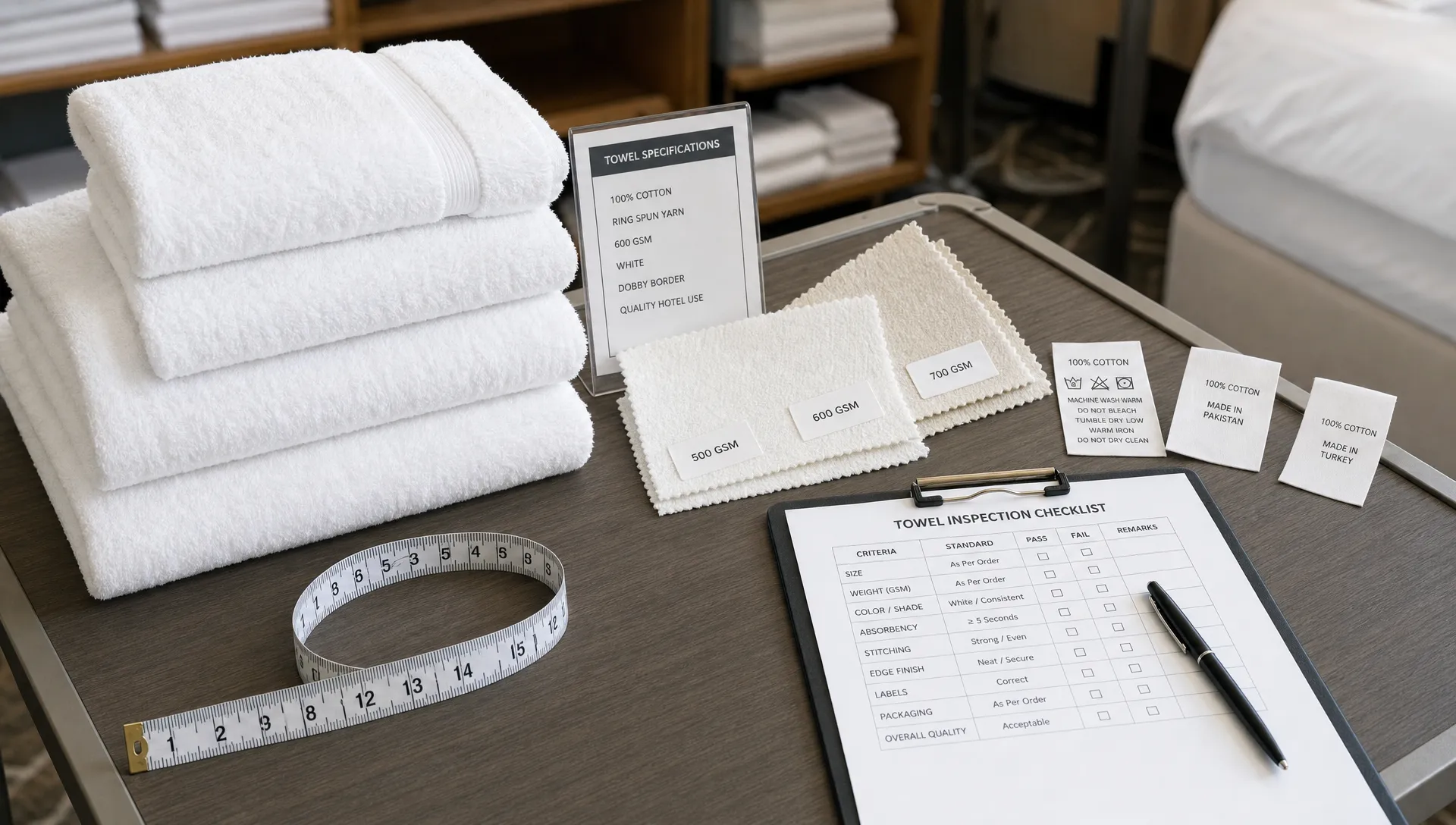
Start by checking the physical basics: size, weight, GSM, border design, pile height, seam quality, and hand feel. Then wash and dry the towel using a process similar to your hotel laundry or your client’s laundry system. If possible, run five to ten wash cycles before final approval. This helps reveal shrinkage, lint shedding, edge distortion, color change, and loss of softness.
For white towels, inspect brightness and staining behavior. For colored towels, check shade consistency and bleeding. For embroidered or jacquard towels, examine whether branding remains sharp after washing. For pool and spa towels, test drying time and odor retention because high moisture environments can expose weaknesses quickly.
Your sample approval should be documented in writing. Keep a sealed approved sample, record its weight and measurements, and share acceptance tolerances with the supplier before bulk production begins. This creates a reference point for final inspection and helps avoid subjective disputes.
Plan branding, labels, and packaging early
Hospitality towels often require more than a plain finished product. Hotels may need woven labels, care labels, embroidery, jacquard logos, color-coded borders, branded cartons, or retail-ready packaging for spa and gift shop programs. These details should be discussed before the certificate and sample approval stages, not after production starts.
If your towel will carry a brand label, confirm whether the label material and sewing thread are covered by the relevant certification scope or require separate documentation. The same applies to embroidery threads, trims, printed inserts, and packaging claims. OEKO-TEX label use must also follow the correct rules, including certificate number and approved wording where applicable.
For buyers who manage trims separately, a specialist in custom woven labels, patches, and ribbons can help develop branded components that match your towel presentation and retail identity. If you prefer a manufacturing partner that coordinates towels, labeling, and packaging within one OEM program, reviewing options for private label towels can help you plan the sourcing process more efficiently.
Packaging also affects hotel operations. Bulk cartons for housekeeping are different from retail boxes for gift sets. Export cartons should protect towels from moisture, compression damage, and contamination during shipping. If cartons require barcodes, SKU labels, destination marks, or pallet instructions, include those requirements in the purchase order.
Compare pricing with the right cost drivers in mind
Certified towels are not priced only by the certificate. The largest cost drivers usually include yarn quality, GSM, size, color, finishing, order quantity, packaging, inspection requirements, and freight terms. A lower quote may simply mean a lighter towel, weaker yarn, smaller dimensions, or fewer finishing steps.
When comparing offers, place suppliers side by side using the same specification. Ask each manufacturer to quote the exact towel size, GSM, fiber content, color, border, label type, packing method, quantity, and shipping terms. If one quote is significantly lower, ask what has changed in the construction.
| Cost driver | What it can change | Procurement advice |
|---|---|---|
| GSM | Weight, absorbency, drying time, and cost | Choose based on guest category and laundry capacity |
| Yarn quality | Softness, lint, durability, and appearance | Do not compare yarn types as if they are identical |
| Color and dyeing | Shade control and colorfastness | Require lab dip approval for custom colors |
| Branding | Embroidery, jacquard, labels, and packaging cost | Finalize artwork before bulk pricing |
| Inspection level | Defect control and shipment confidence | Define inspection criteria before production |
For hotel groups, the lowest purchase price is rarely the true lowest cost. Towels that last longer, keep their shape, and maintain guest-ready appearance can reduce replacement frequency. The best supplier is the one that delivers consistent value across the full towel lifecycle.
Set clear bulk order and export terms
Once samples are approved, document every detail before placing a purchase order. Hospitality towel orders often involve large quantities, strict delivery windows, and multiple destinations. A clear order file protects both buyer and manufacturer.
Confirm the approved sample reference, final specification, total quantity, size breakdown, color breakdown, branding artwork, label placement, packing method, carton markings, inspection plan, shipment terms, and delivery timeline. If your towel purchase is part of a wider bed and bath program, align it with your wholesale hotel linen sourcing so that color standards, packaging, and replenishment planning remain consistent across categories.
Also discuss reorder strategy. Hotels and distributors often need repeat production, not one-time shipments. Ask how the manufacturer manages shade continuity, archived specifications, approved samples, and production records. This is especially important for multi-property hotel groups, wholesalers, and private-label brands that cannot afford visible variation between batches.
Red flags when sourcing certified towels
Most sourcing problems appear early if you know what to watch for. Treat the following signs as reasons to pause, ask for clarification, or request additional documentation.
| Red flag | Why it is risky | What to do |
|---|---|---|
| The certificate is expired | It may no longer support current claims | Request a valid certificate and verify it |
| The certificate covers unrelated products | Towels may not be included in the scope | Ask for towel-specific coverage |
| The supplier avoids sample wash testing | Performance may be unproven | Run your own laundering tests before approval |
| Pricing changes without specification changes | Construction may have been altered | Request a revised technical breakdown |
| Label use is unclear | Incorrect claims can create compliance issues | Confirm OEKO-TEX label rules before production |
| Bulk goods differ from approved samples | Quality control may be weak | Use sealed samples and final inspection criteria |
A reliable supplier will not be offended by these checks. Serious manufacturers expect professional buyers to verify certificates, test samples, and document specifications. In fact, the sourcing process usually becomes smoother when expectations are clear from the beginning.
Why Pakistan is a strong sourcing base for hospitality towels
Pakistan has a well-established textile manufacturing ecosystem, particularly in cotton terry towels, hotel linens, bathrobes, and home textiles. For hospitality buyers, sourcing from a Pakistan-based manufacturer can provide access to bulk production capacity, customization options, and export experience for markets such as Europe, the USA, and Canada.
The key is choosing a partner that understands both manufacturing and compliance. Extreme Towel is a Pakistan-based textile manufacturer and exporter specializing in terry towels, hotel linen, bamboo bedding, bathrobes, private-label customization, OEM manufacturing, quality control inspections, bulk wholesale orders, and global export service. That type of integrated support can help hotels, distributors, and hospitality brands manage sourcing with fewer handoffs.
Still, every order should be built on documented requirements. Certification, fabric quality, finishing, packaging, and inspection should all be part of the sourcing conversation before you commit to bulk production.
Frequently Asked Questions
Are OEKO-TEX certified towels the same as organic towels? No. OEKO-TEX certification focuses on testing textiles for substances that may be harmful to human health. Organic certification relates to how the fiber is grown and processed. A towel can be OEKO-TEX certified without being organic.
What certificate should hospitality buyers request? Most buyers ask for STANDARD 100 by OEKO-TEX documentation. You should confirm the certificate number, validity, product class, product scope, and whether the finished towel you are buying is covered.
What GSM is best for hotel towels? Many hotel bath towels fall between 500 and 700 GSM, but the best choice depends on brand positioning, laundry capacity, drying time, and replacement budget. Luxury suites and spas may choose heavier towels, while high-turnover properties may prefer a balanced mid-weight option.
Can OEKO-TEX certified towels be customized with hotel logos? Yes, but customization must be planned carefully. Embroidery, jacquard weaving, labels, trims, and threads should be reviewed so the finished towel and its claims remain accurate.
How can I avoid counterfeit or misleading certificate claims? Request the certificate number, verify it through official OEKO-TEX tools, check the product scope, and make sure the certificate holder is connected to the product being supplied. Do not rely only on a logo in a brochure.
Should I test samples even if the towel is certified? Yes. Certification does not replace performance testing. Wash samples under realistic conditions to check shrinkage, linting, absorbency, shade stability, softness, and seam strength.
Source certified hospitality towels with confidence
Sourcing OEKO-TEX certified towels for hospitality is a structured process: define the towel specification, verify the certificate, test samples, confirm branding details, and lock bulk order requirements before production.
If you are planning a hotel, spa, wholesale, or private-label towel program, explore Extreme Towel to discuss certified towel manufacturing, OEM customization, bulk supply, quality control, and export support from Pakistan.