
For bedding brands, packaging is part of the product specification, not a finishing touch. A sheet set can leave the factory correctly sewn and still arrive with a crushed box, an unclear size label or moisture trapped inside its wrapper. Each problem can create avoidable returns, warehouse delays or extra handling costs.
The challenge grows when the same range serves online shoppers, retail shelves and international distributors. Each channel handles packaging differently, and attractive presentation alone does not prove that a pack is ready for shipment. These seven mistakes show where packaging decisions go wrong and what to approve before placing a bulk order.
1. Choosing dimensions before testing the packed product
A box that looks right in a design mockup may be too large once the bedding is folded, or too tight once production variations are considered. Oversized packaging wastes storage space and can increase dimensional-weight charges. Undersized packaging can strain seams, distort inserts or make repacking difficult.
Start with a physical packing trial using the actual fabric, set configuration and folding method. A lightweight sheet set and a bulky duvet cover set should not inherit the same package dimensions simply because they share a brand identity.
The useful comparison for bedding brands is the complete packed unit, not the empty box. Measure its external dimensions and gross weight, then repeat the exercise for the filled shipping carton. Include any protective inserts, sleeves and labels.
For illustration, a package measuring 50 × 40 × 20 cm occupies 40 liters. Reducing its height to 16 cm brings that to 32 liters, a 20% reduction in volume. That does not automatically mean a 20% freight saving because carrier rules, weight and pallet utilization also matter.
Keep the smallest format that protects the product without forcing excessive compression. Check how the bedding looks after opening and whether a customer or warehouse operator can repack it without specialist equipment. Record the approved fold and packing method so production does not rely on guesswork.
2. Treating moisture protection as a choice between paper and plastic
Neither a paper sleeve nor a sealed plastic bag guarantees that bedding will arrive clean and dry. Protection depends on the condition of the goods at packing, the barrier material, storage conditions and the journey to the buyer.
Sealing damp goods can trap moisture inside. An open sleeve, meanwhile, may offer too little protection against dust or wet handling unless another layer provides it. Check the complete packaging system rather than judging one material in isolation.
A practical moisture plan for bedding brands starts before sealing: confirm that goods are dry, allow warm goods to cool and define acceptable storage conditions. Where moisture measurements are used, agree on a method and acceptance limits appropriate to the textile instead of borrowing an unrelated threshold.
Desiccants may form part of a validated system, but they are not a remedy for packing wet textiles. Their type, quantity and placement need review for the intended pack and route.
Test the combination of inner pack, shipping carton and handling conditions. Include checks for odor, staining, carton softening and damage to exposed fabric. If distribution testing uses an ISTA procedure, select one suited to the shipment configuration. A test on a single parcel does not automatically validate a palletized export shipment, and a brief warehouse inspection cannot reproduce every condition encountered in transit.
3. Approving attractive claims before checking their accuracy
Packaging copy can create compliance problems even when the product itself meets the buyer’s specification. Fiber descriptions, origin statements and environmental claims need evidence, not just approval from a design team.
For US sales, the FTC’s textile labeling guidance explains core requirements involving fiber content, country of origin and the responsible business identity. Required product labeling and outer packaging should be reviewed together; printing information on a box does not necessarily replace a required label on the textile.
This matters especially when bedding brands sell regenerated fibers associated with bamboo. “Bamboo” is not automatically an acceptable substitute for the correct manufactured-fiber name. Review the distinctions explained in US labeling disclosures for bamboo bed sheets before approving artwork.
Environmental language needs the same discipline. Claims such as “eco-friendly,” “recyclable” or “plastic-free” must accurately describe the relevant packaging components and be supported where required. The FTC Green Guides explain why broad claims and unqualified recyclability statements can mislead.
Build a destination-market review into the artwork schedule. Language, warnings, recycling information and producer-responsibility obligations can differ across markets. For EU shipments, review the Packaging and Packaging Waste Regulation, its phased requirements and relevant national obligations. Do not assume a pack approved for one country is ready for every export destination.
4. Making size and set contents difficult to understand
A shopper should not need to open a package to discover whether it contains a fitted sheet, a flat sheet or pillowcases. Warehouse staff also need enough information to distinguish similar-looking products without breaking the seal.
Size names alone are unreliable across international ranges. A label such as “king” needs dimensions because naming conventions and expected measurements vary by market. Fitted-sheet pocket depth also matters, especially where the range includes different mattress profiles.
Clear product identification helps bedding brands prevent a specific kind of return: the customer received the SKU ordered but misunderstood what that SKU contained. Packaging, product-page copy and order records should describe the same configuration.
| Information | What to make clear |
|---|---|
| Product type | Sheet set, duvet cover set or another defined configuration |
| Set contents | Exact quantities and whether inserts or filled items are excluded |
| Dimensions | Measurements for each component, using units appropriate to the market |
| Fitted-sheet fit | Relevant mattress dimensions and pocket-depth information |
| Variant | A consistent color name and size reference |
Avoid using lifestyle photography that implies extra components are included. If an image shows a styled bed with decorative cushions or a comforter insert, make the actual contents unambiguous.
Approve translations and unit conversions against the product specification, not against an earlier artwork file. A correctly translated label can still be wrong if it uses outdated dimensions or describes the wrong set configuration.
5. Designing for the shelf but forgetting warehouse handling
Retail packaging and shipping cartons perform different jobs. A decorative sleeve may identify the product beautifully but offer little stacking strength. A strong outer carton may survive transport yet leave receiving staff unable to identify the stock inside.
Define what must be visible at each handling stage. The consumer pack needs the correct product identifier. The shipping carton needs clear contents, quantity and any buyer-required handling or traceability information. Mixed-SKU cartons require an explicitly approved identification method.
Test barcode scanning on the actual printed material, not just on a PDF. Gloss, folds, seams and tight placement can make otherwise correct artwork difficult to scan.
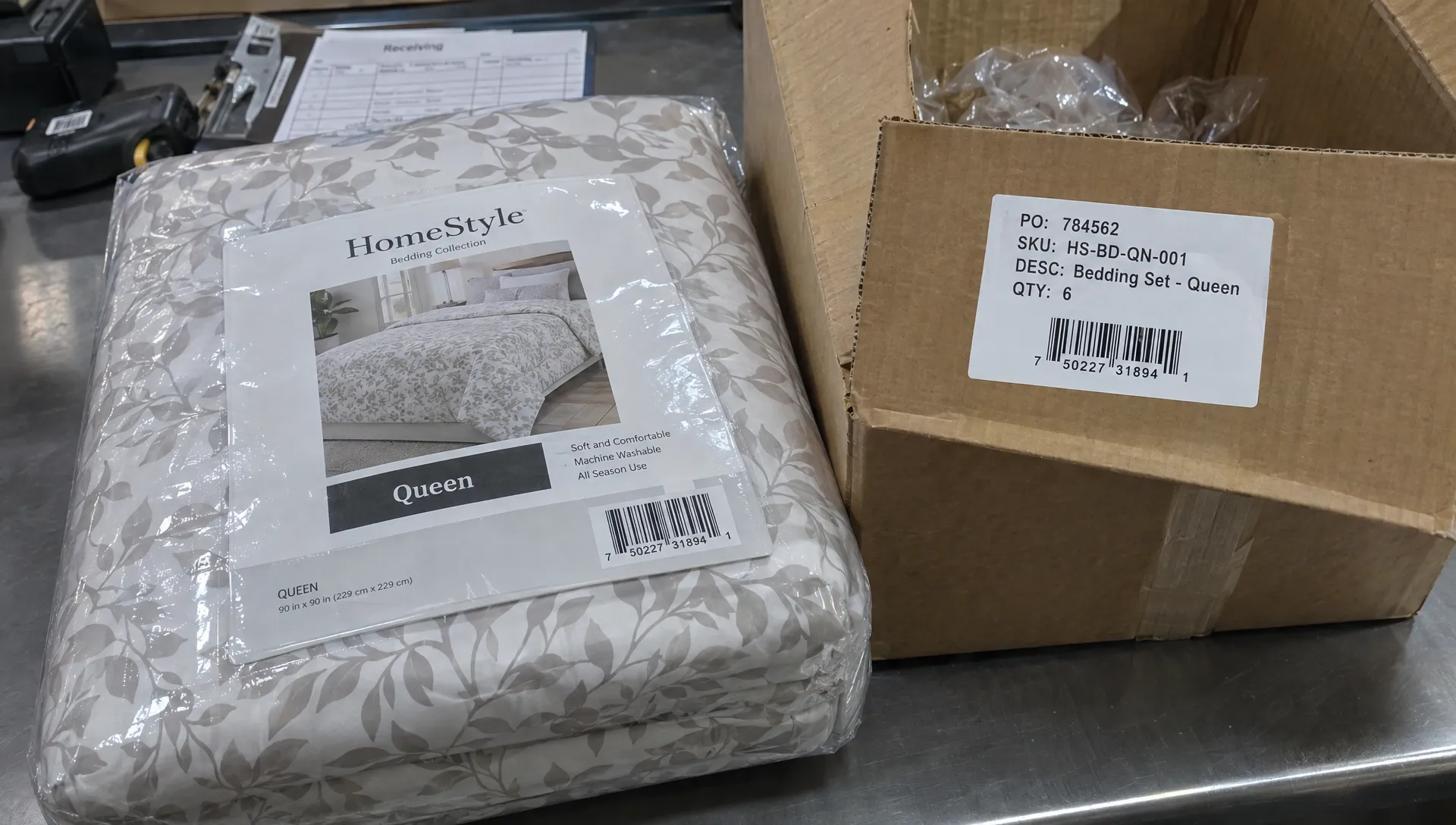
Keep consumer-unit identifiers separate from carton or logistics identifiers where the buyer’s system requires that distinction. Follow retailer and distributor specifications rather than inventing a barcode structure during artwork development.
Also confirm carton gross weight, stacking arrangement and pallet layout. A carton that works well individually may overhang the intended pallet or create an unstable stack. Check that labels remain visible in the approved arrangement.
Finally, define how production lots connect to packed units and cartons. Traceability should help isolate an affected batch if a quality issue arises, rather than forcing the buyer to investigate an entire shipment. The necessary detail depends on the customer’s receiving and inventory systems.
6. Adding layers without considering opening, returns or disposal
A rigid box, inner bag, tissue wrap, ribbon and printed insert can create an impressive presentation. They can also add material cost, packing time and waste without improving protection.
Assess every component against a defined purpose. It should protect the textile, communicate necessary information, support handling or deliver a deliberate presentation benefit. A component that does none of those jobs deserves reconsideration.
The strongest packaging decisions for bedding brands account for what happens after delivery as well as before it. Customers need to open the pack without damaging the bedding, identify the contents and understand how to separate packaging materials where relevant.
Returns need planning too. If the original closure cannot be reused, decide whether the customer has a practical way to protect the product for the return journey. Test repacking with someone who has not learned the factory folding method. That exercise often exposes a box that only works under ideal packing conditions.
Keep channel requirements distinct. A hospitality buyer receiving repeated bulk deliveries may value quick unpacking and fewer loose components more than a retail-style presentation. An e-commerce order may need additional transit protection that a shelf-ready pack does not provide.
Material reduction should follow testing, not replace it. Removing an inner barrier or reducing board strength is not a useful improvement if it increases damaged goods. Compare material use, protection and handling together before approving the change.
7. Treating the first approved sample as permanent authorization
A sample approval is only useful if the bulk order follows the same specification. Changes to board grade, film thickness, adhesive, print finish or packing method can alter performance even when the package looks similar.
For bedding brands, a documented packaging specification connects the design team’s intent with the factory’s repeatable packing instructions. It should identify materials, dimensions, artwork versions, label placement, folding method, carton quantity and agreed inspection criteria.
Keep an approved reference sample and link it to a revision-controlled file. Specify who can authorize substitutions and what must be checked again after a change. A revised carton dimension, for example, may affect stacking and freight calculations as well as appearance.
Assign responsibility across the brand, manufacturer, packaging supplier and importer. Agree who supplies destination-market requirements, who approves claims and who releases final artwork. A manufacturer’s print check is not a substitute for the buyer’s market-compliance review.
Packaging should therefore be included when you build a custom bedding program, rather than added after fabric and sizing decisions are complete.
Before shipment, inspect production-packed goods against the agreed reference. Check the product-to-label match, pack dimensions, closure, cleanliness, carton count and required markings. Record defects and corrective actions before release. Approval should apply to the specified production configuration, not to any later variation that happens to look close enough.
Packaging FAQs for bedding brands
Should every bedding size use the same packaging? Not necessarily. Shared formats can simplify purchasing, but each size and set configuration needs a packing trial. Standardize only where fit, protection and identification remain acceptable.
Is plastic-free packaging always the better choice? No. Assess protection, material use, local disposal options and the evidence supporting environmental claims. Removing plastic without addressing moisture or contamination risks can create a different problem.
When should packaging be finalized? Develop it alongside the product specification. Confirm dimensions with representative bedding, then approve artwork, materials and packing instructions before bulk packing begins. Leave time for revisions and testing.
Does a retail box need a shipping carton? Often, but the answer depends on the distribution model. A shelf-ready box is not automatically suitable for parcel delivery. Validate the complete shipping configuration, including any outer carton or protective layer.
Set the packaging brief before the bulk order
Prepare a brief covering destination markets, sales channels, set contents, packed dimensions, labeling responsibilities and protection requirements. Ask prospective suppliers to identify unresolved details before you approve production.
Extreme Towel offers OEM textile manufacturing, private-label customization, custom packaging and export support from Pakistan. Share your bedding specifications and packaging brief to discuss a bulk manufacturing program, with responsibilities and approval requirements agreed before production.