For US sales, bamboo bed sheets need more than a label naming the plant. Most textiles marketed as bamboo are regenerated cellulose fibers, so the label must identify the actual manufactured fiber, such as rayon or viscose. It must also disclose the required fiber percentages, country of origin and responsible business identity.
That distinction matters whether you import finished bedding, operate a private-label brand or supply hotels. A supplier’s description of “100% bamboo” is not enough to approve production artwork, and a correct sewn-in label does not automatically make conflicting packaging or online claims acceptable.
This guide covers ordinary, unfilled finished sheets and sheet sets. Filled bedding and other specialized products may trigger additional requirements. Use it as an approval framework, not a substitute for product-specific legal or customs advice.
Required US label disclosures for bamboo bed sheets
Under the federal textile labeling framework, three disclosures form the core of the label:
| Disclosure | What it should communicate | Common mistake |
|---|---|---|
| Fiber content | Required generic fiber names and percentages by weight | Calling regenerated rayon “100% bamboo” |
| Country of origin | The actual country of origin under applicable US rules | Using the exporter’s location without checking production history |
| Business identity | A qualifying company’s business name or an appropriate FTC Registered Identification Number | Using only a brand logo that does not identify the responsible business |
The FTC’s guide to labeling under the Textile and Wool Acts explains these requirements, including provisions for labels, packaging and advertising.
These are distinct disclosures. A US importer’s address does not establish US origin, and a certification logo does not replace a fiber-content statement.
Identify the manufactured fiber, not just its source
Bamboo can supply the cellulose used to manufacture rayon. That does not make the resulting fiber equivalent to bamboo fiber extracted directly from the plant.
The FTC’s guidance on avoiding misleading bamboo claims explains that regenerated textiles must use the appropriate generic fiber name. Where the source is substantiated, wording such as “rayon made from bamboo” can communicate both the manufactured fiber and its feedstock.
For buyers of bamboo bed sheets, the first compliance question is therefore which fiber the mill actually supplied, not which plant appears in the product story.
Common descriptions require different supporting evidence:
| Actual material | Appropriate labeling approach |
|---|---|
| Rayon produced from bamboo-derived cellulose | Use rayon or an accepted viscose designation, with a supported bamboo-source description if desired |
| Lyocell produced from bamboo-derived cellulose | Use lyocell only when the fiber meets that generic definition; substantiate the bamboo source separately |
| Fiber obtained directly from bamboo rather than regenerated cellulose | A bamboo fiber description requires evidence supporting that identity and process |
Do not select “lyocell” because it sounds more premium or environmentally favorable. It describes a particular fiber category, not a marketing tier.
Why a fiber test does not prove every bamboo claim
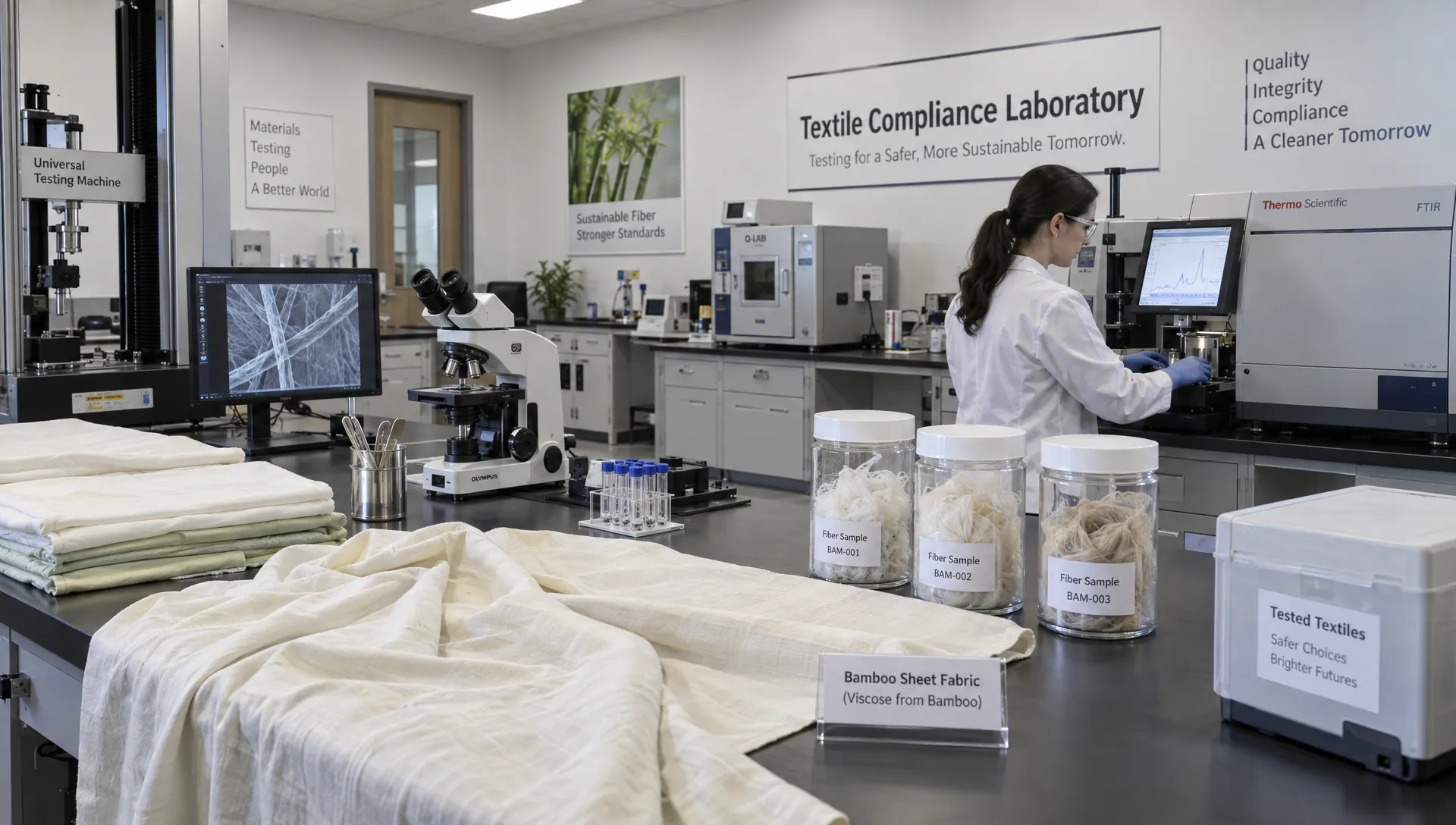
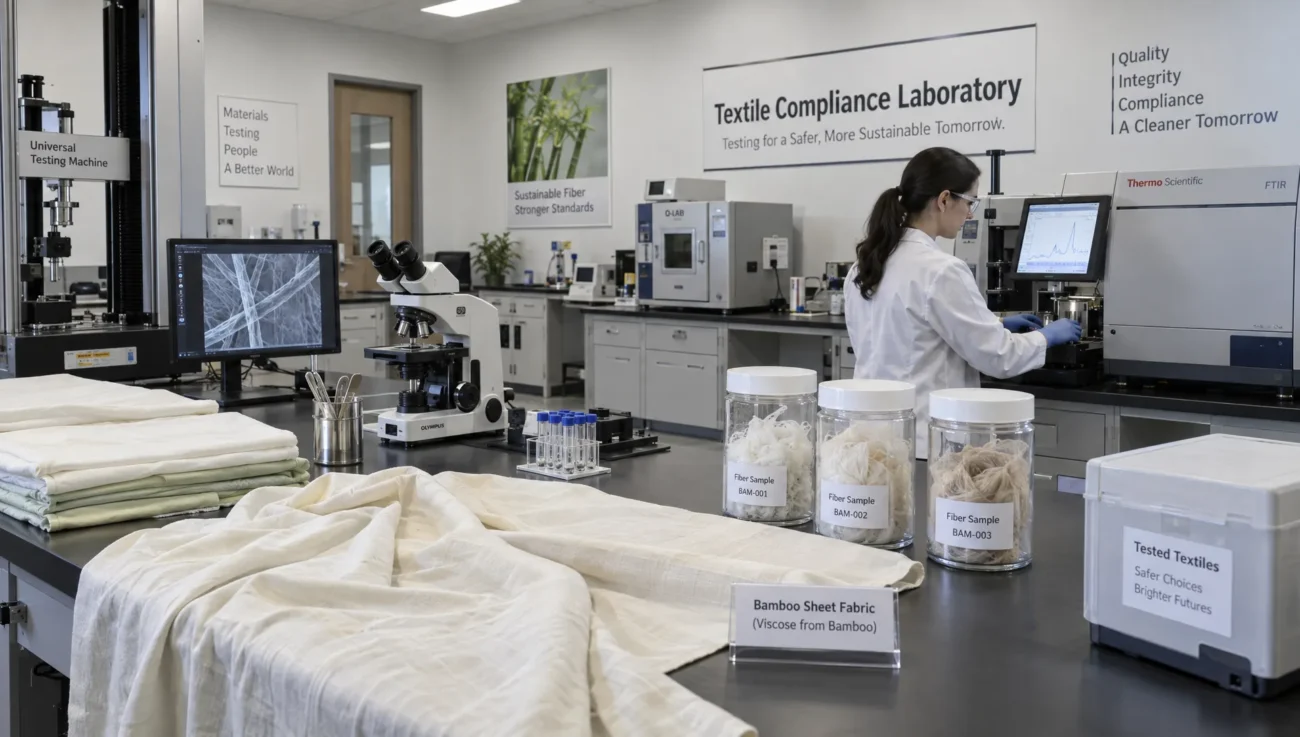
A laboratory report identifying rayon can support the manufactured-fiber declaration. It generally does not, by itself, establish that the original cellulose came from bamboo rather than another plant source.
Request supply-chain records connecting the fabric to its feedstock, alongside the fiber specification and relevant test reports. A purchase order that merely repeats “bamboo fabric” is weak evidence when the underlying fiber and manufacturing process remain unspecified.
The same distinction applies to “100%” claims. For regenerated material, “100% rayon made from bamboo” and “100% bamboo” do not communicate the same thing. The former identifies rayon and its claimed source; the latter represents the textile as bamboo fiber.
Declare blends by weight and check every component
For a declared blend, list the required generic fiber names and percentages by weight in descending order. For example, a substantiated blend might be described as:
70% rayon made from bamboo, 30% cotton
The percentages describe fiber composition, not the proportion of purchase cost, yarn orders or marketing emphasis. A supplier’s general catalog description should not override the approved specification for the actual production lot.
When bamboo bed sheets contain blends, confirm that the percentages on the product label, carton artwork and specification sheet agree. Apply any permitted exclusions and small-fiber rules correctly rather than making assumptions about fitted-sheet elastic, trim or other components.
Also check whether the flat sheet, fitted sheet and pillowcases share the same composition. Set-level labeling may be permitted under the textile rules when the relevant conditions are met. A single blanket claim should not imply that every component is identical when it is not.
Do not treat manufacturing tolerances as permission to exaggerate composition. A “100%” declaration deserves particular scrutiny before artwork approval.
Identify the responsible company and correct origin
Business name or FTC RN
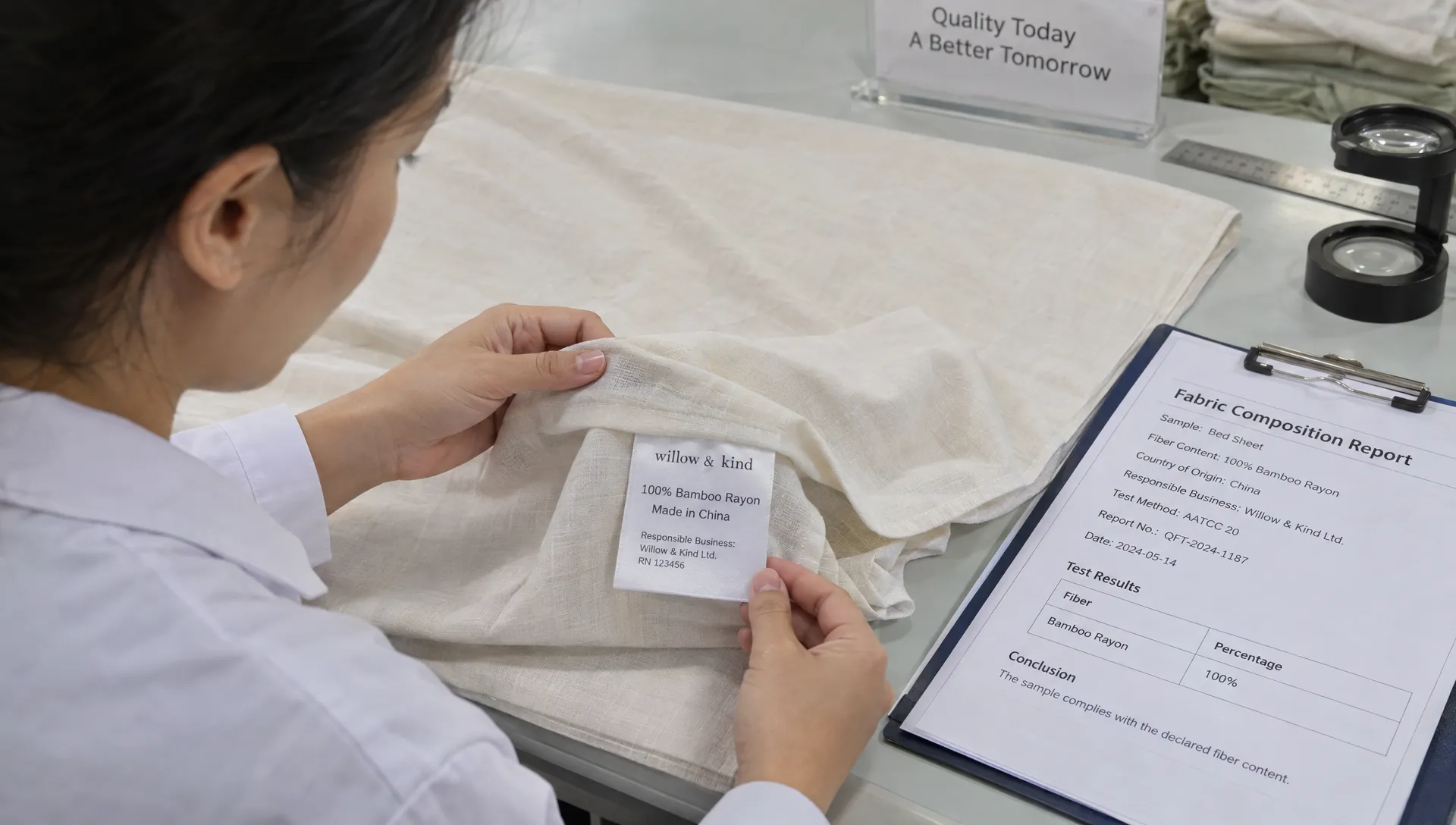
The label must identify a qualifying manufacturer or another responsible business in the distribution chain. This can generally be done through the appropriate business name or an FTC Registered Identification Number, commonly called an RN.
An RN is optional, not a mandatory registration number for every textile product. Eligible US businesses can obtain one; a foreign manufacturer should not assume it can obtain or use an RN as though it were a US entity.
For a private-label order, agree in writing whose identity will appear. If using an importer’s RN, verify the number and business record before printing. Do not invent a number or substitute an internal supplier code.
A brand name alone works only if it satisfies the applicable business-identification requirements. Otherwise, include the qualifying business name or RN separately.
Country of origin is a manufacturing determination
The country shipping the cartons is not necessarily the country of origin. Textile origin depends on the applicable customs rules and the manufacturing operations performed.
For bamboo bed sheets produced through a multinational supply chain, document where the fabric was formed and where subsequent processing occurred. Yarn sourcing, weaving, dyeing, printing and sewing can involve different countries, and their significance depends on the applicable rule.
US importers should assess the product under the textile and apparel origin rules in 19 CFR 102.21, with customs advice where needed.
“Made in Pakistan” is appropriate only when the actual production history and applicable rules support Pakistan as the origin. A Pakistani exporter’s invoice or address alone does not establish that conclusion.
A practical label example for a US sheet set
Assume the fabric legitimately qualifies as 100% rayon made from bamboo, the bamboo source is documented and the applicable origin analysis establishes Pakistan. An illustrative label could read:
100% Rayon Made From Bamboo
Made in Pakistan
[Responsible company’s qualifying business name OR valid FTC RN]
This is a layout example, not a composition or origin statement about any particular product. Replace the placeholder with the actual qualifying business identity. Change the fiber declaration whenever the approved material differs.
Required information must be legible, conspicuous and attached appropriately. Do not assume that putting all disclosures on a removable shipping carton satisfies the requirements for the retail product.
For sets, review the applicable labeling conditions before deciding that one label covers every piece. Separately saleable replacements also need their own compliant treatment.
Are care instructions mandatory on finished sheets?
The FTC’s Care Labeling Rule covers textile wearing apparel and certain piece goods, not ordinary finished household sheets. Consequently, the federal rule does not generally require the same permanent care label on sheets that it requires on covered clothing. The FTC explains the rule’s scope in its care labeling compliance guide.
That does not make care guidance unimportant. Retailers, hospitality buyers or purchase contracts may require it, and inaccurate instructions can still create customer complaints and misleading representations.
Care instructions for bamboo bed sheets should reflect the finished construction, including dyes, finishes, seams and elastic, rather than a generic recommendation copied from a fiber brochure.
Before approving instructions, establish a reasonable basis for washing temperature, bleach restrictions, drying conditions and ironing guidance. For hospitality orders, assess the intended laundry process separately. Our guide to bamboo fitted sheets in commercial laundry explains the construction and laundering variables buyers should evaluate.
Keep packaging and online claims consistent
A technically correct product label cannot reliably cure a prominent, contradictory claim elsewhere. Review the retail box, insert, product title, marketplace listing and advertising together.
If the front of a package says “100% bamboo” while a small label inside says “100% rayon,” the overall presentation remains problematic. Identify the manufactured fiber clearly wherever the bamboo description would otherwise mislead buyers.
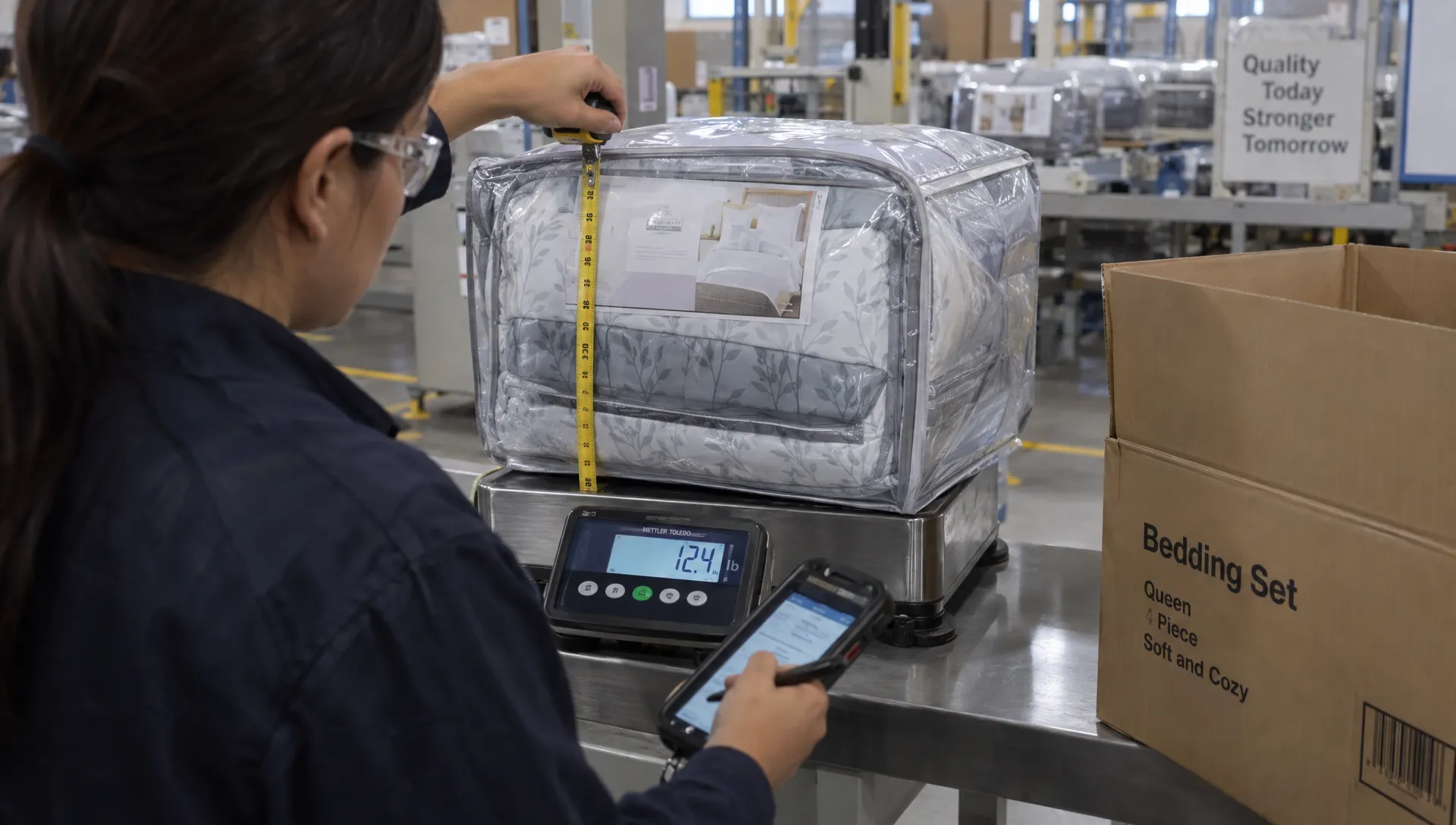
For packaged goods, check whether the required product-label information is visible and readable through the packaging. If it is hidden, the textile rules may require the disclosures to be repeated on the package. Do not rely on a label that customers can access only after opening an opaque retail box.
Online and catalog sales also have origin-disclosure requirements. Distinguish those advertising rules from the specific country marking required on the physical product. Providing the verified country in the product details is a practical way to maintain consistency.
For bamboo bed sheets marketed online, use an accurate fiber description prominently rather than placing the correction only in a downloadable specification or a distant FAQ. Where advertising mentions fibers, review the FTC’s associated generic-name disclosure requirements as well.
Separate mandatory disclosures from claims needing evidence
Fiber content, origin and business identity are not the whole compliance review. Optional claims can create additional obligations even when the core label is correct.
Environmental claims: Avoid assuming that bamboo feedstock makes the finished textile inherently “eco-friendly,” chemical-free or biodegradable under typical disposal conditions. The FTC’s Green Guides summary explains why broad environmental benefits need qualification and substantiation.
Organic claims: Evidence about organically grown feedstock does not, by itself, establish that the finished regenerated textile is certified organic. Check the exact scope of any certification and the wording it supports.
Performance claims: Cooling, antibacterial and odor-control statements need evidence relevant to the finished product. Do not transfer properties associated with the living bamboo plant automatically to rayon made from it. Antimicrobial claims may also require a separate regulatory review.
Sizes, thread count, weave and care instructions can be commercially valuable, but they do not replace the mandatory disclosures. Validate them independently before publishing.
Build a pre-shipment label approval file
The most useful compliance review happens before labels and packaging enter bulk production. For private-label bamboo bed sheets, connect the approved wording to a specific material specification and order, not just a supplier’s standard brochure.
Keep a compact approval file containing:
- The agreed fiber specification, component details and relevant test reports
- Records supporting any bamboo-source claim
- Manufacturing records supporting the country-of-origin determination
- The responsible company’s approved business name or verified RN
- Final product-label, packaging and online-listing artwork
- Evidence supporting care guidance, certifications and optional performance claims
Assign one person to reconcile the file. Purchasing may approve the fabric while marketing approves the packaging, but someone must check that both describe the same product.
Make substitutions subject to renewed approval. A change in fiber supplier, blend, processing route or manufacturing country can affect disclosures even when the finished sheets look unchanged. Keep the approved version tied to the shipment so later reorders do not inherit outdated artwork.
Frequently asked questions
Can the label say “100% bamboo” if the fabric is rayon? No. Rayon must be identified by its appropriate generic fiber name. If the source is substantiated, wording such as “100% rayon made from bamboo” communicates the distinction.
Does every US bedding brand need an FTC RN? No. An appropriate qualifying business name can be used instead. An RN is an identification option for eligible US businesses, not a universal prerequisite for selling textiles.
Must bamboo bed sheets have a sewn-in care label? Ordinary finished sheets are outside the FTC Care Labeling Rule’s general scope. However, the required textile disclosures still need compliant labeling, and retailers or contracts may impose care-label requirements.
Can a laboratory report alone establish bamboo origin? Generally, a report identifying rayon does not establish its original plant feedstock. Support the source claim with appropriate traceability records as well as fiber-identification evidence.
Align manufacturing specifications with US label artwork
For a private-label order, settle fiber identity, origin documentation and business-identification wording before approving bulk packaging. That sequence reduces the risk of relabeling finished inventory.
Explore Extreme Towel’s bamboo bedding manufacturing services to discuss your product specifications, customization and packaging requirements. Provide your US labeling requirements early so production documents and brand artwork can be reviewed against the same agreed specification.