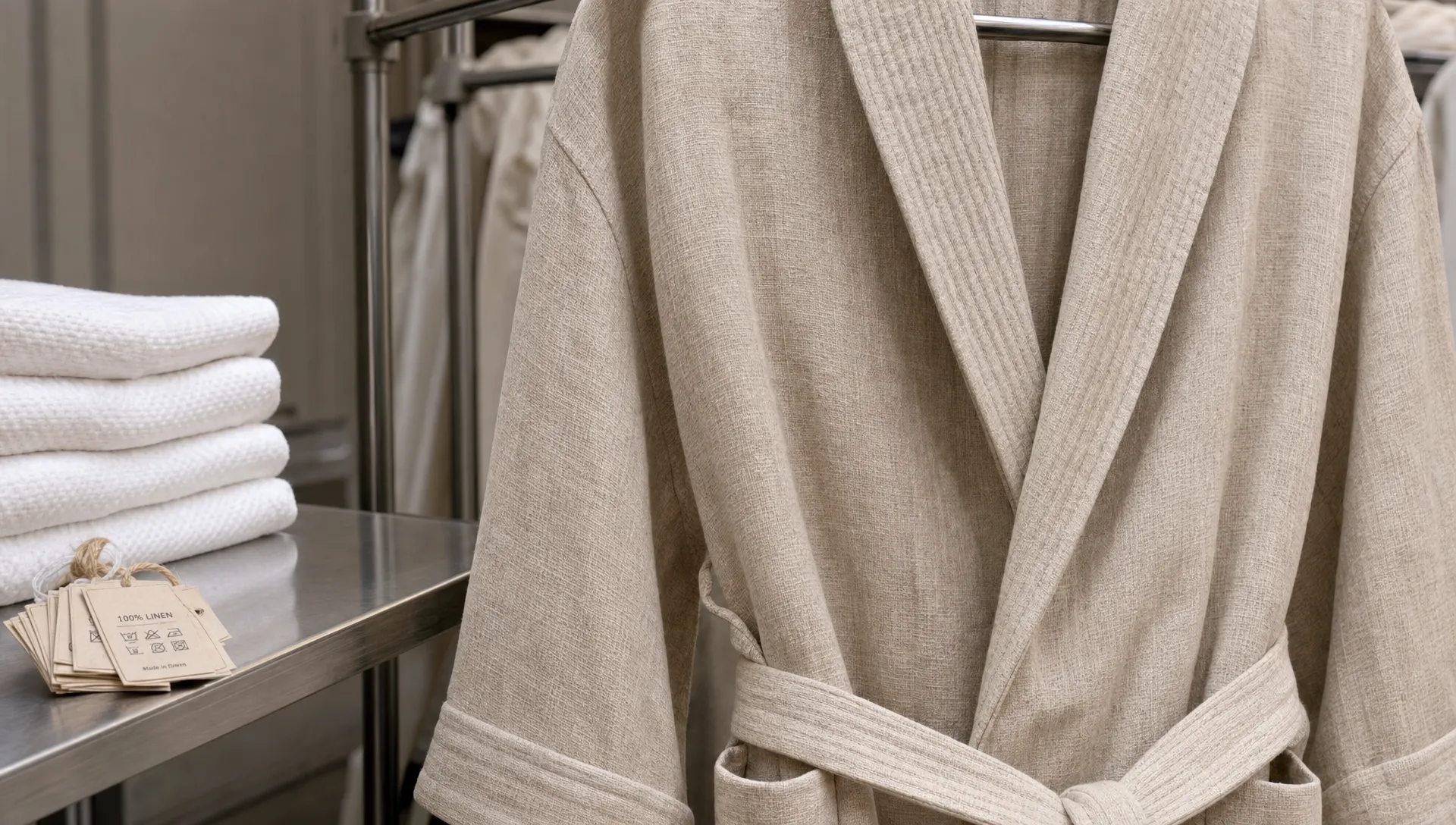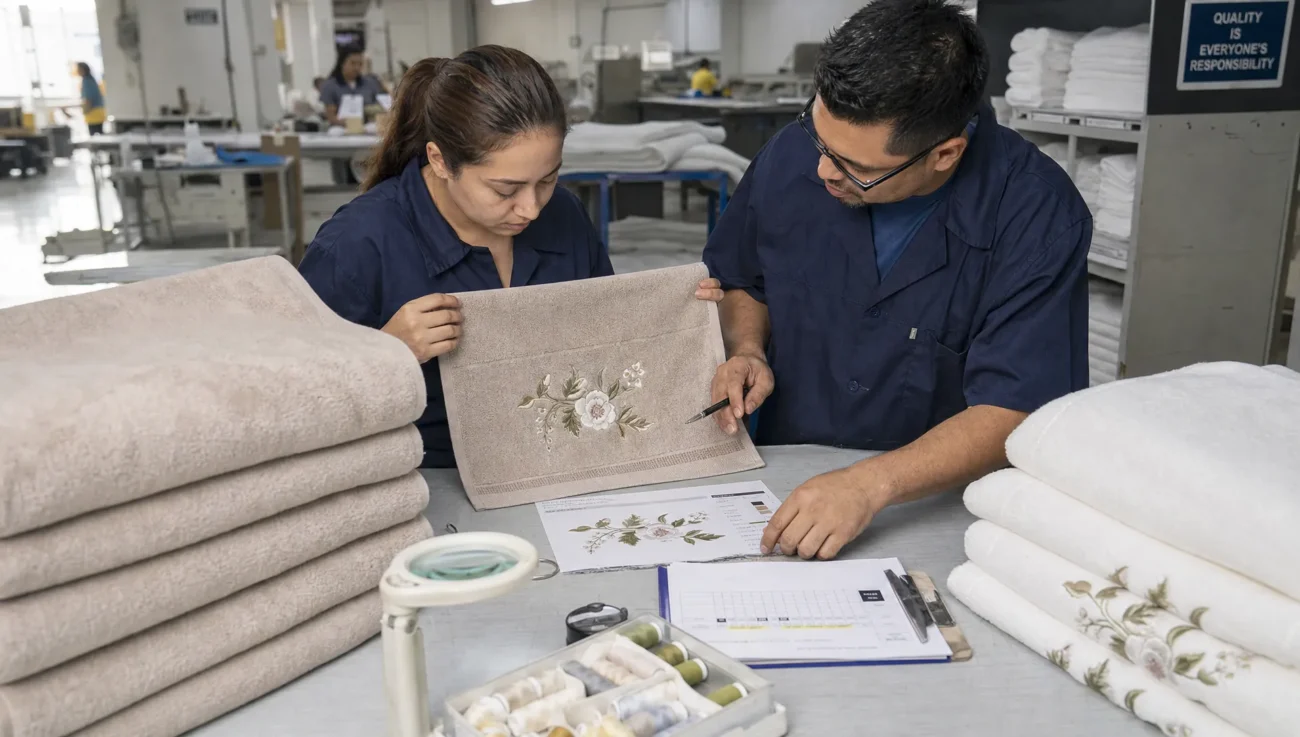
For private-label brands, embroidery towels offer something a plain towel cannot: a visible brand detail that customers can touch, use and remember. Whether the end buyer is a boutique hotel guest, a spa customer, a gym member or a retail shopper, embroidered branding can make a textile product feel more intentional and premium. The challenge is not simply adding a logo to fabric. The real work is choosing the right towel base, stitch method, thread, placement, packaging and manufacturing partner so the finished product looks consistent across every bulk order.
Why Embroidery Towels Help Private-Label Brands Stand Out
Private-label buyers often compete in categories where products can look similar at first glance. A towel may be judged by softness, absorbency and weight, but branding influences how people remember it. A clean embroidered mark on the hem, corner, border or center panel gives the product a finished retail or hospitality identity without overwhelming the design.
This matters for brands selling into markets such as the USA, Canada, Germany, France, Japan, Australia, Spain, Poland, the Netherlands and South Africa, where buyers expect both function and presentation. That is why embroidery towels are popular across hotel linen programs, spa collections, resort merchandise, corporate gifting and premium retail assortments.
Embroidery also has a practical advantage over some decoration methods. It is stitched into the towel rather than printed on the surface, which can help the branding remain visible after repeated laundering when the embroidery is specified correctly. The result can feel more durable, especially for hotels, gyms and distributors that care about long-term appearance.
What Makes a Towel Suitable for Embroidery?
Not every towel base handles embroidery equally well. A plush terry towel with long loops may feel luxurious, but fine logo details can sink into the pile if the embroidery plan is not adapted to the fabric. A flatter border, dobby area or low-pile section usually gives the logo a cleaner surface.
The best starting point is to match the towel type to its intended use. Hotel bath towels need absorbency and repeated wash performance. Beach towels often require larger decoration areas and stronger color impact. Tea towels need a flatter weave and crisp logo definition. Spa towels may focus on softness, subtle branding and a refined color palette.
For private-label programs, embroidery towels work best when the fabric construction, GSM, yarn quality and embroidery placement are planned together instead of treated as separate decisions.
| Towel type | Best embroidery placement | Common private-label use | Key consideration |
|---|---|---|---|
| Bath towel | Border, lower corner or center band | Hotels, spas, retail sets | Balance logo size with softness |
| Hand towel | Corner or center band | Guest bathrooms, salons, gyms | Keep small logos legible |
| Beach towel | Corner, border or large flat panel | Resorts, retail, promotions | Choose placement that does not affect comfort |
| Tea towel | Center, lower edge or hanging corner | Kitchen retail, gifting | Flatter fabric supports finer detail |
| Bathrobe | Chest, sleeve or pocket | Hotels, spas, wellness brands | Stabilization is critical for a neat finish |
If your brand is comparing towel construction options beyond embroidery, Extreme Towel’s guide on how to compare jacquard towel manufacturers for private labels is useful for understanding when woven branding may be a better fit than stitched decoration.
Embroidery Versus Jacquard, Printing and Labels
Private-label buyers usually compare several branding methods before placing a bulk order. Embroidery is not always the cheapest option, but it can deliver a premium impression that suits hospitality, wellness and high-value retail lines.
Jacquard weaving integrates the design into the towel itself. This can be ideal for large patterns, repeat logos and border designs. Printing can be effective for colorful artwork, beach towels and promotional products. Woven labels are useful for care information or subtle brand identification. Embroidery sits between these options because it adds texture, depth and a handcrafted look without requiring the entire towel to be woven around the design.
For many brands, embroidery towels become the preferred choice when the logo is relatively simple, the brand positioning is premium and the buyer wants decoration that feels permanent rather than temporary.
| Branding method | Best for | Strength | Limitation |
|---|---|---|---|
| Embroidery | Logos, monograms, hospitality branding | Premium texture and durability | Fine gradients and tiny details may not translate well |
| Jacquard | Large patterns, woven logos, borders | Integrated into the towel structure | Higher planning needs for artwork and weaving |
| Printing | Colorful graphics and promotional designs | Strong visual impact for large artwork | Durability depends on method and care |
| Woven label | Care labels and discreet branding | Cost-effective identification | Less visual impact on the towel surface |
The right choice depends on brand identity, quantity, budget and end use. A resort retail towel may use jacquard stripes plus embroidery. A hotel hand towel may need only a subtle embroidered logo. A promotional beach towel may perform better with printing if the artwork is large and colorful.
Design Choices That Improve the Finished Product
A good embroidery result starts with artwork that is built for stitching. Logos designed for websites or packaging may include thin lines, gradients, shadows or small text that do not reproduce cleanly on terry fabric. Before production, the artwork should be digitized into a stitch file that controls stitch direction, density, underlay and thread changes.
Strong private-label towel embroidery usually follows a few practical rules:
- Use clear shapes and avoid unnecessary fine detail
- Keep small text large enough to remain readable after washing
- Choose thread colors that contrast with the towel body
- Place the logo on a flatter area whenever possible
- Test the design on the actual towel fabric before bulk approval
Thread selection also matters. Polyester embroidery thread is widely used because it resists frequent washing and can maintain color well. Rayon thread can offer shine, but laundering requirements should be considered carefully. For hotels and institutional buyers, wash performance is often more important than decorative shine.
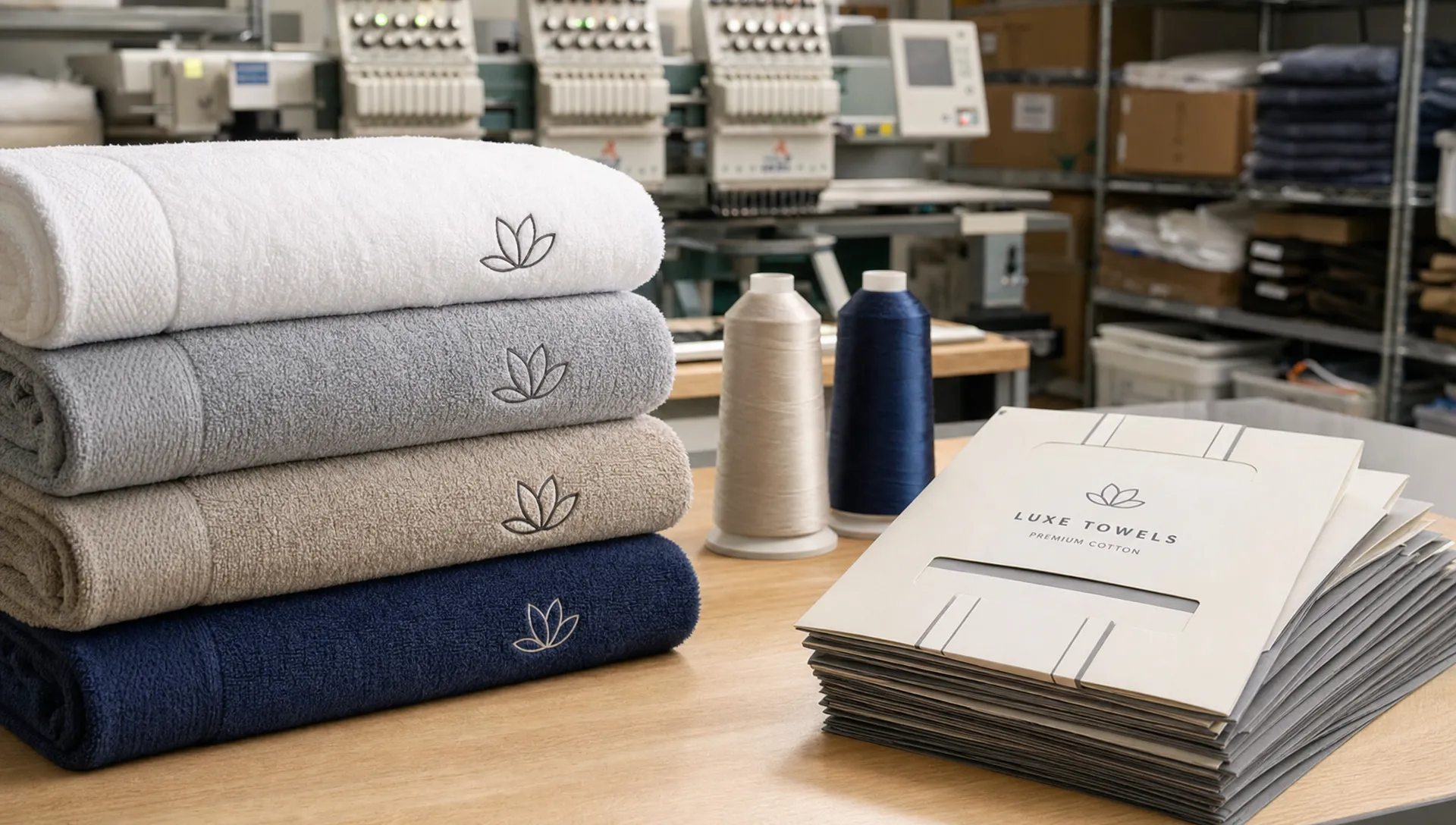
When brands develop embroidery towels for wholesale or hospitality use, sampling should confirm not only how the logo looks on day one, but also how it performs after laundering, folding and repeated handling.
Quality Control for Private-Label Embroidered Towels
Quality control is where premium presentation becomes repeatable. In a single sample, embroidery may look good. In a bulk order, consistency across thousands of units is the real test. Buyers should pay attention to towel size tolerance, GSM consistency, color matching, logo placement, thread trimming and packaging accuracy.
A practical inspection process checks both the textile and the decoration. The towel should meet the agreed material specification, and the embroidery should match the approved sample. Stitching should be clean, without loose threads, puckering, skipped stitches or distorted artwork. Placement should be measured, not judged by eye alone.
For international private-label buyers, documentation is also important. Fiber content, care instructions and country-of-origin labeling must match the destination market’s requirements. In the United States, the Federal Trade Commission textile labeling rules provide guidance on fiber content and related labeling obligations. In the European Union, textile products must follow applicable EU fiber labeling rules, including requirements under Regulation (EU) No 1007/2011.
Brands sourcing embroidery towels from overseas should confirm these requirements early, especially when packaging, sewn labels and hangtags are part of the order. Fixing label issues after production is far more expensive than building compliance into the specification from the start.
How to Build a Private-Label Towel Specification
A clear specification helps the manufacturer quote accurately, sample efficiently and produce consistently. It also reduces the risk of misunderstandings between the buyer, merchandiser, production team and quality inspector.
A private-label towel specification should normally include:
- Towel type, size, GSM and material composition
- Yarn type, color reference and finishing requirements
- Logo artwork, size, placement and thread colors
- Embroidery stitch file requirements and approval process
- Labeling, packaging and carton marking details
- Testing, inspection and shipment expectations
This is especially useful for distributors and wholesalers managing multiple customer accounts. If each retailer or hotel group has different packaging, colors or logo placements, a disciplined specification system helps keep every program organized.
Extreme Towel supports private-label and OEM towel programs for global buyers, including bulk towel manufacturing and custom packaging. Buyers planning a broader retail assortment can also explore Extreme Towel’s page on private-label towels for retail brands to understand how branded towel programs are structured.
Choosing the Right Manufacturing Partner
The best partner for embroidery towels should understand both towel manufacturing and decoration. If the supplier only focuses on embroidery, the towel base may not be optimized. If the supplier only focuses on towel production, logo execution may become an afterthought. Private-label buyers need both capabilities aligned.
A reliable towel manufacturer should be able to discuss fabric options, sampling, logo digitizing, production capacity, quality control and export documentation. For buyers in Europe, North America, Australia, Japan or South Africa, export experience is especially valuable because timing, packaging, cartons and documentation all affect the landed result.
Ask potential suppliers how they handle sample approvals, color matching, embroidery testing and inspections. Request photos or physical samples where possible. If the order includes multiple towel sizes, confirm that logo scale and placement are adjusted for each size rather than copied without review.
For buyers sourcing larger programs, Extreme Towel’s wholesale towel manufacturing options can be a useful starting point for planning bulk orders with customization needs.
Cost Factors Private-Label Buyers Should Expect
Embroidery costs depend on more than the towel itself. Stitch count, logo size, thread colors, placement difficulty, order quantity and packaging all influence pricing. A small one-color logo in a corner is usually more efficient than a large multi-color design with dense stitching.
Buyers should also consider the hidden cost of poor planning. A design that puckers, bleeds visually into the pile or becomes unreadable after washing can damage brand perception. A well-prepared sample round may feel slower at the beginning, but it protects the bulk order.
For retail brands, the target shelf price matters. For hotels, cost per use may be more important than unit price. For distributors, repeatability and margin control often matter most. A good supplier will help align the towel construction and embroidery plan with the buyer’s commercial goal.
Common Mistakes to Avoid
Even experienced buyers can run into problems when embroidery is treated as a final decoration step rather than part of product development. The most common issues are oversized logos, too much stitch density, poor placement on high pile areas and thread colors that look different under hotel or retail lighting.
Another mistake is approving artwork digitally without reviewing a physical sample. A logo can look sharp on screen but lose clarity on fabric. The best approval process includes a real sample on the chosen towel quality, not a generic swatch that behaves differently.
Private-label brands should also avoid changing towel color, GSM or logo scale after sampling without requesting another approval. Small changes can alter how the embroidery sits on the towel, especially when the pile height or border construction changes.
Frequently Asked Questions
Are embroidery towels suitable for hotels and spas? Yes. They are commonly used by hotels, spas, salons and wellness brands because embroidered logos can create a polished, professional look. The towel base and thread should be chosen for frequent laundering.
Can small logos be embroidered on terry towels? Small logos can be embroidered, but very fine details may not remain clear on plush terry fabric. Simplified artwork, proper digitizing and placement on a flatter border usually improve the result.
What is the best towel area for embroidery? Borders, corners and flatter woven sections are often the best areas because they allow cleaner stitch definition. The ideal placement depends on the towel size, pile height and intended use.
Is embroidery better than jacquard for private-label towels? It depends on the design. Embroidery is strong for logos and monograms, while jacquard is better for woven patterns, large repeat branding or designs integrated into the towel structure.
Do embroidery towels need a production sample? Yes. A physical sample helps confirm logo size, stitch density, thread color, placement and wash performance before bulk production begins.
Build a Towel Line Customers Remember
Private-label success depends on the details customers notice and the quality they continue to feel after repeated use. Embroidery towels can give a towel line a stronger brand identity, but only when the textile, logo and production process are developed together.
Extreme Towel manufactures premium terry towels, hotel linen, bathrobes and customized towel programs for buyers seeking OEM production, private-label support and bulk export service. If your brand is planning an embroidered towel collection for retail, hospitality or wholesale distribution, connect with Extreme Towel to discuss your specifications, sampling needs and export requirements.