Hotel linen may look like a routine purchasing category, but it has a direct impact on daily operating costs. Every sheet, towel, bathrobe, pillowcase, and duvet cover moves through a cycle of guest use, collection, washing, drying, folding, storage, and replacement. If the product is poorly specified, inconsistent, or difficult to launder, the true cost rises long after the invoice is paid.
That is where the right commercial linen suppliers create value. A strong supplier does more than quote a low unit price. It helps hotels choose the right fabric, weight, construction, packaging, and replenishment plan so the linen program supports guest experience while keeping costs predictable.
Why linen cost control is not only about unit price
The cheapest linen is not always the lowest-cost linen. Hotels operate in a high-turnover environment where textiles are washed repeatedly, handled by multiple teams, and judged by guests every day. A towel that feels good on arrival but loses softness quickly can become expensive if it must be replaced early. A sheet that shrinks after laundering can create fit issues, housekeeping delays, and unnecessary waste.
A more useful way to evaluate linen is total cost of ownership:
Total linen cost = purchase cost + laundry cost + replacement cost + loss and damage + storage + logistics + service disruption
Commercial linen suppliers help reduce these cost layers by aligning product specifications with how the property actually operates. A city hotel with tight laundry turnaround, a resort with pool operations, and a luxury property with premium room standards should not all buy the same linen package.
| Cost area | Common hotel problem | How the right supplier helps |
|---|---|---|
| Replacement | Fraying, thinning, shrinkage, and staining | Recommends durable constructions and consistent quality control |
| Laundry | Longer drying times and higher energy use | Balances fabric weight, absorbency, and wash performance |
| Labor | Sorting errors and slow room setup | Standardizes sizes, labels, and packaging |
| Inventory | Overstocking some items and running short on others | Supports planned bulk ordering and replenishment |
| Guest experience | Linen feels inconsistent across rooms | Maintains product consistency across production runs |
| Logistics | Damaged cartons, delays, and unclear packing | Provides export-ready packing and order documentation |
Matching linen specifications to the property
A major way suppliers control costs is by preventing over-specification and under-specification. Over-specification means buying a product that is more premium than the use case requires. Under-specification means buying a product that cannot survive the hotel’s laundering and guest-use cycle.
For towels, the supplier can help evaluate GSM, cotton quality, yarn type, pile construction, size, and finishing. Higher GSM can feel more luxurious, but it also increases weight, drying time, and storage space. Lower GSM can be practical for gyms, pool areas, or fast-turn environments, but it must still meet absorbency and durability expectations. Buyers planning towel programs can compare options from a wholesale towels manufacturer to decide which product level fits each department.
For bed linen, specification choices include fabric composition, thread count, weave, dimensions, hemming, and finishing. A premium suite may require a different sheet than a standard room or staff accommodation area. For buyers building a bedding program, working with a wholesale hotel linen manufacturer that offers multiple constructions helps each SKU serve a clear operational purpose.
Hotels also need to consider the guest expectations attached to different materials. Cotton remains a common hotel standard because of its familiar feel and wash performance. Bamboo bedding can also be considered for properties looking for a soft hand feel and a differentiated sleep experience. When evaluating bamboo options, sourcing from a specialist bamboo bed sheets manufacturer helps buyers review construction, finishing, sizing, and bulk consistency before committing to a full program.
The goal is not to choose the highest specification everywhere. The goal is to choose the right specification for each use case, then keep it consistent.
Reducing replacement costs through construction consistency
Replacement cost is one of the biggest hidden expenses in hotel linen management. It is easy to see the cost of the initial order, but harder to track the cost of early retirement due to loose threads, torn hems, uneven shrinkage, or loss of softness.
Commercial linen suppliers with strong quality control processes help hotels extend product life by checking the details that matter in daily use. These can include fabric weight, stitching strength, edge finishing, dimensional stability, absorbency, shade consistency, and packaging condition before shipment.
Consistency is especially important for multi-property groups, wholesalers, and distributors supplying hospitality customers. If one production batch feels different from the next, hotels may face mixed room presentation, guest complaints, and higher sorting complexity. A dependable supplier reduces these risks by controlling production standards and inspecting goods before export.
Durability also affects sustainability. When linen lasts longer, hotels purchase fewer replacement pieces, reduce textile waste, and avoid the cost of frequent emergency orders. This does not mean using heavy products for every application. It means using well-constructed products that match the expected wash cycle and operating environment.
Lowering laundry and labor costs
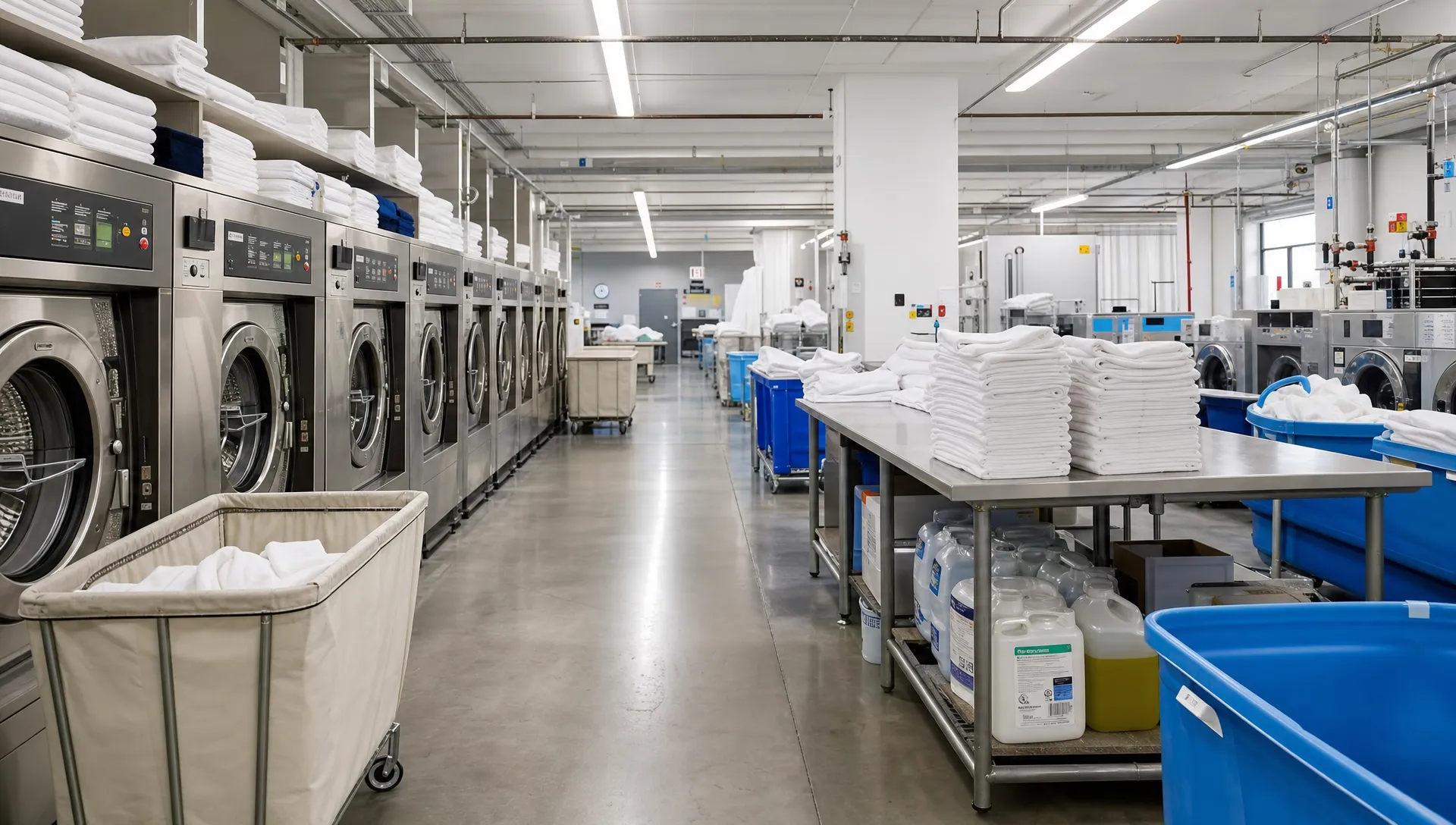
Laundry is not just a back-of-house process. It is a cost center involving water, chemicals, energy, equipment, labor, and time. A towel or sheet that takes longer to dry, tangles easily, sheds excessive lint, or shrinks unpredictably can increase daily workload.
Efficiency matters because laundry is water and energy intensive. The U.S. EPA’s WaterSense resources for hotels encourage hospitality properties to treat water management as an operating priority, not only an environmental initiative. Linen specification is one practical part of that broader efficiency strategy.
A knowledgeable supplier can help hotels improve laundry performance in several ways:
- Balanced fabric weight: Linen should feel appropriate for the brand standard without creating unnecessary drying time or handling weight.
- Correct sizing: Sheets and towels should account for expected shrinkage so they remain usable after commercial laundering.
- Appropriate color selection: White linen is popular because it supports a clean, consistent look and can be managed with established laundering processes.
- Clear care guidance: Wash and dry recommendations help laundry teams avoid avoidable damage.
- Consistent finishing: Smooth hems, stable edges, and reliable dimensions reduce folding and room-preparation issues.
When hotels consider the full laundry cycle, a slightly better product can sometimes lower total cost by reducing rewash rates, premature damage, and housekeeping delays.
Standardizing SKUs to simplify inventory management
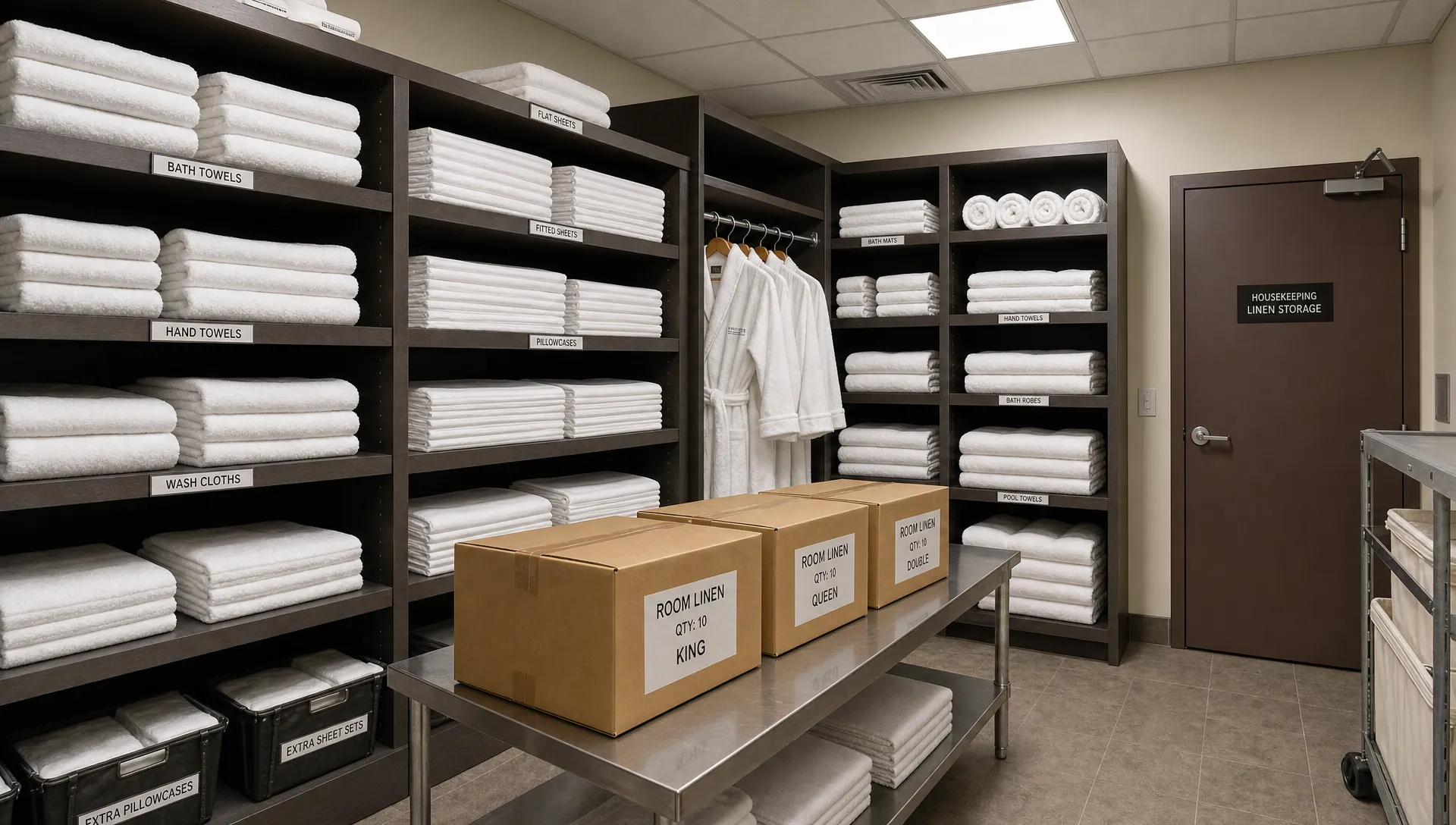
Hotels often lose money when linen programs become too complicated. Too many towel sizes, sheet dimensions, robe styles, or fabric grades can make purchasing and housekeeping harder to control. Teams may overstock slow-moving items while running short on essentials.
Commercial linen suppliers help by standardizing SKUs around room types, departments, and realistic par levels. A par level is the amount of linen required to keep the property operating while some items are in rooms, some are in laundry, and some are clean and ready for use. The right par level depends on occupancy, laundry turnaround, service standards, and delivery schedules.
Standardization helps hotels in several practical ways. Housekeeping teams can identify items faster, purchasing teams can reorder with fewer mistakes, and storage areas become easier to manage. For groups operating multiple properties, consistent specifications can also support centralized purchasing and better pricing discipline.
Custom packaging can add another layer of savings. If cartons are labeled by SKU, size, department, or property, receiving teams spend less time sorting. That matters when large bulk orders arrive during renovations, seasonal openings, or replenishment cycles.
Improving cash flow through bulk planning and replenishment
Bulk purchasing can reduce cost per piece, but only when it is planned correctly. Buying too much ties up cash and storage space. Buying too little creates emergency orders, split shipments, and inconsistent replacement products.
Experienced suppliers help hotels and distributors plan around occupancy patterns, opening schedules, refurbishment timelines, and reorder lead times. For imported linen, planning is especially important because production, packing, export documentation, sea freight, customs clearance, and inland delivery all affect timing.
A supplier that offers OEM manufacturing and bulk production can support longer-term cost control by keeping product specifications stable across orders. This is useful for hotels that want the same towel, sheet, or bathrobe to remain available for future replenishment instead of constantly switching products based on short-term availability.
For procurement teams, the conversation should move beyond how much per piece and toward how often the property will need to reorder, how consistent the replacement stock will be, and how efficiently the goods can be shipped and received.
Preventing loss with branding and accountability
Linen loss is a real cost for hotels. Items may be misplaced, mixed with outsourced laundry, removed from rooms, or transferred between departments without tracking. Private-label customization can help reduce this problem by making ownership clear.
Commercial linen suppliers can support branding through labels, woven tags, embroidery, and custom packaging. For hotels, branding can improve accountability in laundry sorting and storage. For wholesalers and distributors, private-label production can also strengthen customer loyalty and make repeat ordering easier.
However, customization should be used carefully. Heavy embroidery on towels can add cost and may affect feel if placed poorly. Labels should be durable but comfortable. Packaging should protect the goods without adding unnecessary waste or freight volume. A good supplier will help balance brand presentation with practical performance.
Reducing freight, storage, and receiving costs
For hotels buying internationally, landed cost matters more than factory price. Landed cost includes the product, packaging, freight, duties where applicable, customs handling, inland transport, and any costs caused by delays or damaged goods.
Commercial linen suppliers with export experience can help reduce avoidable cost by preparing orders properly. That includes carton labeling, bale or carton strength, packing lists, SKU separation, and documentation needed by the buyer or importer. For large hotel groups and distributors, even small improvements in packing efficiency can make receiving and warehousing easier.
Storage is another overlooked cost. Bulky towels and bedding consume valuable space, especially in city hotels where back-of-house areas are limited. Choosing the correct product weight, carton configuration, and delivery schedule can reduce pressure on storage rooms while keeping enough inventory available for operations.
Evaluating suppliers by cost per use
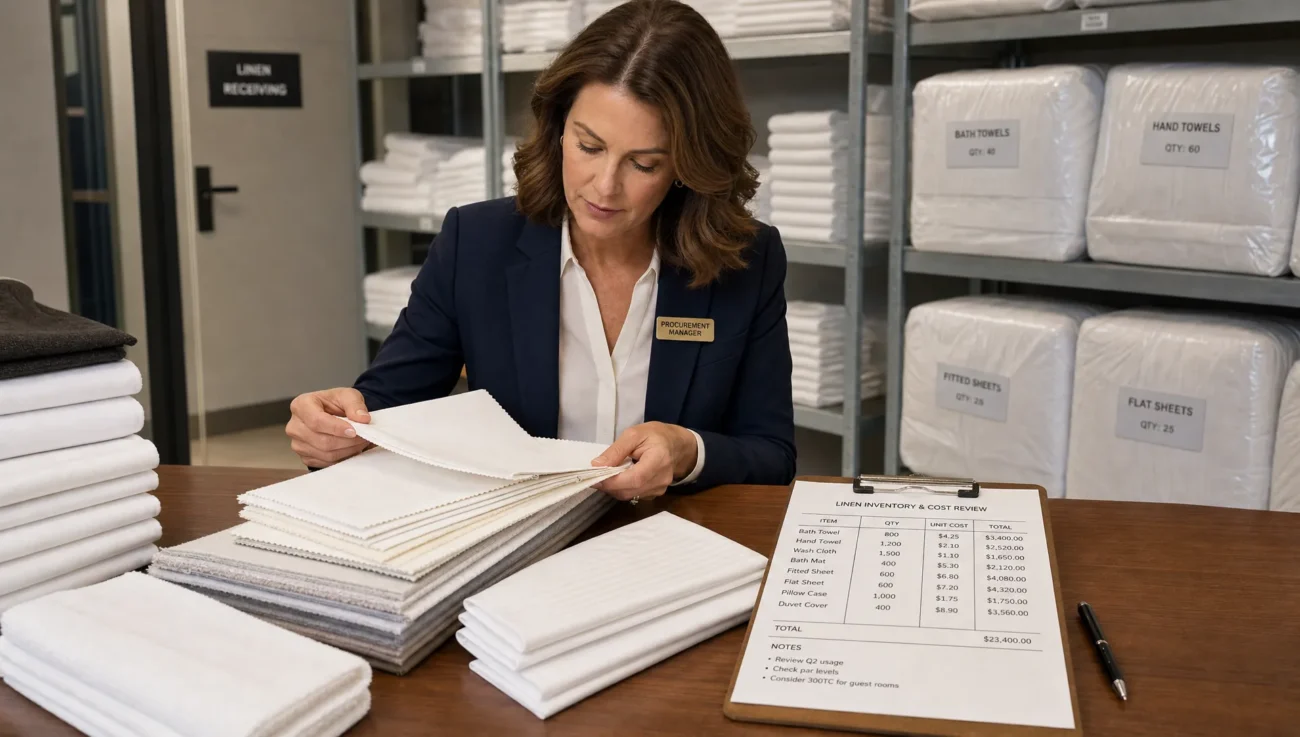
A practical procurement metric is cost per use. It shifts attention from the first invoice to the value a hotel receives over the usable life of the product.
Cost per use = landed cost per piece / expected usable wash cycles
This calculation is not perfect because wash cycles depend on laundry chemistry, machine settings, guest use, stains, handling, and quality standards. Still, it helps buyers ask better questions. If two towels look similar but one maintains appearance and absorbency longer, the higher initial price may be justified. If a sheet is cheaper but shrinks quickly or becomes uncomfortable, the apparent savings disappear.
Hotels should validate supplier claims with samples, wash testing, and small pilot orders when possible. The best suppliers welcome this process because it creates a clearer match between product expectations and real operating conditions.
| Supplier evaluation factor | Cost-control question to ask |
|---|---|
| Product specification | Is this construction appropriate for the exact hotel use case? |
| Quality control | What checks are performed before shipment? |
| Reorder consistency | Can future orders match the approved sample? |
| Packaging | Can cartons be labeled and packed for faster receiving? |
| Customization | Will branding improve accountability without reducing comfort? |
| Export support | Can the supplier support bulk shipments and documentation needs? |
| Communication | Will the supplier help plan replenishment before shortages occur? |
How hotels should brief a commercial linen supplier
The supplier can only control costs effectively when the hotel provides the right information. A vague request for hotel towels or bed sheets often leads to generic quotes that are difficult to compare. A clear brief helps the supplier recommend suitable materials, constructions, and order quantities.
A strong linen sourcing brief should include:
- Property type and service level: Luxury hotel, resort, boutique hotel, serviced apartment, gym, spa, or distributor supply program.
- Product list and sizes: Bath towels, hand towels, pool towels, sheets, pillowcases, duvet covers, bathrobes, and any special dimensions.
- Target guest experience: Softness, absorbency, crispness, weight, color, and presentation goals.
- Laundry process: In-house laundry, outsourced laundry, wash temperature, drying method, and turnaround time.
- Expected order volume: Initial opening order, replenishment order, seasonal purchase, or wholesale program.
- Packaging needs: SKU labels, private-label packaging, carton marks, or department-specific packing.
- Compliance and documentation needs: Any buyer requirements for labeling, testing, or export paperwork.
With this information, suppliers can quote more accurately and recommend products that reduce long-term operating friction.
Frequently Asked Questions
How do commercial linen suppliers reduce hotel costs? They reduce costs by helping hotels choose durable, correctly specified products, standardize inventory, plan bulk orders, improve packaging, and avoid premature replacement. The main savings come from lower total cost of ownership, not just a cheaper unit price.
Is higher GSM always better for hotel towels? No. Higher GSM can feel more luxurious, but it also increases weight, drying time, and storage needs. The best GSM depends on the hotel category, towel use, laundry process, and guest expectations.
How many linen sets should a hotel keep in stock? The right stock level depends on occupancy, laundry turnaround, delivery lead time, and service standards. Many hotels plan around par levels so linen is available in rooms, in laundry, and in clean storage without excessive overstock.
Should hotels use private-label linen? Private-label linen can improve brand presentation and accountability, especially for hotels, resorts, wholesalers, and distributors. It should be designed carefully so labels, embroidery, and packaging support operations without adding unnecessary cost.
Why should hotels evaluate linen by cost per use? Cost per use helps procurement teams compare long-term value instead of only comparing purchase price. A product with a higher unit cost may still be more economical if it lasts longer, launders efficiently, and reduces replacement frequency.
Ready to control hotel linen costs with smarter sourcing?
Cost control starts with choosing the right textile partner. Extreme Towel supports hotels, hospitality brands, wholesalers, distributors, and private-label buyers with terry towels, hotel linen, bamboo bedding, bathrobes, OEM manufacturing, bulk production, quality inspections, custom packaging, and global export service.
If you are reviewing your linen program or planning a new bulk order, connect with Extreme Towel to discuss specifications that fit your property, budget, and long-term operating goals.